Construction and verification of a nomogram model for predicting the risk of post-stroke spasticity: a retrospective study
Qian Xie, Jingling Zhu, Xuanling Cheng, Jianling Deng, Qing Song, Aiguo Xue, Shuxiong Luo

TL;DR
This study developed and validated a nomogram model to predict the risk of post-stroke spasticity using clinical data from over 300 patients.
Contribution
A novel nomogram model for predicting post-stroke spasticity was constructed and validated using routine clinical data and machine learning techniques.
Findings
The model achieved an AUC of 0.844 in the training set and 0.842 in the validation set, showing strong predictive accuracy.
Calibration curves demonstrated good agreement between predicted and observed probabilities in both training and validation sets.
Decision curve analysis and clinical impact curve confirmed the model's practical applicability in clinical settings.
Abstract
Objective: The aim of this study is to develop and validate a nomogram model for predicting the risk of post-stroke spasticity (PSS). Methods: A retrospective study collected data from 366 stroke patients admitted to Guangzhou University of Chinese Medicine’s Dongguan Hospital between January 2022 and April 2025. PSS was defined as a Modified Ashworth Scale (MAS) score ≥1 within 3 months after stroke. The patients were divided into training and validation sets using a 7:3 ratio. Using multivariate logistic regression analysis and least absolute shrinkage and selection operator (Lasso) regression, a predictive model was built, and a nomogram was created for clinical application. The receiver operating characteristic (ROC) curve and calibration curve were plotted to assess the discrimination and calibration of the model. Decision curve analysis (DCA) and the clinical impact curve (CIC)…
Genes, proteins, chemicals, diseases, species, mutations and cell lines named across the full text — each resolved to its canonical identifier and authoritative record.
Click any figure to enlarge with its caption.
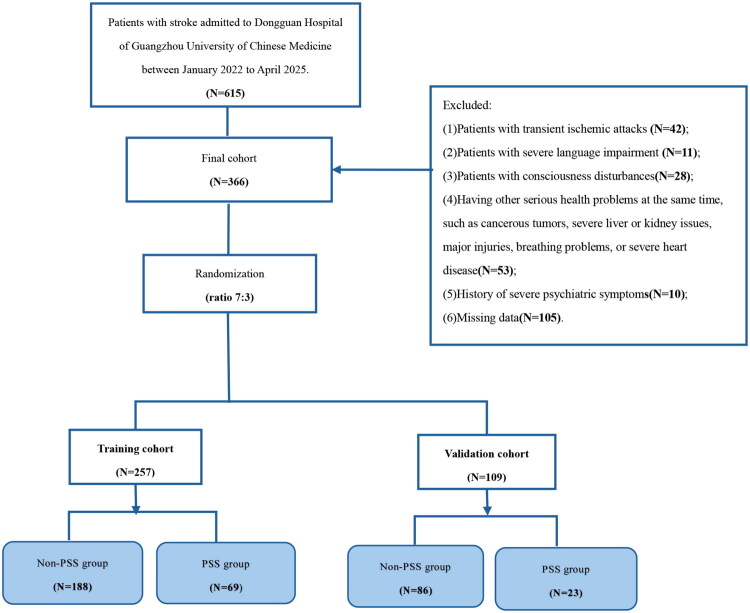 Figure 1
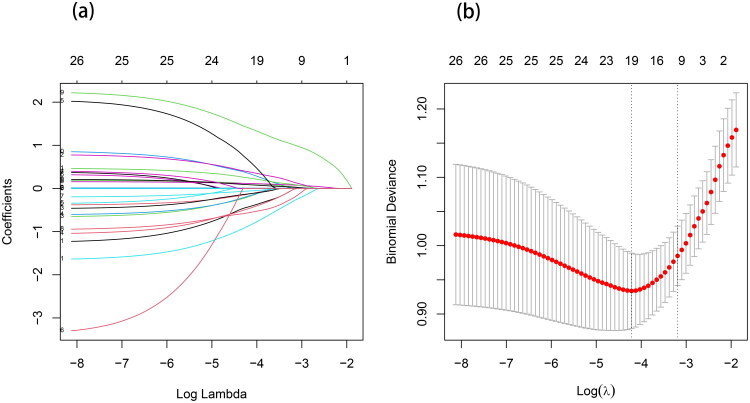 Figure 2
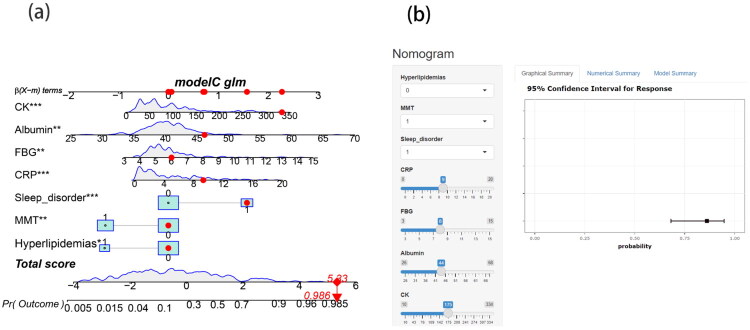 Figure 3
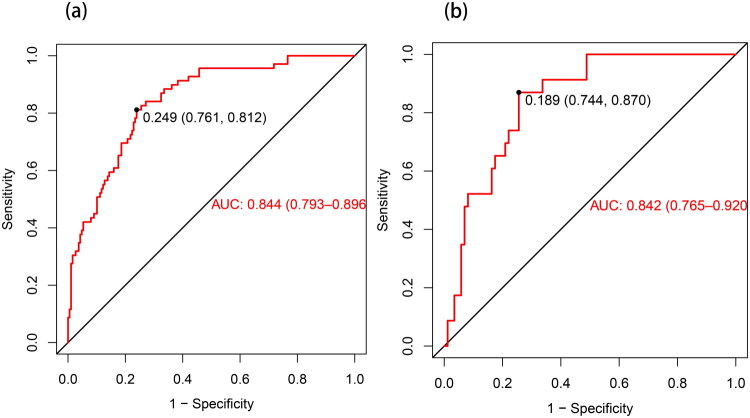 Figure 4
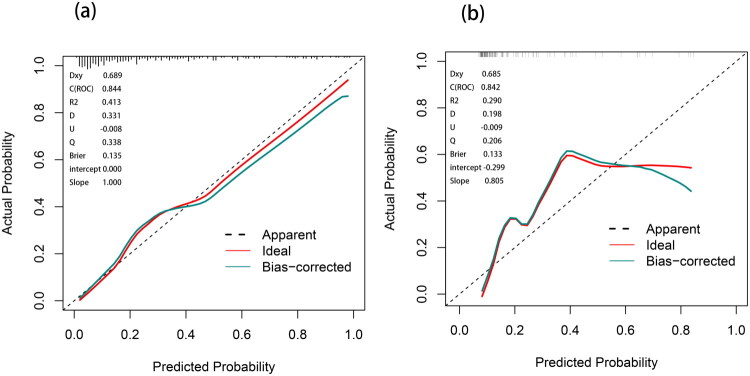 Figure 5
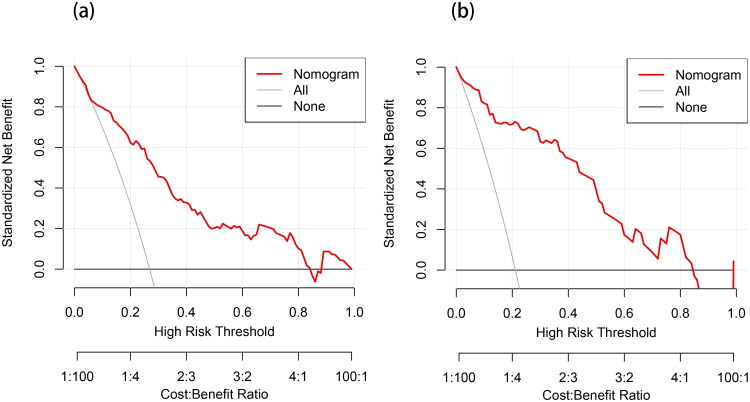 Figure 6
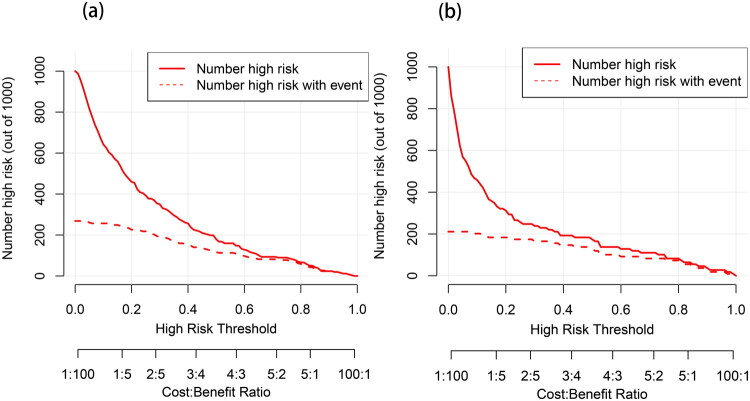 Figure 7
Peer Reviews
No public reviews on file for this paper yet. If you reviewed it on a platform where reviews are public (OpenReview, ICLR, NeurIPS, ICML), you can paste yours below so the community can read it here.
Videos
No videos yet. Explain this paper in a talk, walkthrough, or lecture? Add one.
Taxonomy
TopicsBotulinum Toxin and Related Neurological Disorders · Acute Ischemic Stroke Management · Stroke Rehabilitation and Recovery