A scoping review of turmeric adulteration based on data from six continents
Stefan Gafner, Nilüfer Orhan, Çiğdem Kahraman, Mark Blumenthal

TL;DR
This study reviews global data to show that 20% of turmeric products are adulterated with dyes or synthetic additives.
Contribution
The first scoping review to systematically analyze global turmeric adulteration rates across spices and supplements.
Findings
20.0% of 2235 turmeric samples were found to be adulterated.
Dietary and food supplements had a higher adulteration rate (22.0%) than spice samples (20.4%).
Abstract
Turmeric (Curcuma longa) is widely used as a spice and in dietary/food supplements and herbal medicines. Reports assessing the authenticity of commercial products have shown that the ingredient is subject to adulteration with, among others, artificial dyes, undeclared diluents, and synthetic curcumin. This scoping review summarizes published data on adulteration of turmeric products sold as spice and dietary or food supplements to estimate the prevalence of non-authentic turmeric on the market. This scoping review was based on a literature analysis from Google Scholar, PubMed, ScienceDirect, Scopus, and Web of Science databases, covering publications from 2000 to 2025. Article selection was performed according to PRISMA-ScR guidelines. After the initial search, specific countries were added to refine the search. Of the 375 publications retrieved, 347 were eliminated as duplicates or…
Genes, proteins, chemicals, diseases, species, mutations and cell lines named across the full text — each resolved to its canonical identifier and authoritative record.
Click any figure to enlarge with its caption.
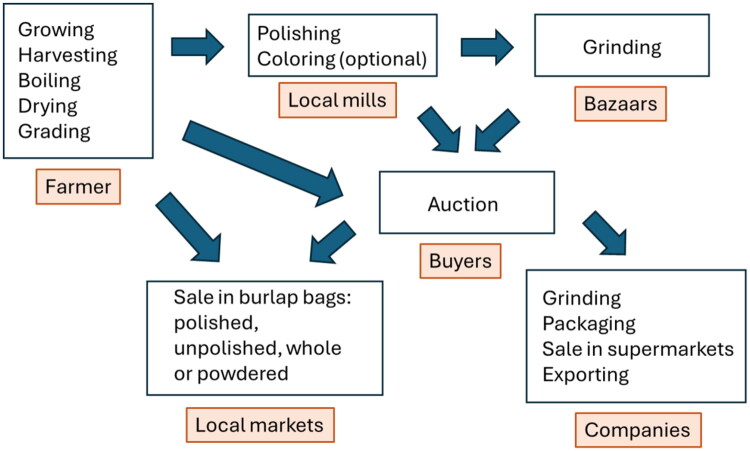 Figure 1
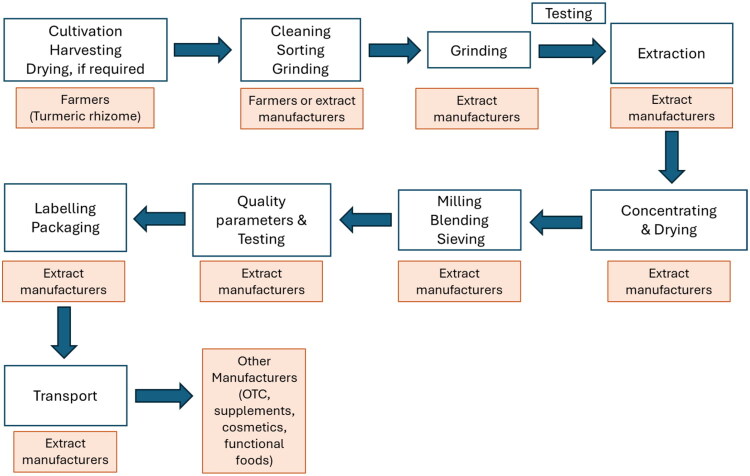 Figure 2
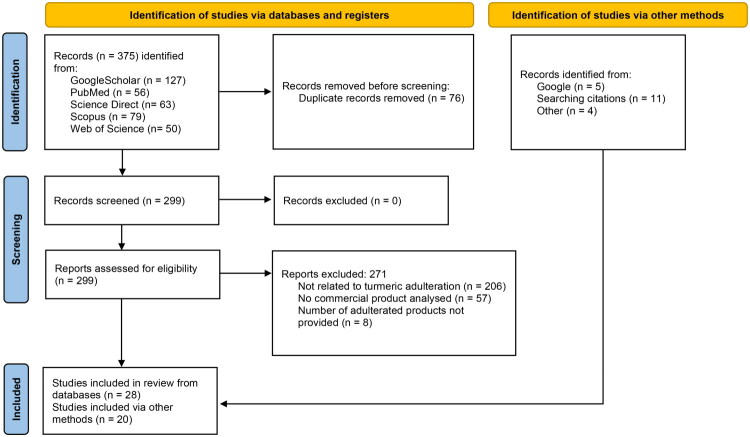 Figure 3
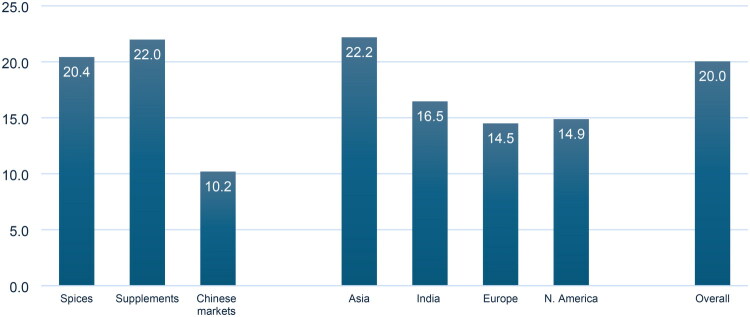 Figure 4
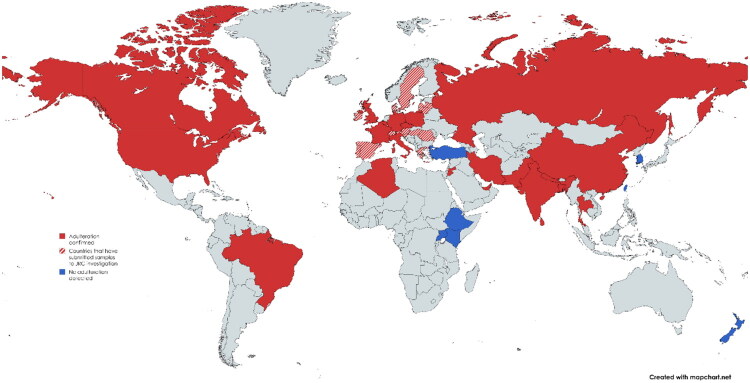 Figure 5
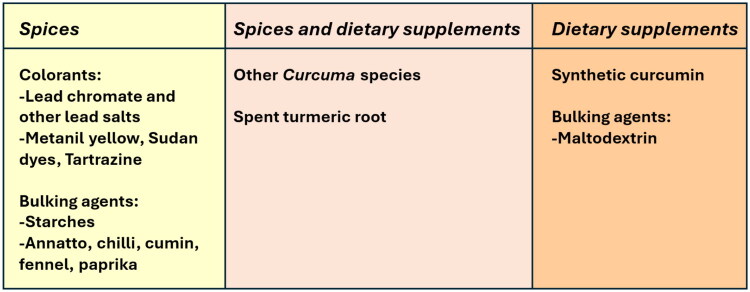 Figure 6
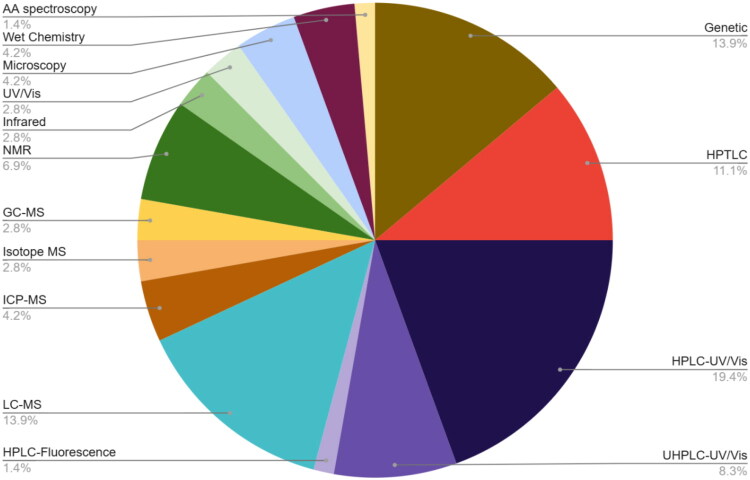 Figure 7
Peer Reviews
No public reviews on file for this paper yet. If you reviewed it on a platform where reviews are public (OpenReview, ICLR, NeurIPS, ICML), you can paste yours below so the community can read it here.
Videos
No videos yet. Explain this paper in a talk, walkthrough, or lecture? Add one.
Taxonomy
TopicsCurcumin's Biomedical Applications · Contact Dermatitis and Allergies · Ginger and Zingiberaceae research