Isolation of Streptococcus mutans in the gastrointestinal tract of corpses
Ami Kaneki, Hiroko Oka, Masashi Ogawa, Yuya Ito, Mariko Kametani, Momoko Usuda, Tatsuya Akitomo, Chieko Mitsuhata, Jinthana Lapirattanakul, Masakazu Hamada, Narutaka Katsuya, Takahiro Harada, Takafumi Nagao, Miki Kawada-Matsuo, Kazuhiko Nakano, Hitoshi Komatsuzawa

TL;DR
This study shows that Streptococcus mutans, a bacteria causing tooth decay, can be found alive in the gastrointestinal tract of corpses and may adapt to different organs.
Contribution
The study is the first to isolate live S. mutans in the gastrointestinal tract and show gene expression differences in strains from different organs.
Findings
S. mutans was isolated from multiple gastrointestinal organs, with the highest frequency in the oral cavity.
Strains from the same corpse had identical serotypes and genotypes but showed different gene expression patterns.
The bacteria may adapt to different environments in the gastrointestinal tract through changes in gene expression.
Abstract
The oral–gut axis, the pathway by which oral bacteria reach the intestine, has recently attracted attention. However, no recent studies have isolated live Streptococcus mutans, a major pathogen of dental caries, in the gastrointestinal tract. In the present study, we isolated S. mutans from the gastrointestinal tract of corpses. Fifty corpses from forensic autopsies (ages 0–94 years, median age 49) were used. Samples were taken from the oral cavity and gastrointestinal tract (esophagus, stomach, duodenum, small intestine, and large intestine) using sterile swabs. S. mutans isolates was cultured from the swabs, and DNA and RNA of the bacteria were extracted for genetic analysis. S. mutans was isolated from each organ with the following frequency: oral cavity, 14 cases (28%); esophagus, 3 cases (6%); stomach, 1 case (2%); duodenum, 0 cases (0%); small intestine, 1 case (2%); and large…
Genes, proteins, chemicals, diseases, species, mutations and cell lines named across the full text — each resolved to its canonical identifier and authoritative record.
Click any figure to enlarge with its caption.
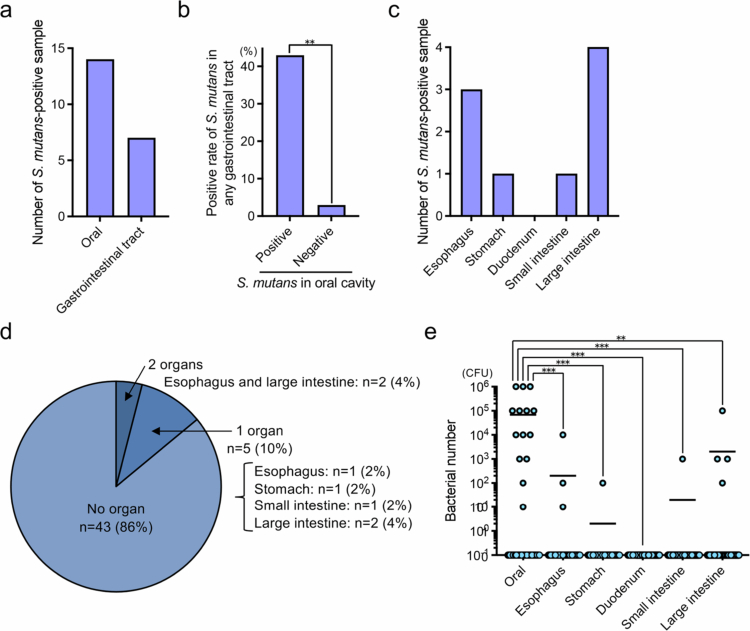 Figure 1
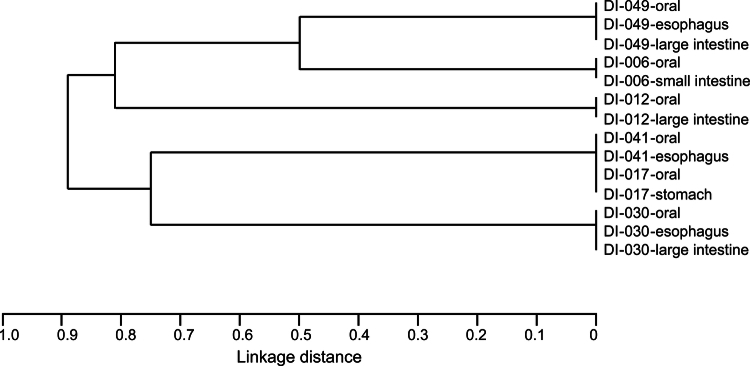 Figure 2
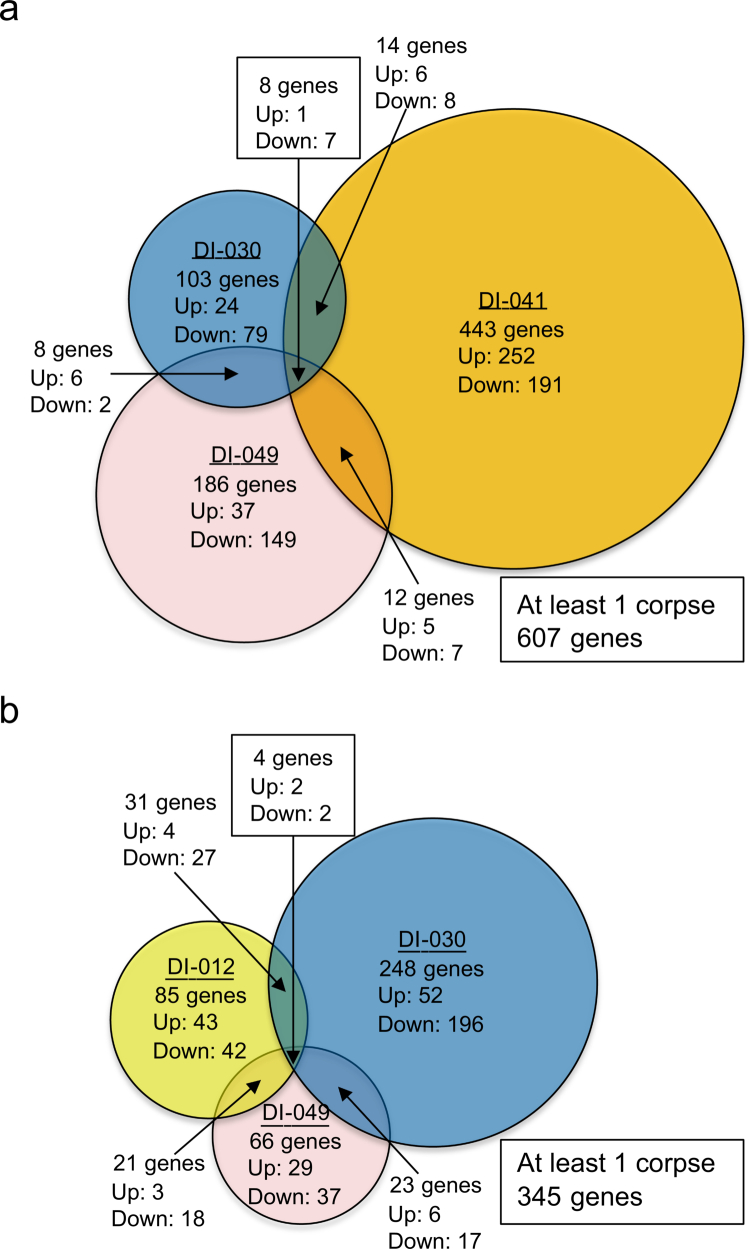 Figure 3
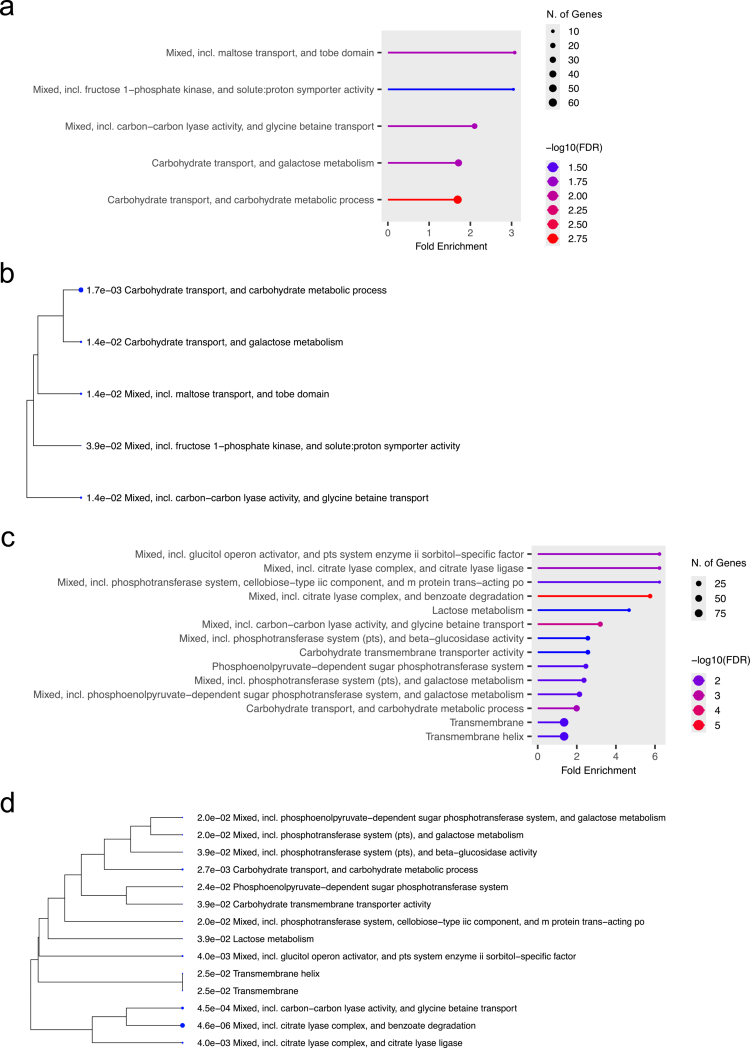 Figure 4
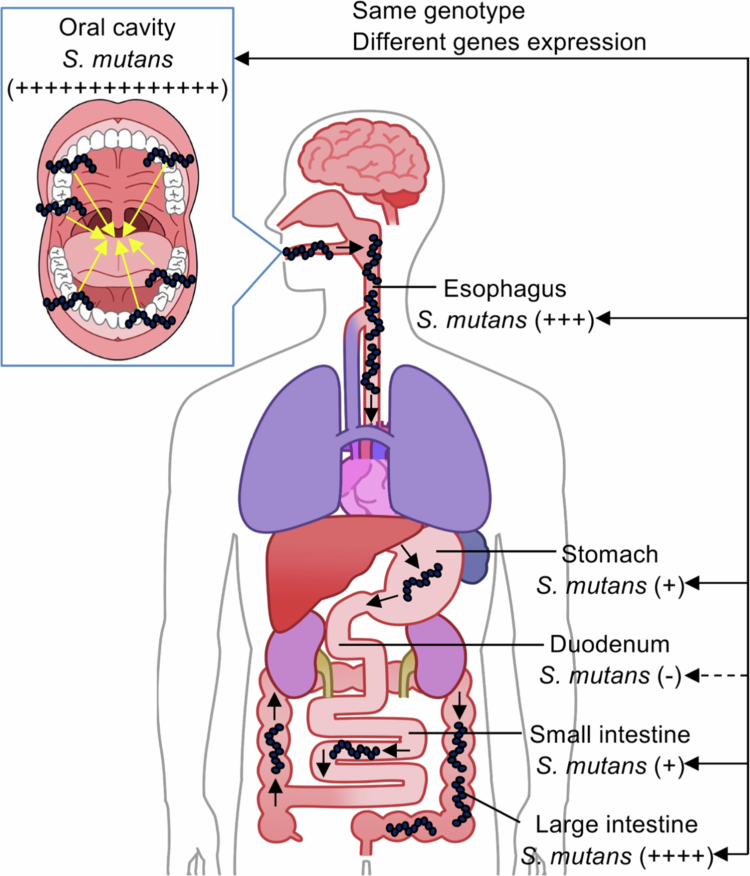 Figure 5
Peer Reviews
No public reviews on file for this paper yet. If you reviewed it on a platform where reviews are public (OpenReview, ICLR, NeurIPS, ICML), you can paste yours below so the community can read it here.
Videos
No videos yet. Explain this paper in a talk, walkthrough, or lecture? Add one.
Taxonomy
TopicsOral microbiology and periodontitis research · Pneumonia and Respiratory Infections · Gut microbiota and health