Identification of the key amino acid mutations in the PB2 and PA proteins of classical swine H1N1 influenza A virus in mammalian adaptation
Xiuhui Wang, Xiaomin Liu, Shuaiyong Wang, Qi Wang, Juan Wang, Manzhu Wang, Yun Yao, Yanjun Zhou, Tongling Shan, Wu Tong, Hao Zheng, Ning Kong, Yifeng Jiang, Changlong Liu, Guangzhi Tong, Hai Yu

TL;DR
This study identifies key amino acid mutations in swine H1N1 influenza virus that increase its virulence in mammals, offering insights into its potential pandemic risk.
Contribution
The study identifies specific PB2 and PA mutations that enhance the virulence of classical swine H1N1 influenza in mammals.
Findings
The G11-MA strain showed increased virulence in mice compared to the wild-type virus.
The PB2-D740N and PA-T97I mutations together improve replication in mammalian cells and mice.
The combination of PB2 and PA mutations enhances viral polymerase activity and mouse survival rates.
Abstract
The classical swine (CS) H1N1 influenza virus, first isolated in 1930, is highly homologous to the 1918 Spanish influenza virus. CS H1N1 virus, which crossed the interspecies barrier to infect humans has become the dominantly prevalent strain in China’s pig population, showing a trend of continuous transmission. However, whether subsequent adaptation of CS H1N1 to mammals would increase their pathogenicity toward humans is unknown. To address this, a mouse-adapted (MA) CS H1N1 virus (A/Swine/Guangdong/1/2011[G11-MA]) was generated through serially passaged in mouse lungs, exhibiting increased virulence compared to the wild-type (WT). Further study showed that the G11-MA strain exhibited amino acid mutations in PB2-D740N, PB1-T56I, PA-T97I and HA-K188E, and the combination of PB2-D740N with PA-T97I improved the replication ability in mammalian cells and mice. The G11-MA strain with PB2…
Genes, proteins, chemicals, diseases, species, mutations and cell lines named across the full text — each resolved to its canonical identifier and authoritative record.
Click any figure to enlarge with its caption.
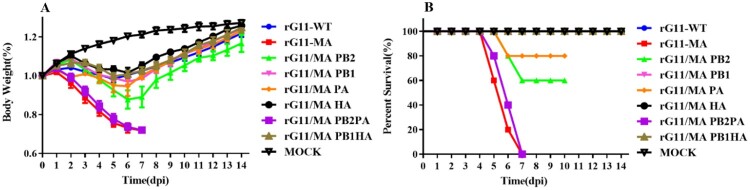 Figure 1
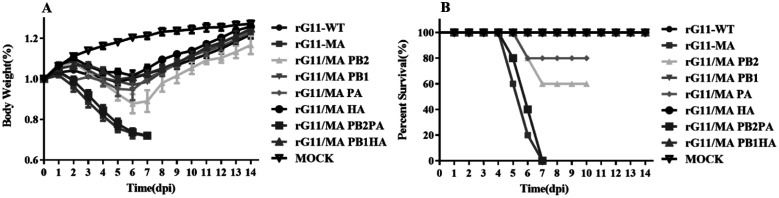 Figure 2
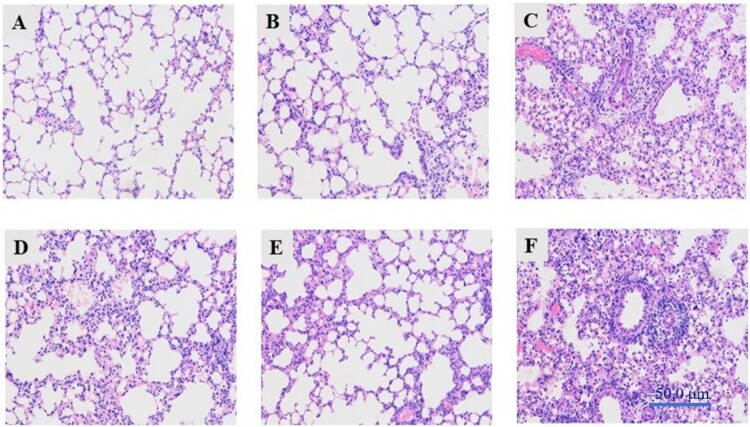 Figure 3
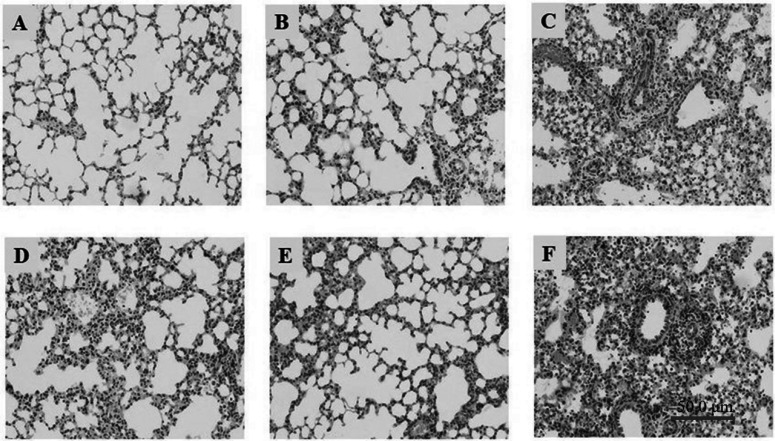 Figure 4
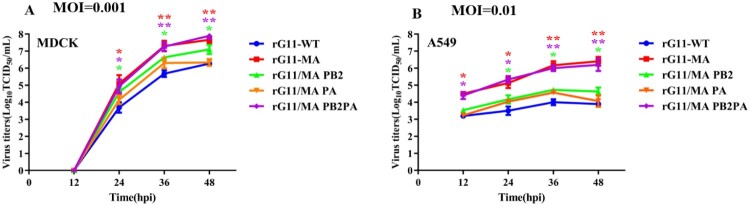 Figure 5
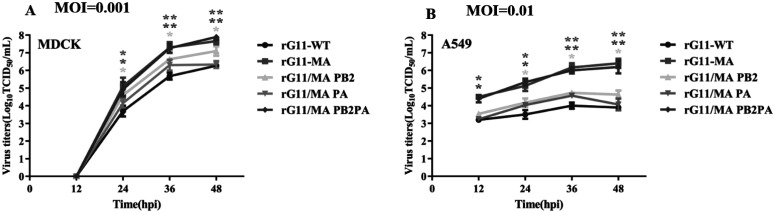 Figure 6
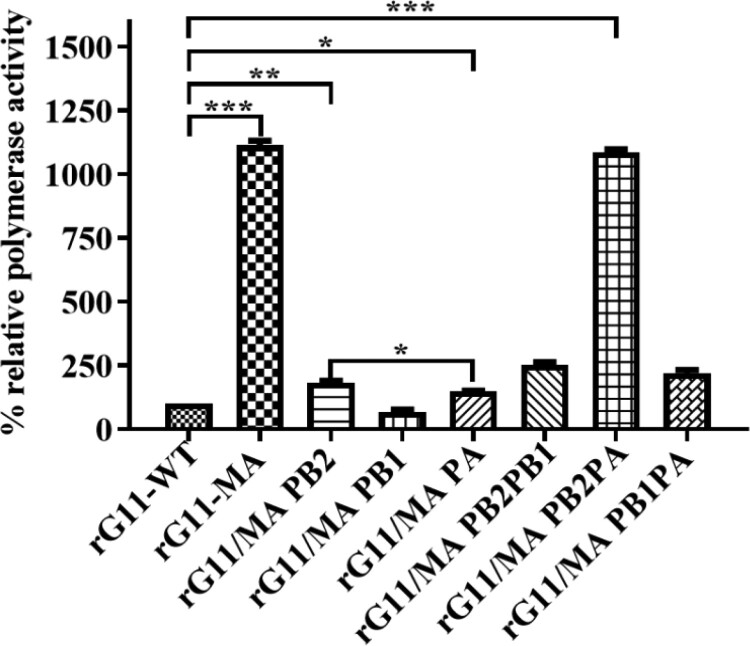 Figure 7
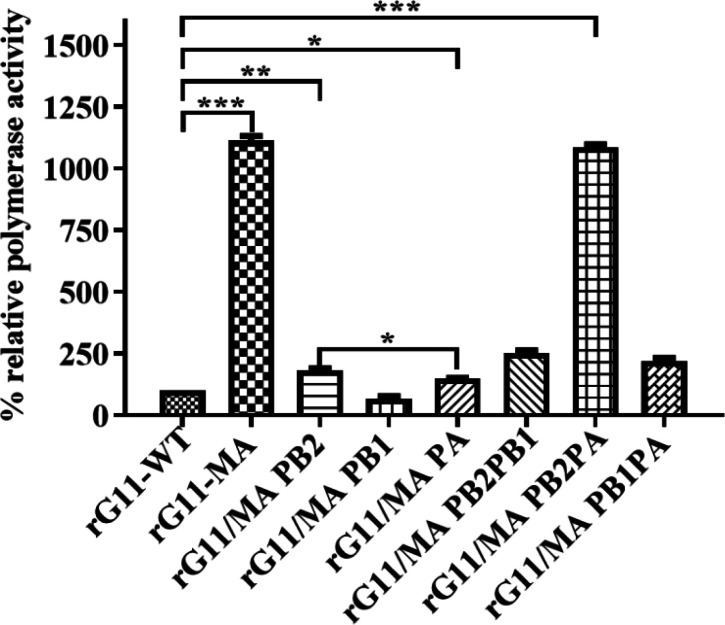 Figure 8
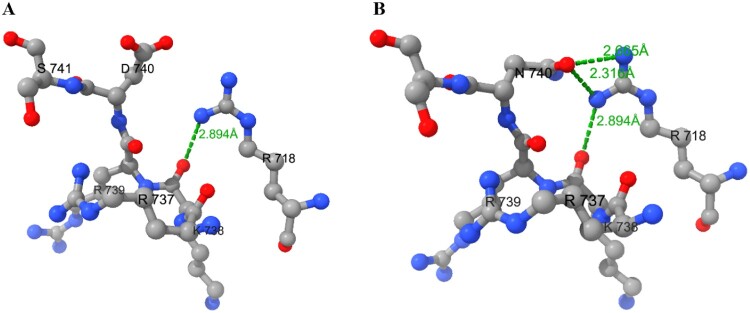 Figure 9
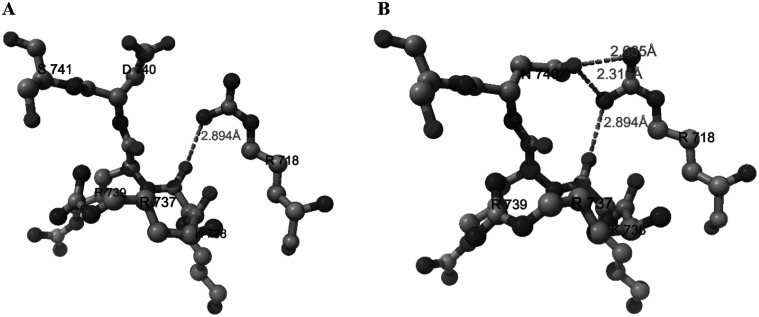 Figure 10
Peer Reviews
No public reviews on file for this paper yet. If you reviewed it on a platform where reviews are public (OpenReview, ICLR, NeurIPS, ICML), you can paste yours below so the community can read it here.
Videos
No videos yet. Explain this paper in a talk, walkthrough, or lecture? Add one.
Taxonomy
TopicsInfluenza Virus Research Studies · Respiratory viral infections research · Poxvirus research and outbreaks