Ameliorative effects of Corchorus olitorius leaf ethanolic extract on letrozole-induced polycystic ovary syndrome (PCOS) in rats
Udoh Ekaette Sunday, Essiet Grace Akanimo, Victor Udo Nna, Umoren Inyang Arit, Ugbem Theophilius Ipeh, Lapeh Pierre Takem, Umiom Edem

TL;DR
This study shows that Corchorus olitorius leaf extract can help reduce symptoms of PCOS in rats by improving hormonal and physical markers.
Contribution
The study demonstrates the ameliorative effects of Corchorus olitorius extract on PCOS in rats for the first time.
Findings
C. olitorius extract normalized vaginal cytology and improved ovarian and uterine morphology in PCOS rats.
The extract helped restore hormonal levels, glucose, and lipid profiles in PCOS-induced rats.
Treatment with the extract showed significant improvements compared to the PCOS control group.
Abstract
To evaluate the effects of Corchorus olitorius leaf extract on induced polycystic ovarian syndrome (PCOS) rats. 36 female Wistar rats were divided into six groups (n=6) including Sham, PCOS + vehicle (Dimethyl sulfoxide), PCOS + Clomiphene citrate, PCOS + 200, 400, and 600 mg/kg Corchorus olitorius. The Sham group was administered CMC (carboxymethylcellulose) (0.5%) 1 ml/0.1 kg, while the PCOS groups were administered letrozole (1 mg/kg) dissolved in 0.5% CMC solution for 21 days via oral gavage. The PCOS condition was established to be successful when Papanicolaou-stained vaginal cytology of days 13-21 showed a greater dominance of clusters of empty cornified squamous cells. The duration of treatments was for 14 days ( via oral gavage) and euthanization occurred on the 15th day. Hormonal levels, glucose level, lipid profile, hematological indices, liver function, kidney function, and…
Genes, proteins, chemicals, diseases, species, mutations and cell lines named across the full text — each resolved to its canonical identifier and authoritative record.
Click any figure to enlarge with its caption.
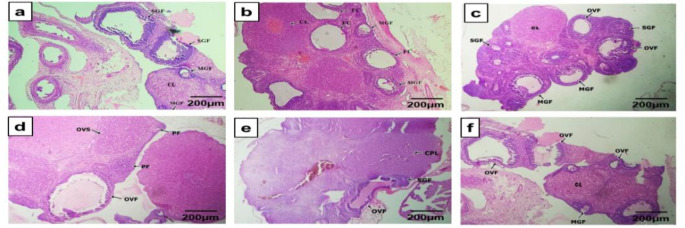 Figure 1
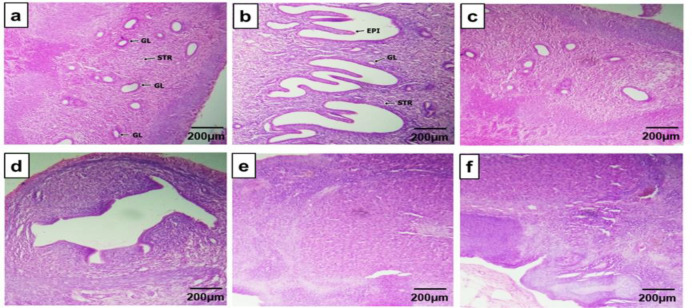 Figure 2
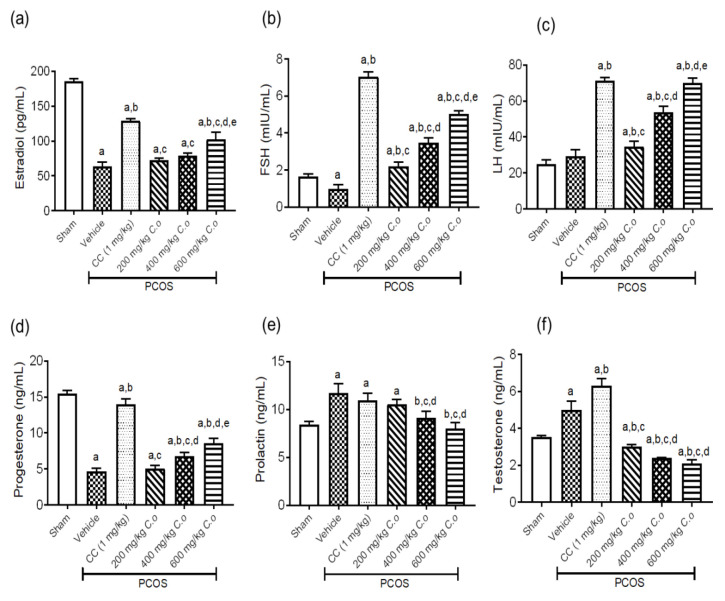 Figure 3
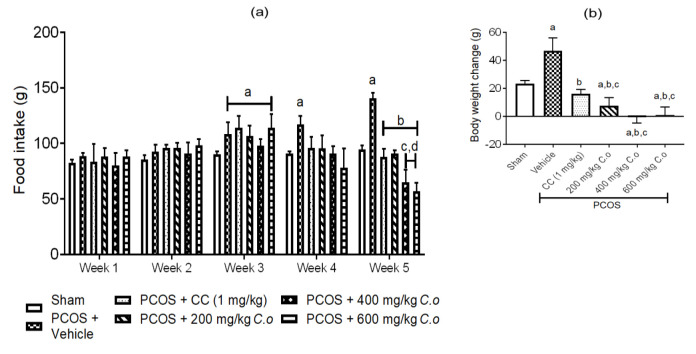 Figure 4
Peer Reviews
No public reviews on file for this paper yet. If you reviewed it on a platform where reviews are public (OpenReview, ICLR, NeurIPS, ICML), you can paste yours below so the community can read it here.
Videos
No videos yet. Explain this paper in a talk, walkthrough, or lecture? Add one.
Taxonomy
TopicsOvarian function and disorders · Phytoestrogen effects and research · Seed and Plant Biochemistry