The Effects of Hesperidin on the Healing Process of Cleft Lip Surgical Wounds in Rats: A Histological Evaluation and Therapeutic Analysis
Parastoo Namdar, Atena Shiva, Fatemeh Barzegar, Majid Saeedi, Seyyed Mobin Rahimnia, Maziar Khatami, Shahin Arab

TL;DR
This study shows that hesperidin, a citrus compound, may reduce scarring in cleft lip surgery wounds in rats by altering tissue healing processes.
Contribution
The first investigation of hesperidin's effects on cleft lip wound healing in an animal model.
Findings
100 mg/kg hesperidin reduced fibroblast proliferation and collagen deposition in rat cleft lip wounds.
Higher hesperidin doses increased epithelial proliferation while decreasing inflammatory cell density.
Hesperidin may help reduce scar formation in cleft lip surgical wounds.
Abstract
Cleft lip and palate are the most common congenital craniofacial anomalies, and inadequate treatment of these defects may lead to serious psychosocial and economic consequences. Hesperidin, a flavanone extracted from citrus fruit peels, is a potent antioxidant. However, no study has yet investigated the effects of hesperidin on surgical wound healing in cleft lips. The aim of the present study was to evaluate the histological effects of hesperidin on the healing process of surgically induced cleft lip wounds in rats. In this in vivo study, sixteen male Wistar rats were randomly divided into four groups: the control group (normal saline), intervention group 1 (25 mg/kg hesperidin), intervention group 2 (50 mg/kg hesperidin), and intervention group 3 (100 mg/kg hesperidin). A surgical wound was created on the left upper lip of each rat and sutured in two layers. The treatments were…
Genes, proteins, chemicals, diseases, species, mutations and cell lines named across the full text — each resolved to its canonical identifier and authoritative record.
Click any figure to enlarge with its caption.
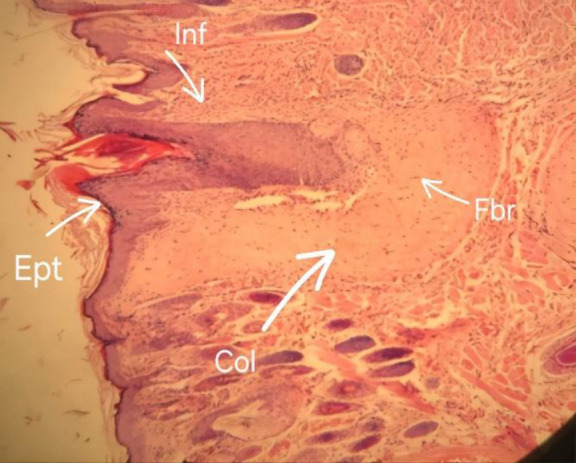 Figure 1
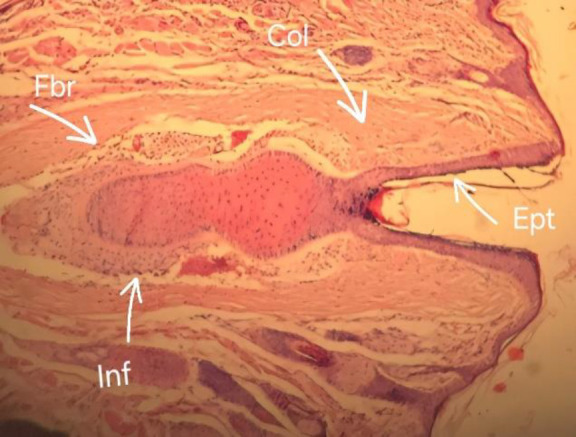 Figure 2
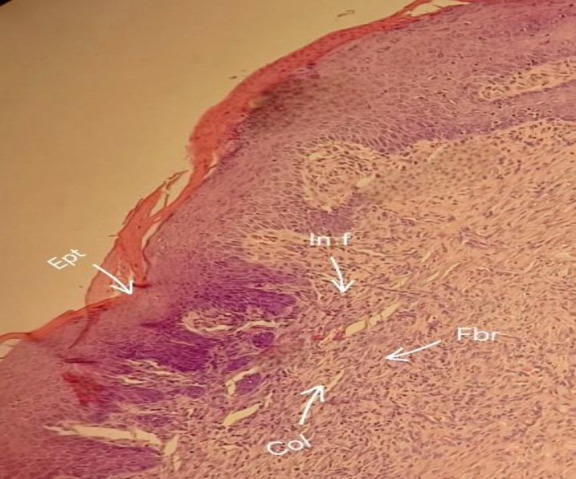 Figure 3
Peer Reviews
No public reviews on file for this paper yet. If you reviewed it on a platform where reviews are public (OpenReview, ICLR, NeurIPS, ICML), you can paste yours below so the community can read it here.
Videos
No videos yet. Explain this paper in a talk, walkthrough, or lecture? Add one.
Taxonomy
TopicsWound Healing and Treatments · Surgical Sutures and Adhesives · Biological Stains and Phytochemicals