Evaluating the effect of rutin on contrast-induced nephropathy in rats
Faezeh Esparham, Fatemeh Rajabian, Mahboobeh Ghasemzadeh Rahbardar, Bibi Marjan Razavi, Abolfazl Khajavi Rad, Sakineh Amoueian, Hossein Hosseinzadeh

TL;DR
This study shows that rutin, a flavonoid, may help protect rat kidneys from damage caused by contrast agents through its antioxidant properties.
Contribution
The study demonstrates rutin's protective effects against contrast-induced nephropathy in rats, highlighting its antioxidant potential.
Findings
Rutin improved biochemical parameters and reduced oxidative stress in rats exposed to contrast agents.
Rutin (100 mg/kg) reduced tubular necrosis and interstitial edema in kidney tissue.
Rutin had no significant effect on medullary congestion and proteinaceous casts in renal tissue.
Abstract
Contrast-induced nephropathy is a common cause of acute kidney injury, and oxidative stress plays an important role in its development. The flavonoid rutin is of interest for its potential antioxidant properties. This study aimed to assess the protective effects of rutin against contrast-induced renal toxicity in rats. Eight groups of male Wistar rats (n=6 in each group) were designed: (1) Sham, (2) Premedication-control (N(ω)-nitro-L-arginine methyl ester (L-NAME, 10 mg/kg, i.p.)+indomethacin (10 mg/kg, i.p.)), (3) Contrast medium (L-NAME+indomethacin+diatrizoate (12.5 ml/kg, i.p)), (4-6) Rutin (25, 50, and 100 mg/kg, p.o., for 7 days)+L-NAME+indomethacin+ diatrizoate, (7) N-acetylcysteine (NAC, 125 mg/kg, i.p.), L-NAME+indomethacin+diatrizoate, and (8) Rutin-alone (100 mg/kg). All study groups except for the sham and rutin-alone were subjected to 48 hr of water deprivation. On day 8,…
Genes, proteins, chemicals, diseases, species, mutations and cell lines named across the full text — each resolved to its canonical identifier and authoritative record.
Click any figure to enlarge with its caption.
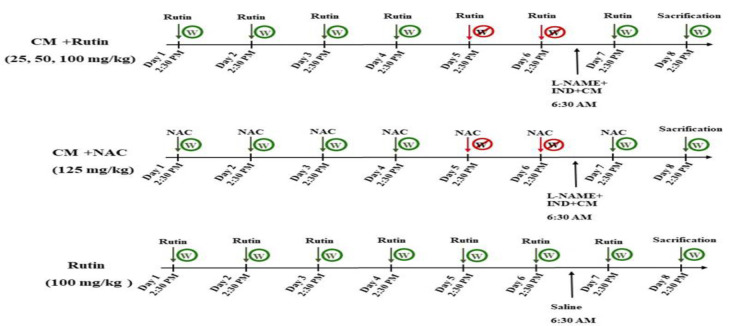 Figure 1
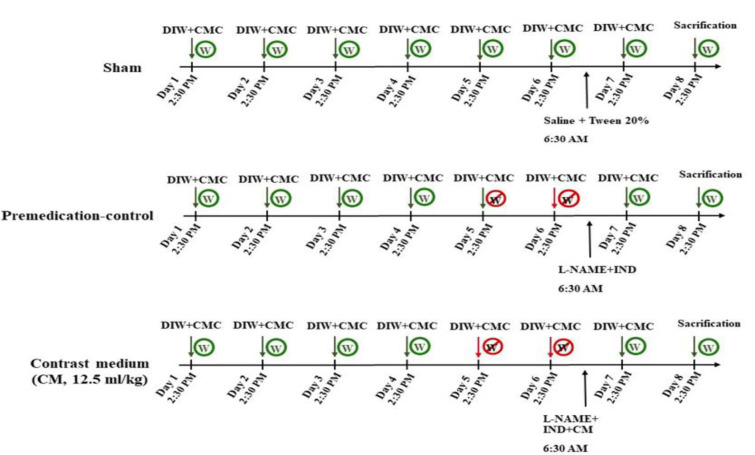 Figure 2
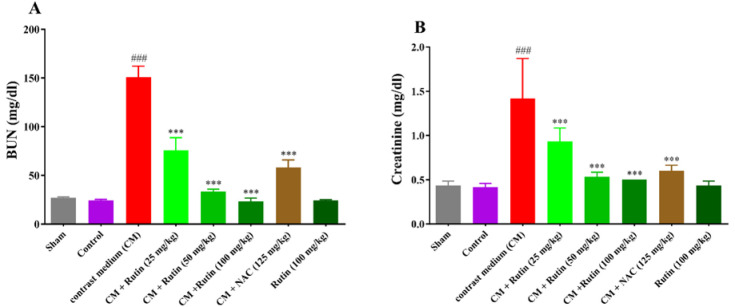 Figure 3
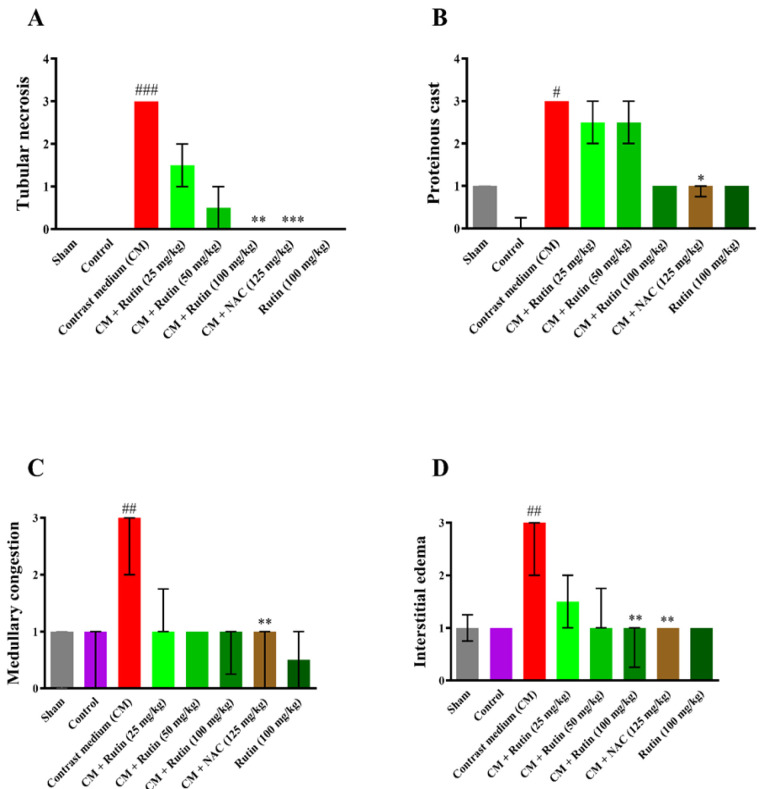 Figure 4
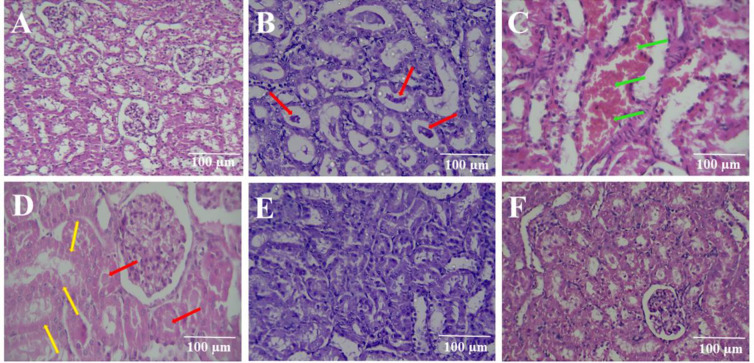 Figure 5
Peer Reviews
No public reviews on file for this paper yet. If you reviewed it on a platform where reviews are public (OpenReview, ICLR, NeurIPS, ICML), you can paste yours below so the community can read it here.
Videos
No videos yet. Explain this paper in a talk, walkthrough, or lecture? Add one.
Taxonomy
TopicsChemotherapy-induced organ toxicity mitigation · Chronic Kidney Disease and Diabetes · Ginkgo biloba and Cashew Applications