GFSeeker: a splicing-graph-based approach for accurate gene fusion detection from long-read RNA sequencing data
Bingyan Wang, Heng Hu, Runtian Gao, Guohua Wang, Tao Jiang

TL;DR
GFSeeker is a new computational tool that improves the detection of gene fusions in cancer using long-read RNA sequencing data.
Contribution
GFSeeker introduces a splicing-graph-based framework that achieves higher accuracy in detecting gene fusions compared to existing methods.
Findings
GFSeeker outperforms existing methods with 6%–15% higher F1 scores on benchmark datasets.
GFSeeker successfully identified the MATN2–POP1 fusion in MCF-7 cells, which other tools missed.
The tool's dual re-alignment validation effectively reduces noise from high error rates in long-read RNA-seq.
Abstract
Gene fusions are critical oncogenic drivers and therapeutic targets in diverse cancers. Long-read ribonucleic acid sequencing (RNA-seq) offers an unprecedented opportunity to resolve the full-length structure of fusion isoforms, but its high intrinsic error rates pose significant challenges to the precise identification of true fusion events. Here, we developed GFSeeker, an innovative splicing-graph-based computational framework for accurate gene fusion detection from long-read RNA-seq. GFSeeker employs a unique pipeline based on a splicing graph reference and a dual re-alignment validation to effectively overcome data noise from high error rates. Benchmarking across simulated, non-tumor, and cancer cell line datasets demonstrated GFSeeker’s state-of-the-art performance, achieving 6%–15% higher F1 score compared to existing methods. Notably, GFSeeker successfully identified the known…
Genes, proteins, chemicals, diseases, species, mutations and cell lines named across the full text — each resolved to its canonical identifier and authoritative record.
Click any figure to enlarge with its caption.
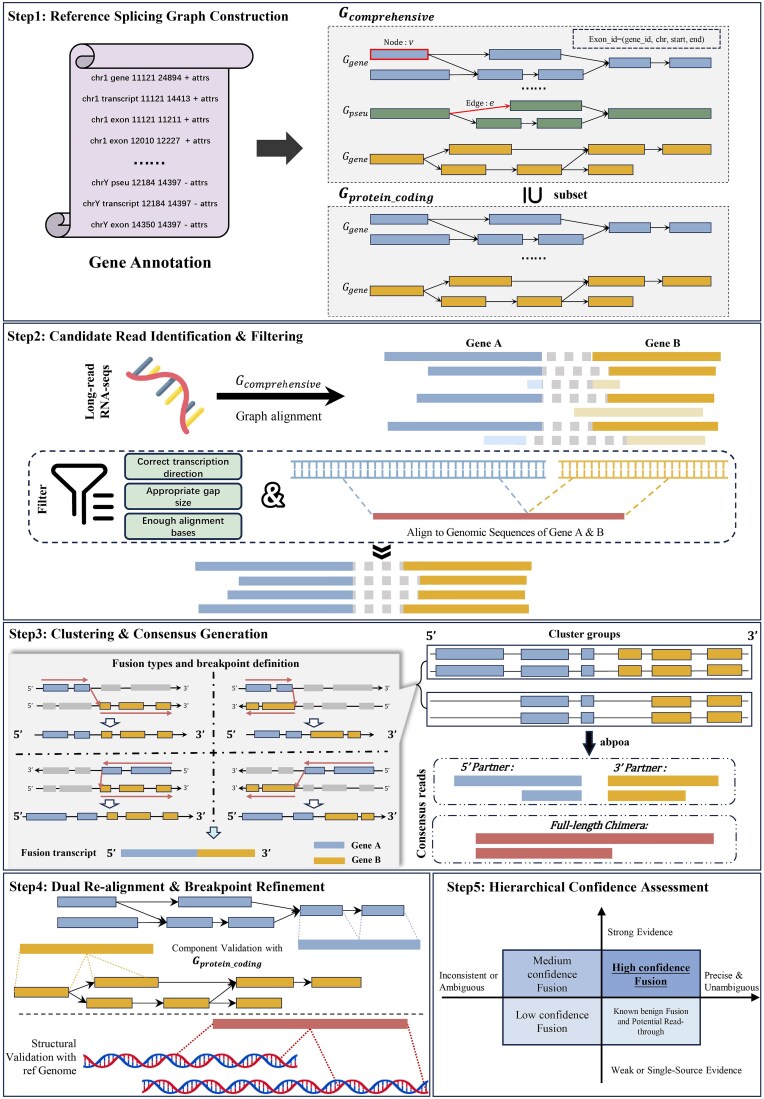 Figure 1
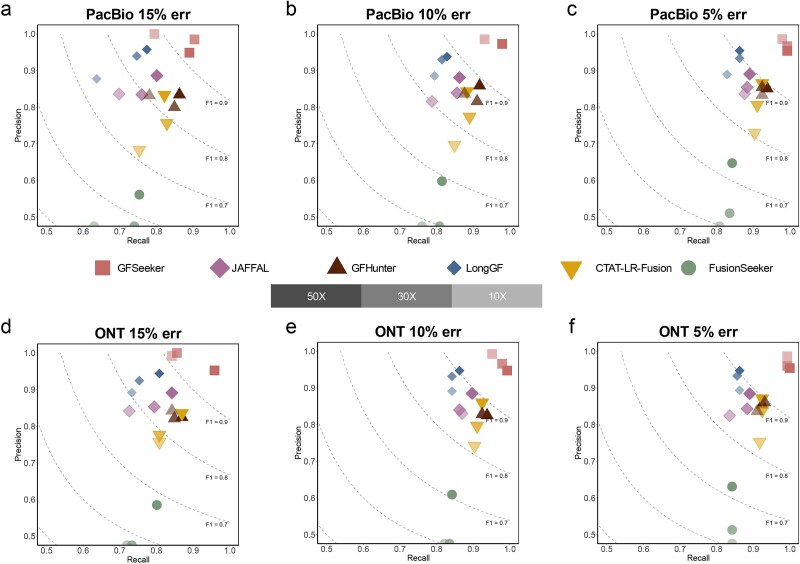 Figure 2
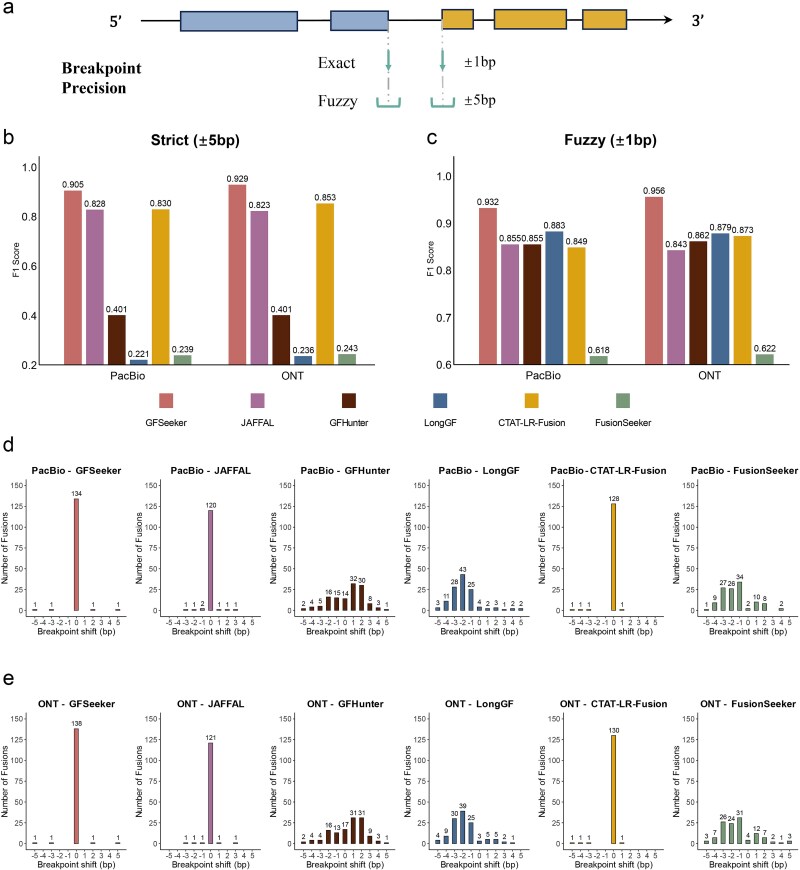 Figure 3
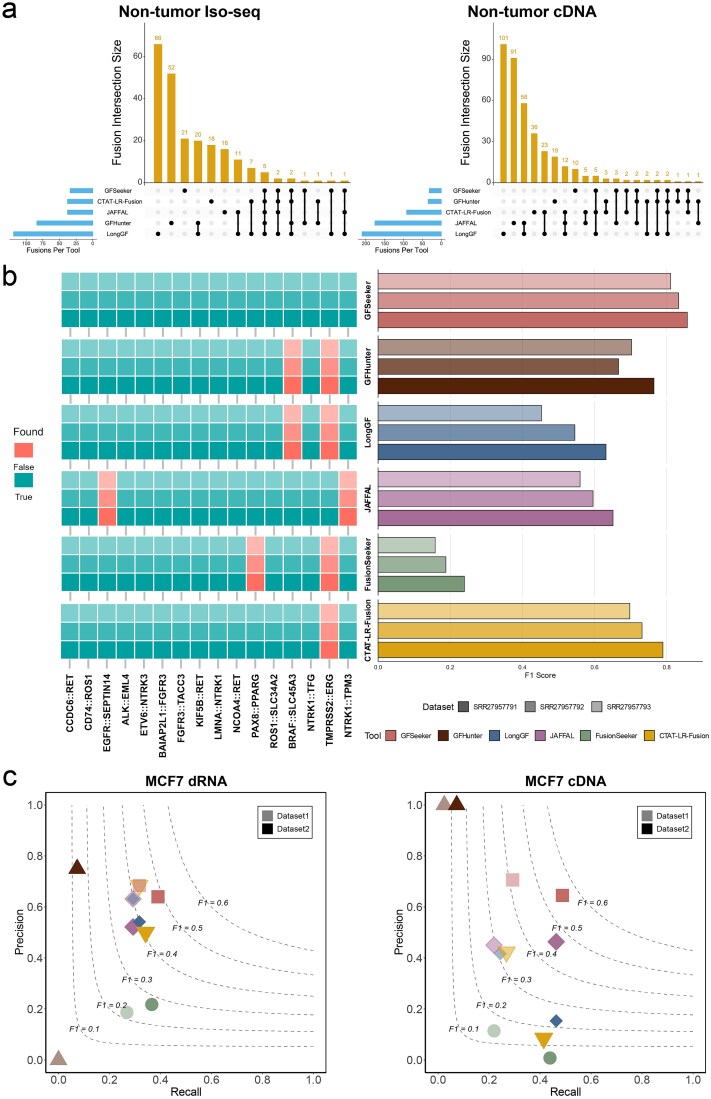 Figure 4
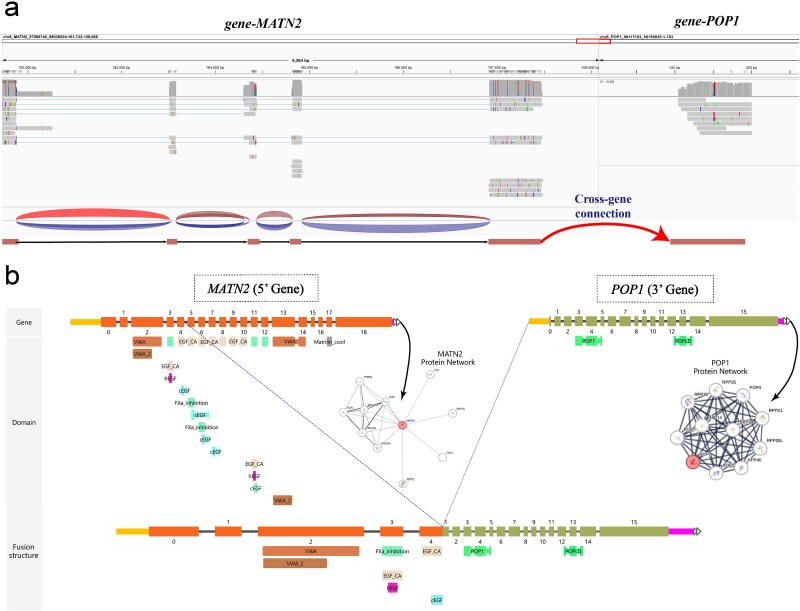 Figure 5
Peer Reviews
No public reviews on file for this paper yet. If you reviewed it on a platform where reviews are public (OpenReview, ICLR, NeurIPS, ICML), you can paste yours below so the community can read it here.
Videos
No videos yet. Explain this paper in a talk, walkthrough, or lecture? Add one.
Taxonomy
TopicsMachine Learning in Bioinformatics · RNA Research and Splicing · Bioinformatics and Genomic Networks