Longitudinal tau‐PET accumulation and downstream effects in amyloid‐beta negative cognitively unimpaired individuals
Anika Wuestefeld, Nicola Spotorno, Alexa Pichet Binette, Niklas Mattsson‐Carlgren, Rik Ossenkoppele, Sebastian Palmqvist, Ruben Smith, Erik Stomrud, Olof Strandberg, Danielle van Westen, Oskar Hansson, Laura E.M. Wisse

TL;DR
Some people without amyloid-beta and cognitive issues show tau accumulation in the brain, linked to brain atrophy but not cognitive decline.
Contribution
Identifies a subgroup of amyloid-beta-negative cognitively unimpaired individuals with longitudinal tau accumulation and its associations.
Findings
16% of participants were identified as tau-accumulators with greater baseline tau-PET and accumulation in non-Braak regions.
Tau accumulation was associated with increased age, more atrophy in BA35, and higher CSF Aβ42/40 and MTBR-tau243/Aβ40 ratios.
No significant cognitive decline was observed in tau-accumulators despite focal atrophy and baseline cognitive differences.
Abstract
Previous studies, including ours (Wuestefeld et al., Brain, 2023), showed tau positron emission tomography (PET) uptake in medial temporal and neocortical regions of amyloid‐beta (Aβ)‐negative cognitively unimpaired (CU) individuals, associated with neurodegeneration and worse memory performance. To further understand if tau‐PET uptake is clinically relevant in this population, we characterized Aβ‐negative CU individuals with higher longitudinal tau‐PET accumulation and its associations with atrophy and cognitive decline. We included 333 CU BioFINDER‐2 participants, negative for both global [18F]flutemetamol Aβ‐PET and cerebrospinal fluid (CSF) Aβ42/Aβ40 (age=63.8, 55% female, 2.28±1.36 years follow‐up). Using linear mixed‐effects models, we calculated the rate of change (ROC) in [18F]RO948 tau‐PET SUVR in composite regions of interest (ROI), recapitulating the Braak stages.…
Genes, proteins, chemicals, diseases, species, mutations and cell lines named across the full text — each resolved to its canonical identifier and authoritative record.
Click any figure to enlarge with its caption.
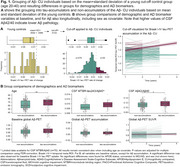 Figure 1
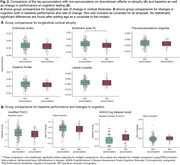 Figure 2
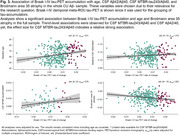 Figure 3
Peer Reviews
No public reviews on file for this paper yet. If you reviewed it on a platform where reviews are public (OpenReview, ICLR, NeurIPS, ICML), you can paste yours below so the community can read it here.
Videos
No videos yet. Explain this paper in a talk, walkthrough, or lecture? Add one.
Taxonomy
TopicsDementia and Cognitive Impairment Research · Alzheimer's disease research and treatments · Neurobiology of Language and Bilingualism