Characterization of individuals fulfilling clinical criteria for limbic‐predominant age‐related TDP43 encephalopathy (LATE) in a tertiary memory clinic
Colin Groot, Ismael Luis Calandri, Ilse Bader, Diana I. Bocancea, Hannah de Bruin, Maria Carrigan, Suzie Kamps, Lotte A. de Koning, Sophie E. Mastenbroek, Roos M. Rikken, Bastiaan G J van Tol, Marie R. Vermeiren, Alex J. Wesseling, Ye Xia, Charlotte E. Teunissen

TL;DR
This study applies new criteria to identify LATE in dementia patients, showing distinct cognitive and brain atrophy patterns compared to Alzheimer's disease.
Contribution
The study validates new clinical criteria for LATE and demonstrates distinct clinical and biological trajectories compared to Alzheimer's disease.
Findings
Probable LATE showed slower cognitive decline and lower mortality rates compared to Alzheimer's disease.
Probable LATE had lower hippocampal volumes and slower whole-brain atrophy compared to Alzheimer's disease.
Possible LATE-AD showed faster cognitive decline and higher mortality rates compared to Alzheimer's disease.
Abstract
Limbic‐predominant age‐related TDP‐43 encephalopathy (LATE) clinically mimics and often co‐occurs with Alzheimer's disease (AD). Expert consensus criteria have been proposed for the LATE clinical diagnosis, integrating clinical and radiological features, and AD biomarkers. Here, we applied the newly proposed criteria in a tertiary memory clinic population. We included participants from the Amsterdam Dementia Cohort aged >50 years who received a diagnosis of MCI or dementia between 1997‐2024. Following the LATE consensus criteria scheme (Figure 1), we categorized participants as “Probable LATE”, “Possible LATE” or “Possible LATE‐AD” (i.e. LATE clinical and radiological profile with AD biomarker profile). Participants not fulfilling criteria for LATE but fulfilling NIA‐AA criteria for AD were categorized as AD. We compared the LATE groups with AD on cognitive decline (N = 1046, N Mean…
Genes, proteins, chemicals, diseases, species, mutations and cell lines named across the full text — each resolved to its canonical identifier and authoritative record.
Click any figure to enlarge with its caption.
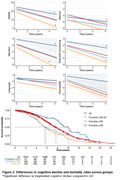 Figure 1
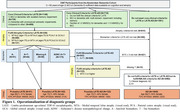 Figure 2
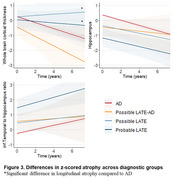 Figure 3
Peer Reviews
No public reviews on file for this paper yet. If you reviewed it on a platform where reviews are public (OpenReview, ICLR, NeurIPS, ICML), you can paste yours below so the community can read it here.
Videos
No videos yet. Explain this paper in a talk, walkthrough, or lecture? Add one.
Taxonomy
TopicsAmyotrophic Lateral Sclerosis Research · Dementia and Cognitive Impairment Research · Alzheimer's disease research and treatments