Characterising real‐world macro walking outcomes of people with Posterior Cortical Atrophy using accelerometery: Feasibility and preliminary comparison with Alzheimer's and Lewy body disease
Ríona Mc Ardle, Cameron Kirk, Silvia Del Din, Yuhan Bai, Diego Kaski, Jonathan D. Rohrer, Brook Galna, Alan J Thomas, Lynn Rochester, Matthew J Bancroft, Keir X X Yong

TL;DR
This study shows that real-world walking assessments using accelerometers are feasible for people with PCA and suggests their walking patterns are more similar to Alzheimer's than to Lewy body disease.
Contribution
The study introduces the first real-world accelerometry-based assessment of macro walking outcomes in PCA and compares it with AD and LBD.
Findings
PCA participants walked faster and spent more time walking than LBD participants.
PCA walking patterns were more similar to AD than LBD in real-world settings.
Real-world accelerometry was feasible for PCA participants over seven days.
Abstract
Posterior cortical atrophy (PCA) is a dementia subgroup commonly misdiagnosed due to unusual presentation and limited clinical awareness. Previously, the GaitDem study provided proof‐of‐concept for the use of accelerometery‐based walking assessment in clinical and real‐world settings in supporting differentiation Lewy body disease (LBD) and Alzheimer's disease (AD). Real‐world walking assessment also provides insights into the impact of disease on everyday behaviours. Here, we aimed to assess the feasibility of accelerometery‐based real‐world walking assessment of PCA and describe differences between PCA and more prevalent neurodegenerative dementia syndromes, AD and LBD. Fourteen participants with PCA (Age: 71 years(56‐78); 57% female) wore an accelerometer (AX6, Axivity) affixed to their lower back for up to seven days. Using validated algorithms, real‐world walking outcomes were…
Genes, proteins, chemicals, diseases, species, mutations and cell lines named across the full text — each resolved to its canonical identifier and authoritative record.
Click any figure to enlarge with its caption.
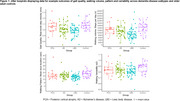 Figure 1
Peer Reviews
No public reviews on file for this paper yet. If you reviewed it on a platform where reviews are public (OpenReview, ICLR, NeurIPS, ICML), you can paste yours below so the community can read it here.
Videos
No videos yet. Explain this paper in a talk, walkthrough, or lecture? Add one.
Taxonomy
TopicsBalance, Gait, and Falls Prevention · Dementia and Cognitive Impairment Research · Stroke Rehabilitation and Recovery