[18F]RO948 Tau PET Imaging in Early and Late‐Onset Alzheimer's Disease: Regional Evolution and Correlations with Plasma Biomarkers
Mariola Zapater‐Fajari, Marco Bucci, Konstantinos Chiotis, Anders Wall, Jonas Eriksson, Gunnar Antoni, Ilaria Pola, Kübra TAN, Wiebke Traichel, Andrea Benedet, Nicholas Ashton, Kaj Blennow, Henrik Zetterberg, Nenad Bogdanovic, Agneta K Nordberg

TL;DR
This study uses [18F]RO948 PET imaging to track tau buildup in Alzheimer's patients, finding differences in brain regions affected in early and late-onset disease and correlations with blood biomarkers.
Contribution
The study reveals distinct regional tau deposition patterns in early and late-onset Alzheimer's and shows plasma p-Tau217 correlates strongly with PET imaging findings.
Findings
EOAD and LOAD patients showed higher [18F]RO948 uptake in medial temporal regions compared to controls.
EOAD dementia patients had broader cortical involvement compared to LOAD dementia patients.
Plasma p-Tau217 levels correlated more strongly with PET uptake than other plasma biomarkers.
Abstract
Using [18F]RO948 as a tau PET ligand, we assessed tau deposition in a cohort of memory clinic patients and cognitively unimpaired controls. Regional tau binding was then compared to levels of plasma p‐Tau217, p‐Tau181, p‐Tau231 biomarkers. Thirty‐seven patients from the Memory Clinic at Karolinska University Hospital Huddinge were evaluated: 27 patients with biomarker confirmed AD (CSF A+) at clinical stage of MCI (n = 14) or dementia (n = 13). Thirteen cases qualified for an early onset disease (EOAD) and fourteen for late onset (LOAD), and 10 cognitively normal (CN) participants. On the same day, participants underwent [18F]RO948 tau PET imaging, magnetic resonance imaging (MRI), and blood sampling for plasma biomarker analysis using the NuLISAseq (Alamarbio) CNS panel. EOAD and LOAD patients, whether MCI or dementia, showed significantly higher [18F]RO948 uptake in the entorhinal…
Genes, proteins, chemicals, diseases, species, mutations and cell lines named across the full text — each resolved to its canonical identifier and authoritative record.
Click any figure to enlarge with its caption.
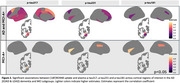 Figure 1
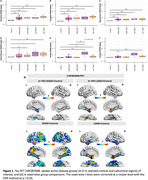 Figure 2
Peer Reviews
No public reviews on file for this paper yet. If you reviewed it on a platform where reviews are public (OpenReview, ICLR, NeurIPS, ICML), you can paste yours below so the community can read it here.
Videos
No videos yet. Explain this paper in a talk, walkthrough, or lecture? Add one.
Taxonomy
TopicsDementia and Cognitive Impairment Research · Alzheimer's disease research and treatments · Schizophrenia research and treatment