Telomere Dynamics Influenced by Sleep, Sleep Variability and Circadian Rhythms in Older Adults With and Without Alzheimer's Risk
Asrar Lehodey, Blandine Montagne, Stéphane Rehel, Perla Kaliman, Anne Chocat, Florence Mézenge, Brigitte Landeau, Denis Vivien, Vincent De la Sayette, Gael Chételat, Géraldine Rauchs, Géraldine Poisnel

TL;DR
This study shows that poor sleep and irregular sleep patterns may speed up cellular aging, as seen in telomere shortening, in older adults with and without Alzheimer's risk.
Contribution
The study is the first to link sleep variability and circadian rhythms to changes in telomere dynamics, including %CST, in older adults with and without Alzheimer's risk.
Findings
Poor sleep quality and higher sleep variability predicted an increase in the percentage of critically short telomeres.
Greater regularity in sleep/wake patterns was associated with telomere shortening and increased %CST.
In Aβ-positive individuals, longer REM sleep latency predicted telomere shortening and increased %CST.
Abstract
Sleep and circadian rhythms disturbances have been linked to cognitive decline and an increased risk of Alzheimer's disease (AD). These disruptions are also closely associated with biological aging processes. Telomere shortening, a key marker of cellular aging, has been implicated in various age‐related diseases, including AD. Although sleep disturbances have been linked to shorter telomere length (TL), the effects of sleep, its variability, and circadian rhythms on telomere dynamics—particularly the percentage of critically short telomeres (%CST), which would be a more specific marker of brain aging and vulnerability to AD—remains unknown. Furthermore, the interplay between these factors and AD risk has yet to be investigated in healthy older adults. Data from 124 healthy older adults (mean age ± SD: 69.27 ± 3.73y) from the Age‐Well interventional trial (NCT02977819) were analyzed.…
Genes, proteins, chemicals, diseases, species, mutations and cell lines named across the full text — each resolved to its canonical identifier and authoritative record.
Click any figure to enlarge with its caption.
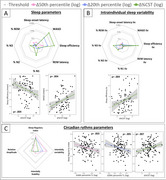 Figure 1
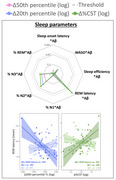 Figure 2
Peer Reviews
No public reviews on file for this paper yet. If you reviewed it on a platform where reviews are public (OpenReview, ICLR, NeurIPS, ICML), you can paste yours below so the community can read it here.
Videos
No videos yet. Explain this paper in a talk, walkthrough, or lecture? Add one.
Taxonomy
TopicsTelomeres, Telomerase, and Senescence · Circadian rhythm and melatonin · Menopause: Health Impacts and Treatments