Adherence to Accelerometer Use in Older Adults Undergoing mHealth Cardiac Rehabilitation: Secondary Analysis of a Randomized Clinical Trial
Souptik Barua, Dhairya Upadhyay, Stephanie Pena, Riley McConnell, Ashwini Varghese, Samrachana Adhikari, Erik LeRoy, Antoinette Schoenthaler, John A Dodson

TL;DR
This study explores how consistent use of wearable accelerometers during cardiac rehab in older adults relates to improvements in physical function.
Contribution
The study introduces an AI clustering framework to identify distinct adherence patterns to accelerometer use in mHealth cardiac rehabilitation.
Findings
Higher adherence to accelerometer use was associated with greater improvements in 6-minute walk distance.
AI clustering revealed distinct behavioral phenotypes of adherence, with consistently high adherence linked to better functional outcomes.
The high-resolution clustering identified richer adherence patterns and a stronger association with physical activity levels.
Abstract
Wearable accelerometers, which continuously record physical activity metrics, are commonly used in mobile health–enabled cardiac rehabilitation (mHealth-CR). The association between adherence to accelerometer use during mHealth-CR and improvement in clinical outcomes, such as functional capacity, is understudied. The emergence of artificial intelligence (AI) technology provides novel opportunities to investigate accelerometry use patterns in relation to mHealth-CR outcomes. In this study, we sought to use an AI clustering framework to identify distinct behavioral phenotypes of adherence to accelerometer use. We then aimed to quantify the association of these adherence phenotypes with functional capacity improvements in older adults undergoing mHealth-CR. We analyzed data from the RESILIENT (Rehabilitation at Home Using Mobile Health in Older Adults After Hospitalization for Ischemic…
Genes, proteins, chemicals, diseases, species, mutations and cell lines named across the full text — each resolved to its canonical identifier and authoritative record.
Click any figure to enlarge with its caption.
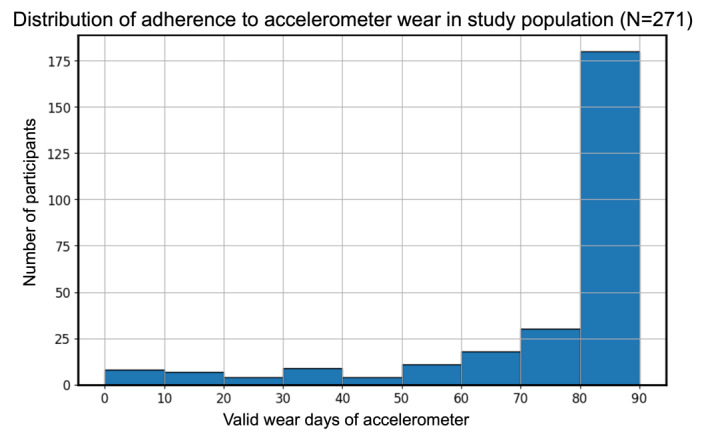 Figure 1
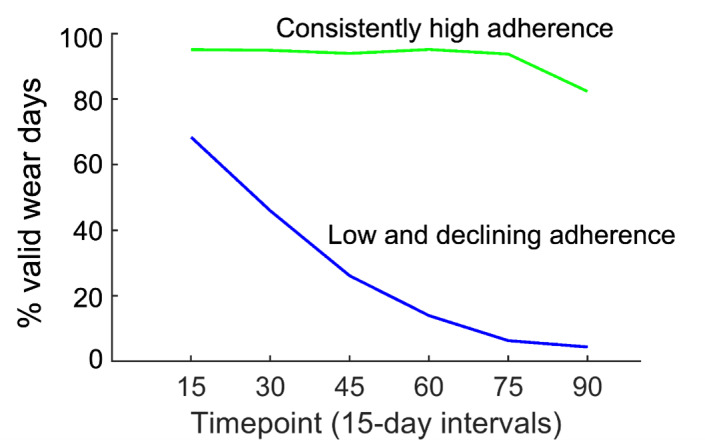 Figure 2
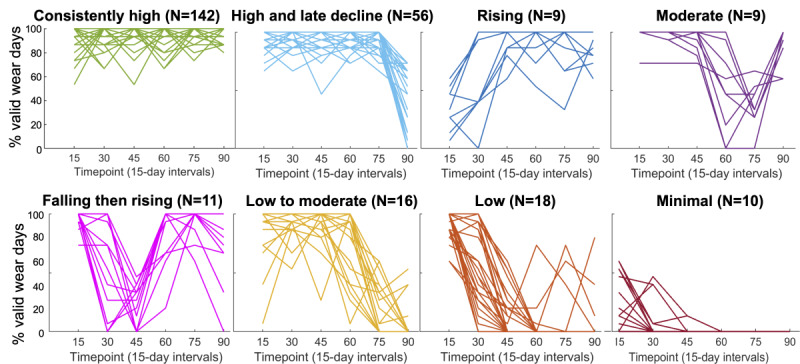 Figure 3
Peer Reviews
No public reviews on file for this paper yet. If you reviewed it on a platform where reviews are public (OpenReview, ICLR, NeurIPS, ICML), you can paste yours below so the community can read it here.
Videos
No videos yet. Explain this paper in a talk, walkthrough, or lecture? Add one.
Taxonomy
TopicsCardiac Health and Mental Health · Physical Activity and Health · Mobile Health and mHealth Applications