Population pharmacokinetics and optimized dosing of piperacillin-tazobactam in hematological patients with febrile neutropenia
Julia Laporte-Amargos, Marta Ulldemolins, María Patricia Hernández-Mitre, Jason A. Roberts, Raul Rigo-Bonnin, Francisco Carmona-Torre, Maria Huguet, Pedro Puerta-Alcalde, Montserrat Arnan, Jose Luis del Pozo, Anna Torrent, Carolina García-Vidal, Anna Sureda, Alba Bergas

TL;DR
This study finds that extended or continuous infusions of piperacillin-tazobactam are more effective for treating febrile neutropenia in patients with certain kidney function or resistant bacteria.
Contribution
The study provides optimized dosing recommendations for piperacillin-tazobactam in hematological patients with febrile neutropenia based on pharmacokinetic analysis and simulations.
Findings
Extended or continuous infusions of piperacillin-tazobactam outperformed short infusions in achieving target drug concentrations.
Higher creatinine clearance and infections with less susceptible bacteria required continuous infusions of 12–16 g/day to maintain efficacy.
Optimized dosing strategies are recommended for patients with higher kidney function or suspected resistant pathogens like Pseudomonas aeruginosa.
Abstract
Hematological patients with febrile neutropenia receiving piperacillin-tazobactam may experience pharmacokinetic alterations that compromise drug exposure. We aimed to characterize the population pharmacokinetics of piperacillin in plasma and provide optimized dosing recommendations for this patient population. A population pharmacokinetic analysis was conducted in patients who received piperacillin-tazobactam as part of the BEATLE study, which compared the efficacy, safety, and pharmacokinetic/pharmacodynamic target attainment of β-lactams administered in extended infusion versus short 30 min infusion in adult hematological patients with febrile neutropenia. Monte Carlo simulations were performed to evaluate, for each dosing regimen, the probability of attaining (i) an efficacy target of unbound piperacillin concentrations above the minimum inhibitory concentration (MIC) of the…
Genes, proteins, chemicals, diseases, species, mutations and cell lines named across the full text — each resolved to its canonical identifier and authoritative record.
Click any figure to enlarge with its caption.
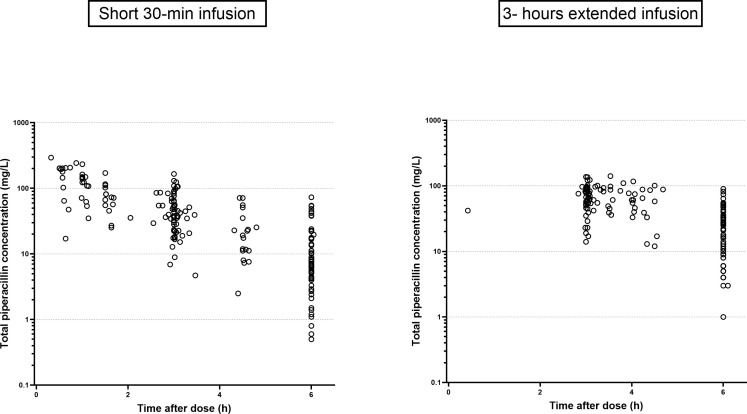 Figure 1
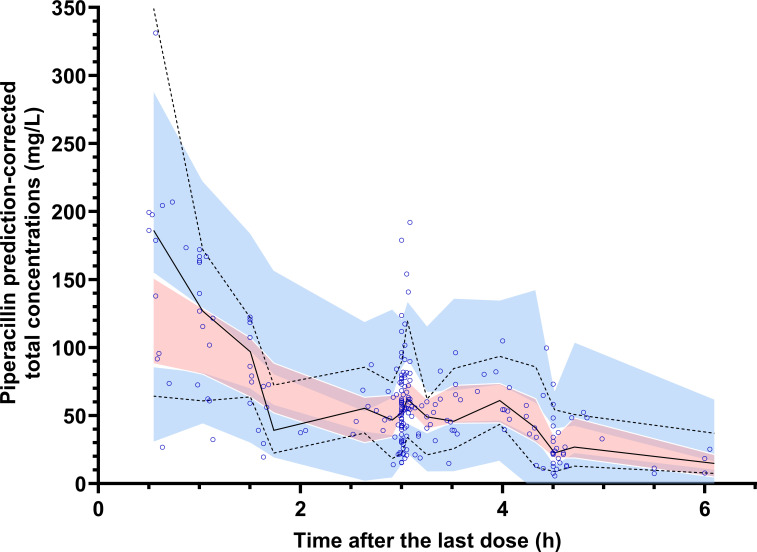 Figure 2
 Figure 3
Peer Reviews
No public reviews on file for this paper yet. If you reviewed it on a platform where reviews are public (OpenReview, ICLR, NeurIPS, ICML), you can paste yours below so the community can read it here.
Videos
No videos yet. Explain this paper in a talk, walkthrough, or lecture? Add one.
Taxonomy
TopicsNeutropenia and Cancer Infections · Antibiotics Pharmacokinetics and Efficacy · Blood disorders and treatments