Predicting prolonged dalbavancin exposure using machine learning: a validated strategy for individualized redosing
Hamza Sayadi, Matthieu Gregoire, Yeleen Fromage, Mohamed Ksentini, Marc Labriffe, Caroline Monchaud, Cyrielle Codde, Jean-François Faucher, David Boutoille, Pierre Marquet, Jean-Baptiste Woillard

TL;DR
This paper presents a machine learning approach to predict if dalbavancin dosing needs adjustment, improving personalized treatment for infections.
Contribution
A validated machine learning model for individualized redosing decisions using minimal clinical data.
Findings
Support vector machine models achieved over 88% accuracy and 90% sensitivity in predicting dalbavancin exposure.
ML predictions outperformed Bayesian estimation in accuracy and sensitivity, especially reducing false negatives.
The model remained reliable through week 8, the clinically relevant exposure period.
Abstract
Dalbavancin is a long-acting lipoglycopeptide increasingly used off-label for complex Gram-positive infections requiring prolonged therapy. Its extended half-life enables simplified regimens, but interindividual pharmacokinetic variability and pathogen MIC heterogeneity complicate dosing. We developed and externally validated machine learning (ML) models to predict whether dalbavancin plasma concentrations remain above predefined pharmacokinetic/pharmacodynamic targets after two standard 1,500 mg doses (day 1/day 8 or day 1/day 15). Predictions were binary (adequate vs subtherapeutic concentration), directly reflecting the clinical decision to readminister a 1,500 mg dose. Models were trained on simulated PK profiles from a published population PK (popPK) model and evaluated in three independent settings: (i) simulated validation data sets from two alternative published popPK models,…
Genes, proteins, chemicals, diseases, species, mutations and cell lines named across the full text — each resolved to its canonical identifier and authoritative record.
Click any figure to enlarge with its caption.
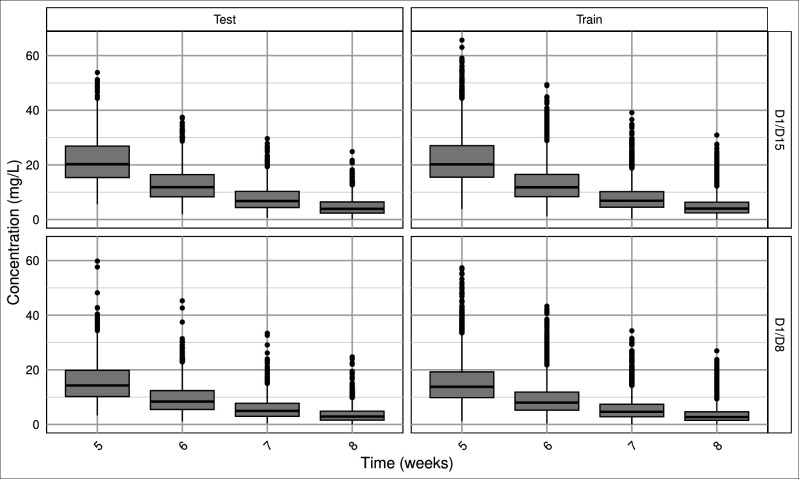 Figure 1
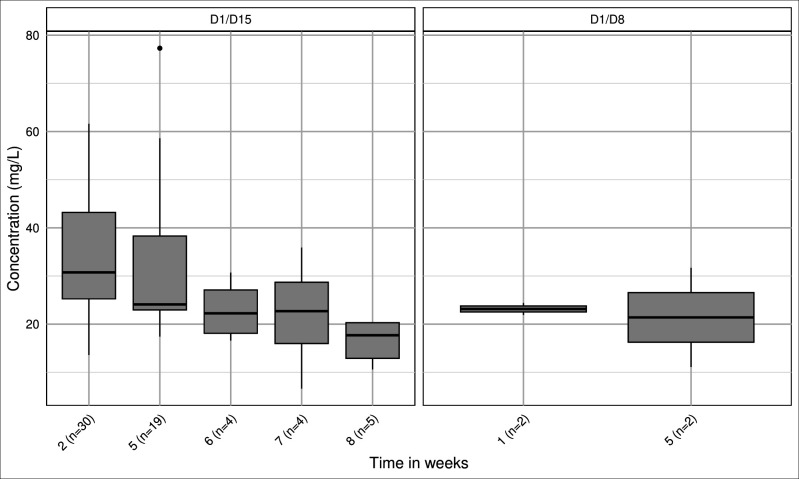 Figure 2
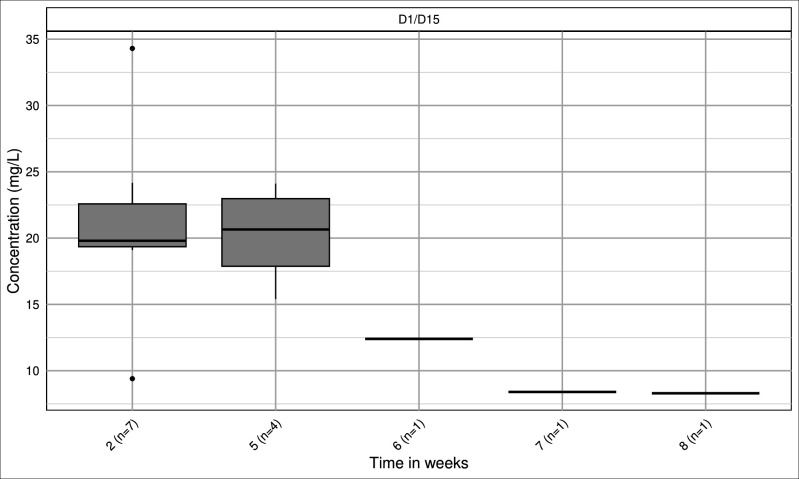 Figure 3
Peer Reviews
No public reviews on file for this paper yet. If you reviewed it on a platform where reviews are public (OpenReview, ICLR, NeurIPS, ICML), you can paste yours below so the community can read it here.
Videos
No videos yet. Explain this paper in a talk, walkthrough, or lecture? Add one.
Taxonomy
TopicsAntimicrobial Resistance in Staphylococcus · Antibiotics Pharmacokinetics and Efficacy · Pneumonia and Respiratory Infections