The heme A synthase Cox15, as a target of redox-active 3-benzylmenadiones with antiparasitic activity
Marcelo L. Merli, Claudia Serot, Cindy Vallières, Julia A. Cricco, Bogdan I. Iorga, Elisabeth Davioud-Charvet, Brigitte Meunier

TL;DR
This paper identifies Cox15 as a new drug target for treating Chagas disease by studying how cruzidione, a potent compound, affects the parasite and yeast models.
Contribution
The study reveals Cox15 as a novel antiparasitic drug target through the mode of action of cruzidione.
Findings
Cruzidione's primary target is the heme A synthase Cox15, as shown by yeast sensitivity and enzyme loss.
Cruzidione reduces heme content in T. cruzi, likely by inhibiting heme A synthase.
NADH-dehydrogenase is involved in cruzidione bioactivation, similar to its role with plasmodione.
Abstract
Chagas disease, caused by Trypanosoma cruzi, is a neglected parasitic infection. The very limited arsenal of anti-T. cruzi treatments calls for the development of new drugs. Recently, a library of 3-benzylmenadione derivatives was synthesized, with cruzidione being the most efficient and specific compound against the parasite. To decipher its mode of action, we used the yeast Saccharomyces cerevisiae as a model. Evidence pinpointed at the heme A synthase Cox15 as a primary target of cruzidione: (i) a mutation in Cox15 (i.e., S429F) renders the yeast cells highly sensitive to the drug, (ii) treatment with cruzidione led to the loss of cytochrome c oxidase, an enzyme that relies on heme A as an essential cofactor, and (iii) replacement of the yeast Cox15 by T. cruzi enzyme resulted in a high sensitivity to cruzidione. We then investigated the effect of cruzidione in T. cruzi and observed…
Genes, proteins, chemicals, diseases, species, mutations and cell lines named across the full text — each resolved to its canonical identifier and authoritative record.
Click any figure to enlarge with its caption.
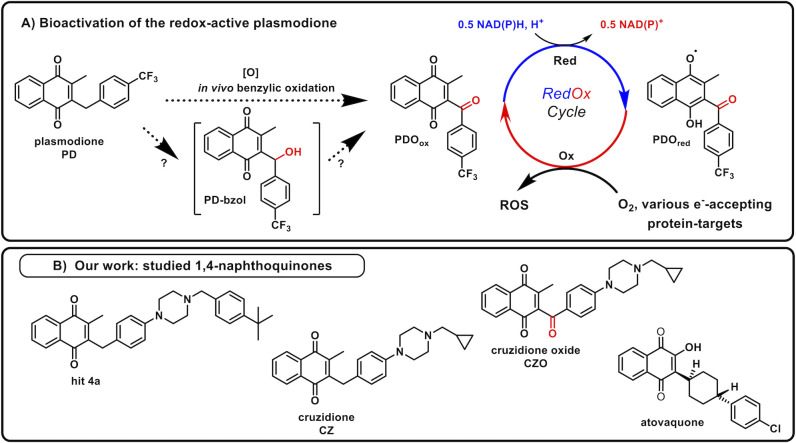 Figure 1
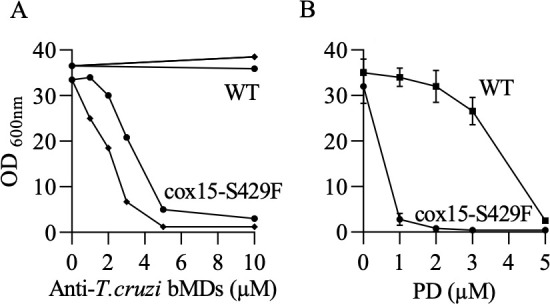 Figure 2
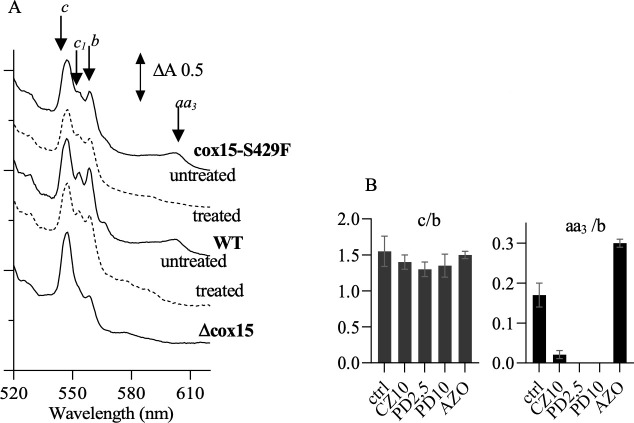 Figure 3
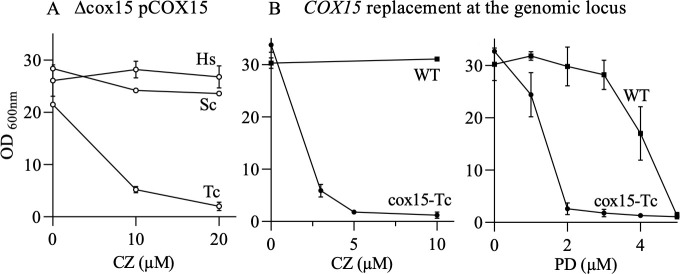 Figure 4
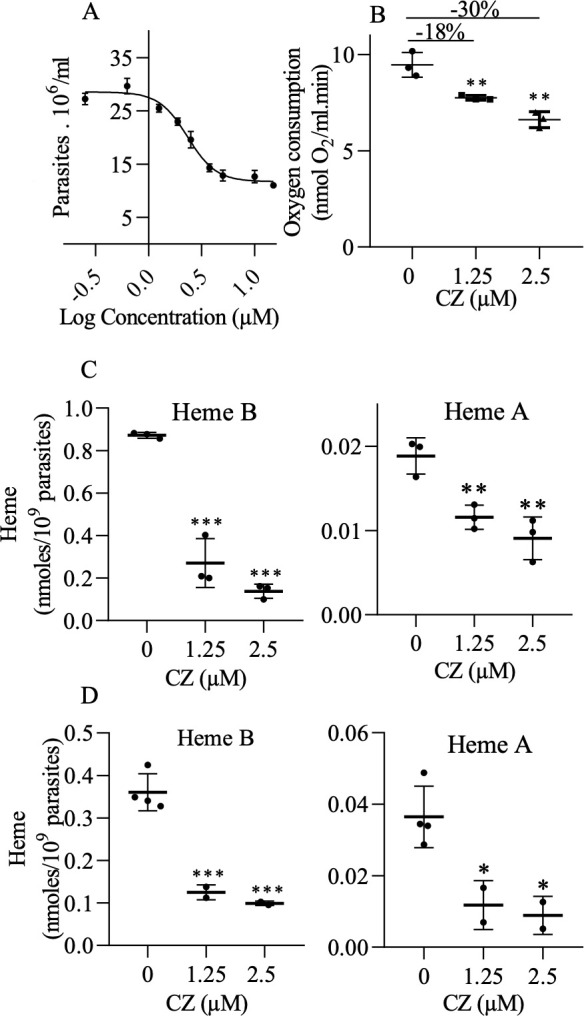 Figure 5
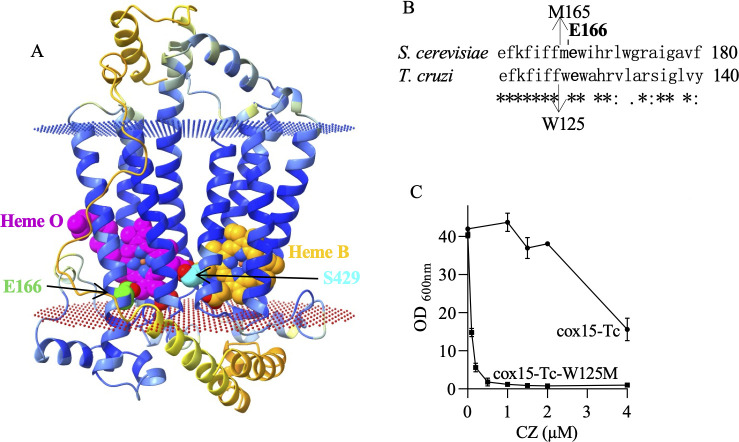 Figure 6
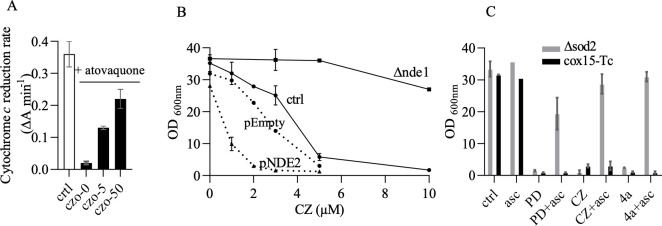 Figure 7
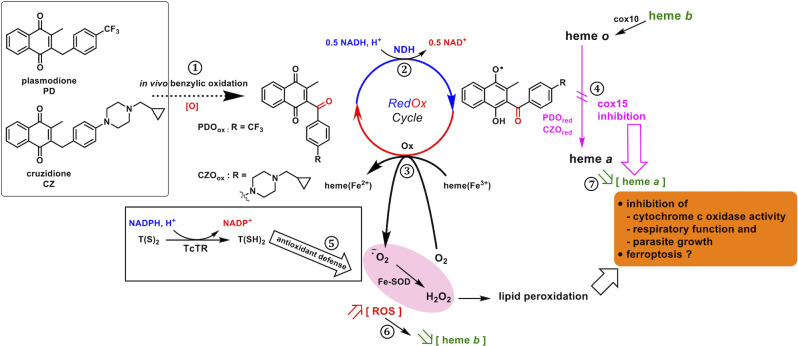 Figure 8
Peer Reviews
No public reviews on file for this paper yet. If you reviewed it on a platform where reviews are public (OpenReview, ICLR, NeurIPS, ICML), you can paste yours below so the community can read it here.
Videos
No videos yet. Explain this paper in a talk, walkthrough, or lecture? Add one.
Taxonomy
TopicsTrypanosoma species research and implications · Malaria Research and Control · Metal-Catalyzed Oxygenation Mechanisms