Synergistic activity of rifampicin and polymyxin B against intracellular Gram-negative ESKAPE pathogens involves bacterial membrane alterations and enhanced oxidative damages
Vallo Varik, Gang Wang, George Kritikos, Manuel Banzhaf, Emilien Drouot, Alexandra Koumoutsi, Françoise Van Bambeke

TL;DR
Combining rifampicin and polymyxin B effectively targets intracellular antibiotic-resistant Gram-negative bacteria by damaging their membranes and increasing oxidative stress.
Contribution
The study reveals the molecular mechanisms behind the synergy of rifampicin and polymyxin B against intracellular Gram-negative ESKAPE pathogens.
Findings
The combination of rifampicin and polymyxin B was synergistic against intracellular and extracellular forms of P. aeruginosa, A. baumannii, E. coli, and K. pneumoniae.
The synergy was enhanced in acidic environments similar to host vacuoles where intracellular bacteria reside.
P. aeruginosa mutants with altered membranes and increased oxidative damage were more susceptible to the drug combination.
Abstract
Antibiotic-resistant bacteria, particularly the ESKAPE (Enterococcus faecium, Staphylococcus aureus, Klebsiella pneumoniae, Acinetobacter baumannii, Pseudomonas aeruginosa, and Enterobacter spp.) pathogens, pose a major public health threat. Their ability to reside inside cells contributes to their persistence and resistance. Combining rifampicin with polymyxins is a much-discussed approach against multidrug-resistant Gram-negative bacterial infections. We therefore evaluated a combination of polymyxin B and rifampicin against Gram-negative clinical isolates in extracellular and intracellular in vitro models of infection. The combination was synergistic against intra- and extra-cellular forms of P. aeruginosa, A. baumannii, E. coli, and K. pneumoniae. This synergy was enhanced in an acidic environment resembling the host vacuole where intracellular bacteria reside. The combination…
Genes, proteins, chemicals, diseases, species, mutations and cell lines named across the full text — each resolved to its canonical identifier and authoritative record.
Click any figure to enlarge with its caption.
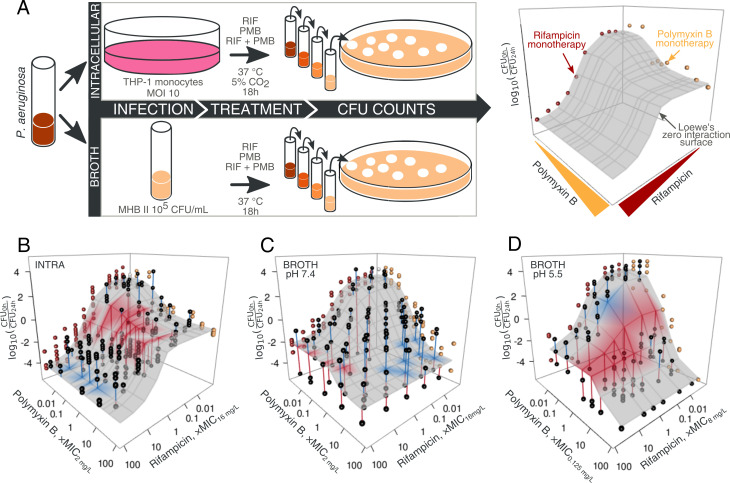 Figure 1
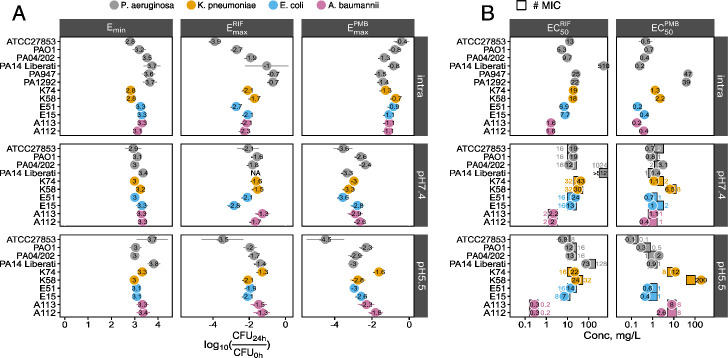 Figure 2
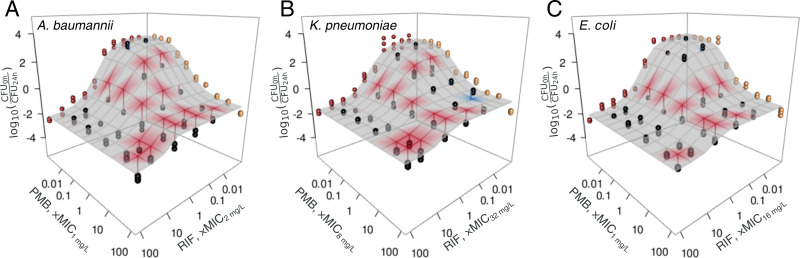 Figure 3
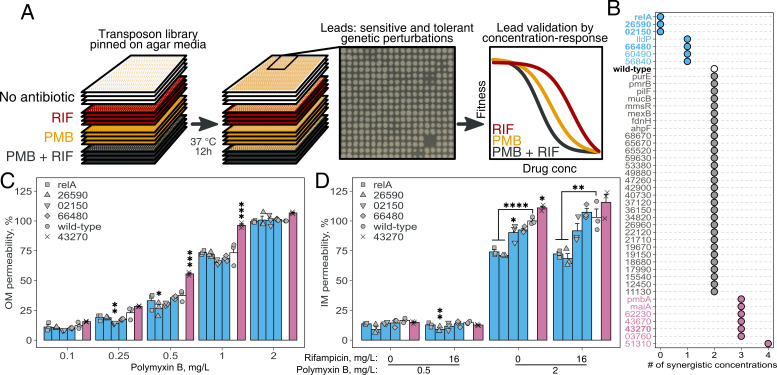 Figure 4
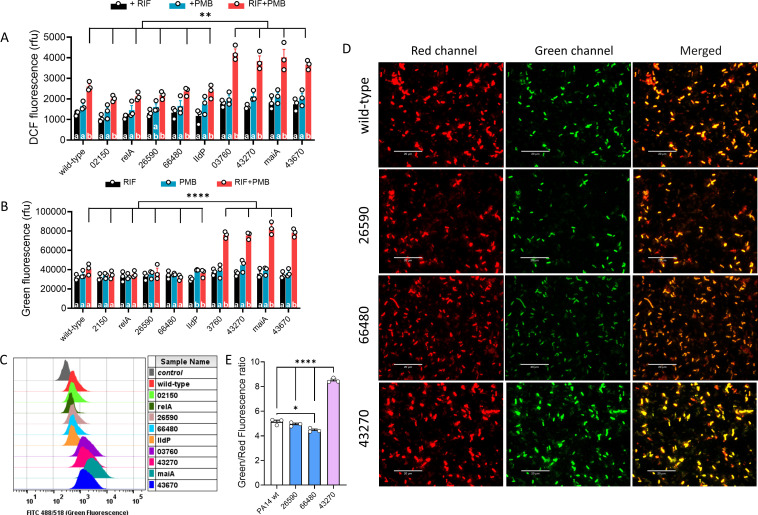 Figure 5
 Figure 6
 Figure 7
Peer Reviews
No public reviews on file for this paper yet. If you reviewed it on a platform where reviews are public (OpenReview, ICLR, NeurIPS, ICML), you can paste yours below so the community can read it here.
Videos
No videos yet. Explain this paper in a talk, walkthrough, or lecture? Add one.
Taxonomy
TopicsAntibiotic Resistance in Bacteria · Immune Response and Inflammation · Bacterial Genetics and Biotechnology