Impact of Pseudomonas aeruginosa biofilm exopolysaccharide composition on bacteriophage and bacteriophage-antibiotic combination activity
Sean R. Van Helden, Callan R. Bleick, Dana J. Holger, Amer El Ghali, Jose Alexander, Keith S. Kaye, Steven H. Marshall, Laura J. Rojas, Robert A. Bonomo, Susan M. Lehman, Michael J. Rybak

TL;DR
This study explores how the composition of Pseudomonas aeruginosa biofilm affects the effectiveness of bacteriophage and antibiotic treatments.
Contribution
The study identifies how different biofilm phenotypes influence the antibiofilm activity of specific phages and phage-antibiotic combinations.
Findings
A triple-phage cocktail combined with ciprofloxacin was more effective in eradicating biofilms than either treatment alone.
Phage 109 showed strong antibiofilm activity against both P. aeruginosa strains regardless of their biofilm phenotype.
Phage activity varied depending on the biofilm phenotype of the P. aeruginosa strains.
Abstract
Multidrug-resistant Pseudomonas aeruginosa is a leading cause of hospital-acquired infections, including medical device infections, partially due to the organism’s ability to produce biofilm on prosthetic material. Increased antibiotic tolerance of bacteria within biofilm, along with the increasing prevalence of infections caused by multidrug-resistant P. aeruginosa, including extensively drug-resistant phenotypes, results in scenarios where conventional antibiotics may fail to effectively treat these infections. Bacteriophage (phage) therapy is a promising alternative to conventional antimicrobial therapy that can provide potent antibiofilm activity, particularly when combined with antibiotics. The impact of P. aeruginosa biofilm phenotype on the efficacy of phage-antibiotic combinations remains unclear. We characterized the biofilms of a panel of 10 clinical and two laboratory P.…
Genes, proteins, chemicals, diseases, species, mutations and cell lines named across the full text — each resolved to its canonical identifier and authoritative record.
Click any figure to enlarge with its caption.
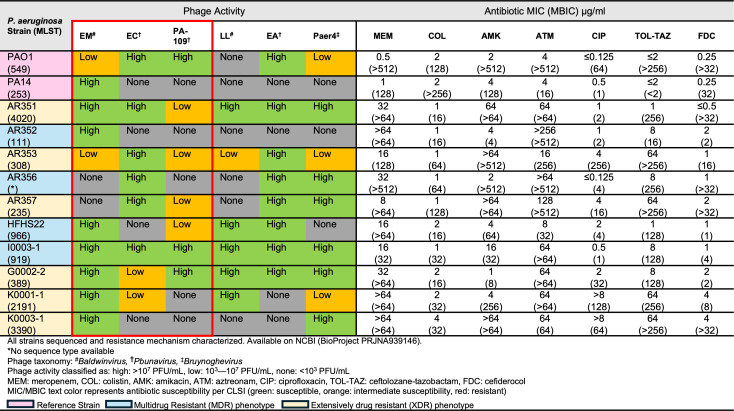 Figure 1
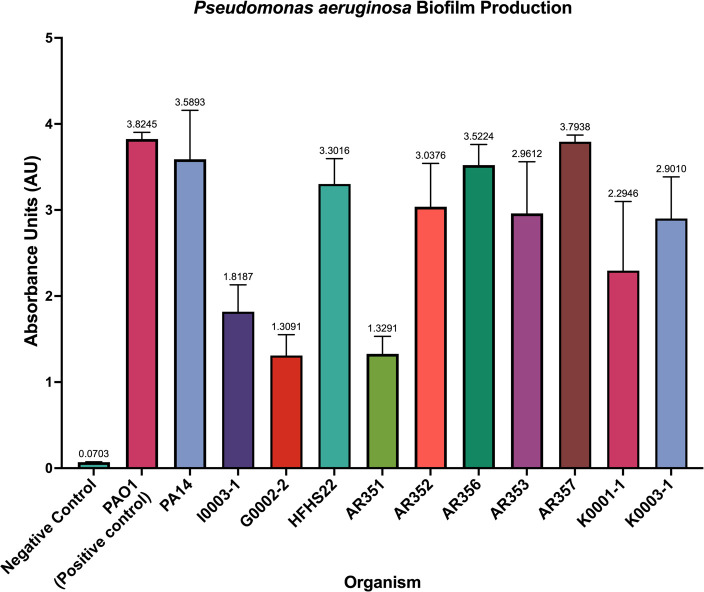 Figure 2
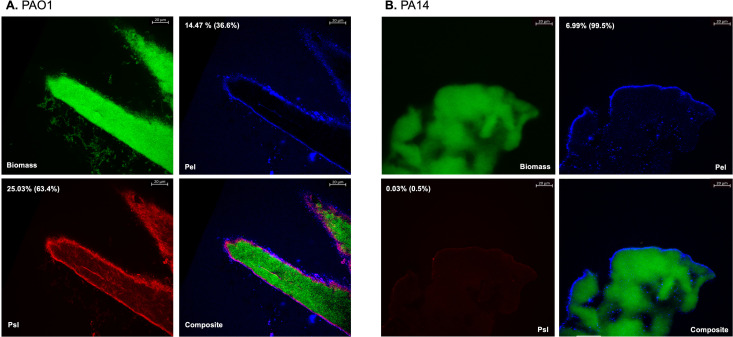 Figure 3
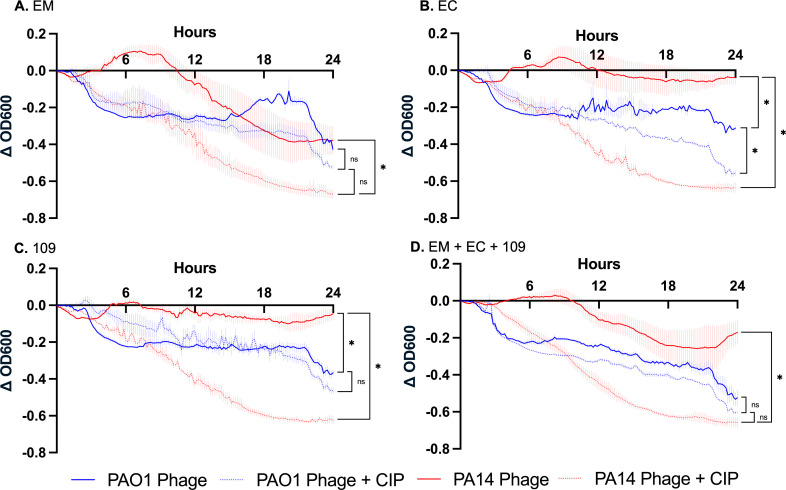 Figure 4
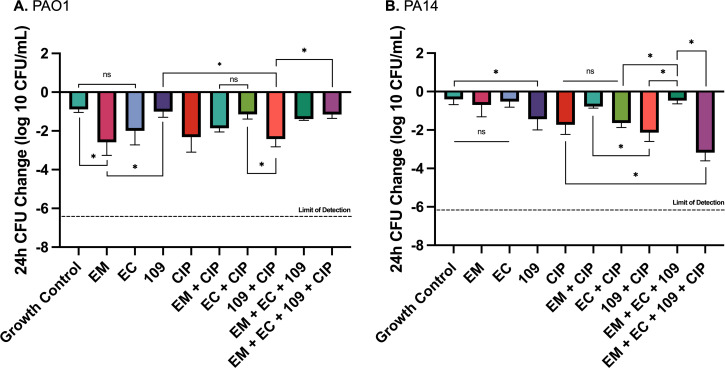 Figure 5
Peer Reviews
No public reviews on file for this paper yet. If you reviewed it on a platform where reviews are public (OpenReview, ICLR, NeurIPS, ICML), you can paste yours below so the community can read it here.
Videos
No videos yet. Explain this paper in a talk, walkthrough, or lecture? Add one.
Taxonomy
TopicsBacteriophages and microbial interactions · Bacterial biofilms and quorum sensing · Fecal contamination and water quality