Head to head comparison of plasma phosphorylated tau 217 assays in real life memory clinic in Thailand
Watayuth Luechaipanit, Thanaporn Haethaisong, Adipa Chongsuksantikul, Prawit Oangkhana, Kittithatch Booncharoen, Jedsada Khieukhajee, Yuttachai Likitjaroen, Poosanu Thanapornsangsuth

TL;DR
This study compares two immunoassay methods for measuring plasma p-tau217 in a memory clinic in Thailand to evaluate their accuracy in diagnosing Alzheimer's disease.
Contribution
The study provides a real-world comparison of two commercial immunoassays for plasma p-tau217 in a clinical setting.
Findings
Both MSD and Simoa assays showed high diagnostic accuracy for Alzheimer's disease with AUCs of 0.932 and 0.919, respectively.
The sensitivity and specificity of both assays were comparable, with no significant differences observed.
Plasma p-tau217 performed equivalently to amyloid-PET and CSF biomarkers in diagnosing AD.
Abstract
Recently, immunoassay‐based plasma phosphorylated tau 217 (p‐tau217) was commercially available as research used only (RUO) test kit. Due to its exceptional performance compared to other p‐tau species and designation as a core early‐changing biomarker, p‐tau217 may become a standalone for Alzheimer's disease biomarker, potentially gaining regulatory approval in the near future. However, not every immunoassay demonstrates high diagnostic accuracy in clinical setting. In this study, we retrospectively evaluated 146 participants, comparing the performance of single molecule assay (Simoa) on SR‐X platform and electrochemiluminescence (ECL) on Meso Scale Discovery (MSD) Quickplex SQ120 platform. Participants with cognitive complaints were enrolled between 2022 and October 2024 during clinical visits at the Memory Clinic at King Chulalongkorn Memorial Hospital and Neurology Clinic at…
Genes, proteins, chemicals, diseases, species, mutations and cell lines named across the full text — each resolved to its canonical identifier and authoritative record.
Click any figure to enlarge with its caption.
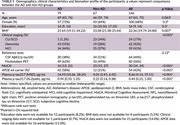 Figure 1
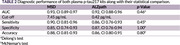 Figure 2
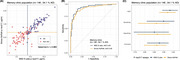 Figure 3
Peer Reviews
No public reviews on file for this paper yet. If you reviewed it on a platform where reviews are public (OpenReview, ICLR, NeurIPS, ICML), you can paste yours below so the community can read it here.
Videos
No videos yet. Explain this paper in a talk, walkthrough, or lecture? Add one.
Taxonomy
TopicsAlzheimer's disease research and treatments · Dementia and Cognitive Impairment Research · S100 Proteins and Annexins