Grey‐White matter contrast as an early brain pathology marker in Familial Alzheimer's disease
Lloyd Prosser, Ian B. Malone, Antoinette O'Connor, Damien Ferguson, Duncan Alston, Helen Rice, Leonard Pieperhoff, Frederik Barkhof, Nick C Fox, Tiago Gil Oliveira, Philip SJ Weston

TL;DR
This study shows that grey-white matter contrast on MRI scans can detect early brain changes in people with a genetic risk for Alzheimer's disease before symptoms appear.
Contribution
The study demonstrates that grey-white matter contrast is more sensitive than cortical thickness for tracking early neurodegeneration in presymptomatic familial Alzheimer's disease.
Findings
Symptomatic mutation carriers had reduced grey-white matter contrast in specific brain regions compared to non-carriers.
Grey-white matter contrast was significantly correlated with proximity to symptom onset in presymptomatic carriers.
Cortical thickness showed less sensitivity to presymptomatic changes compared to grey-white matter contrast.
Abstract
Previous work has suggested that the grey‐white matter contrast (GWC) on T1‐weighted MRI may be an early marker of neurodegeneration in Alzheimer's disease (AD). Here we aimed to calculate regional GWC in a familial AD (FAD) population and examine its utility in detecting early neurodegeneration in comparison to traditionally used cortical thickness measures. Seventy individuals from families affected by FAD were included, including presymptomatic mutation carriers, symptomatic mutation carriers and their non‐carrier sibling controls (Table 1). The presymptomatic group was split at median estimated years to onset (EYO; median = ‐9.5 yrs), into early‐presymptomatic and late‐presymptomatic. Both GWC and cortical thickness were estimated using Freesurfer for six pre‐defined regions of interest (ROIs), known to be particularly vulnerable to AD pathology: entorhinal cortex, superior frontal…
Genes, proteins, chemicals, diseases, species, mutations and cell lines named across the full text — each resolved to its canonical identifier and authoritative record.
Click any figure to enlarge with its caption.
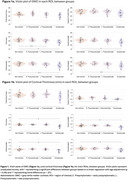 Figure 1
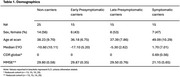 Figure 2
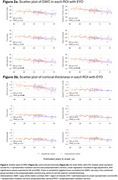 Figure 3
Peer Reviews
No public reviews on file for this paper yet. If you reviewed it on a platform where reviews are public (OpenReview, ICLR, NeurIPS, ICML), you can paste yours below so the community can read it here.
Videos
No videos yet. Explain this paper in a talk, walkthrough, or lecture? Add one.
Taxonomy
TopicsDementia and Cognitive Impairment Research · Alzheimer's disease research and treatments · Functional Brain Connectivity Studies