Heterogeneity in tau onset, patterns and accumulation rates are explained by age of amyloid onset
Zeyu Zhu, Amir Dehsarvi, Sebastian Roemer‐Cassiano, Anna Dewenter, Anna Steward, Fabian Hirsch, Lukas Frontzkowski, Davina Biel, Michael Schöll, Günter U Höglinger, Matthias Brendel, Nicolai Franzmeier

TL;DR
Earlier onset of amyloid buildup in Alzheimer's patients leads to earlier and faster tau accumulation, but with a longer delay before tau pathology begins.
Contribution
The study reveals how age of amyloid onset influences tau onset and accumulation patterns, providing insights into Alzheimer's progression.
Findings
Earlier amyloid onset predicts earlier tau onset in vulnerable brain regions.
Younger amyloid onset is linked to faster tau accumulation in neocortical areas.
A longer delay between amyloid and tau onset is observed in individuals with younger amyloid onset.
Abstract
Amyloid pathology drives tau accumulation, i.e., the key driver of clinical worsening in Alzheimer's disease (AD). Yet, there is considerable heterogeneity in the time of tau onset, as well as in the rates and patterns of tau accumulation, which jointly determine symptom onset and clinical trajectories. The exposure to amyloidosis is predictive of AD progression and may therefore predict tau onset and trajectories. Therefore, we investigated how the age and duration of amyloid onset influence tauopathy onset and accumulation. We included 479/390 ADNI/A4 participants with Flortaucipir tau‐PET, and Florbetaben/Florbetapir amyloid‐PET. Using sampled iterative local approximation, we determined subject‐specific estimated onset ages of amyloid‐PET positivity (centiloid>20), and tau‐PET positivity (SUVR>1.3). Using robust linear regression, we investigated the associations between estimated…
Genes, proteins, chemicals, diseases, species, mutations and cell lines named across the full text — each resolved to its canonical identifier and authoritative record.
Click any figure to enlarge with its caption.
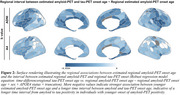 Figure 1
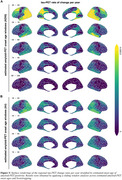 Figure 2
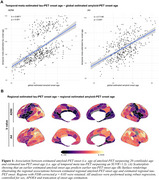 Figure 3
Peer Reviews
No public reviews on file for this paper yet. If you reviewed it on a platform where reviews are public (OpenReview, ICLR, NeurIPS, ICML), you can paste yours below so the community can read it here.
Videos
No videos yet. Explain this paper in a talk, walkthrough, or lecture? Add one.
Taxonomy
TopicsAlzheimer's disease research and treatments · Dementia and Cognitive Impairment Research · Neurological Disease Mechanisms and Treatments