Distinct Longitudinal Trajectories of Alzheimer's Disease Subtypes Defined by Regional Amyloid Predominance Patterns
Chung Hee Gwag, Min Soo Byun, Dahyun Yi, Hyejin Ahn, Yisak Kim, Yeongsoo Yoon, Gangwoo Kim, Yoonseok Oh, Bo Kyung Sohn, Seunghoon Lee, Minjae Kim, Jun‐Young Lee, Yu Kyeong Kim, Yun‐Sang Lee, Koung Mi Kang, Chul‐Ho Sohn, Kwangsoo Kim, Dong Young Lee

TL;DR
This study identifies three Alzheimer's disease subtypes based on amyloid accumulation patterns and finds that one subtype has faster progression and worse outcomes.
Contribution
The study introduces a novel approach to classify Alzheimer's subtypes by amyloid patterns and links these subtypes to distinct clinical and neurodegeneration trajectories.
Findings
Three AD subtypes with distinct amyloid accumulation patterns were identified using clustering analysis.
Cluster C, with fronto-parietal amyloid predominance, showed faster clinical decline and greater cortical atrophy compared to other subtypes.
Subtype-specific differences in prognosis suggest the need for tailored therapeutic strategies for Alzheimer's disease.
Abstract
It remains uncertain whether regional predominance patterns of amyloid accumulation are associated with neurodegeneration rates and the prognosis of Alzheimer's disease (AD) patients. This study aimed to examine differences in longitudinal neurodegeneration rates and clinical trajectories across AD subtypes defined through clustering analysis based on amyloid deposition pattern. Participants were recruited from the Korean Brain Aging Study of Early Diagnosis and Prediction of Alzheimer's Disease (KBASE), started in 2014, Seoul, Republic of Korea. A total 149 amyloid‐positive cognitively impaired (CI) older adults consisting of mild cognitive impairment (N = 72) and mild AD dementia (N = 77) were included for this study. Participants underwent clinical and neuropsychological assessments at baseline, as well as at 1‐year and 2‐year follow‐ups. Multimodal neuroimaging, including [11C]…
Genes, proteins, chemicals, diseases, species, mutations and cell lines named across the full text — each resolved to its canonical identifier and authoritative record.
Click any figure to enlarge with its caption.
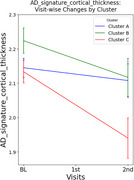 Figure 1
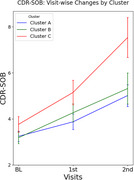 Figure 2
Peer Reviews
No public reviews on file for this paper yet. If you reviewed it on a platform where reviews are public (OpenReview, ICLR, NeurIPS, ICML), you can paste yours below so the community can read it here.
Videos
No videos yet. Explain this paper in a talk, walkthrough, or lecture? Add one.
Taxonomy
TopicsDementia and Cognitive Impairment Research · Alzheimer's disease research and treatments · Functional Brain Connectivity Studies