Combining Lumipulse pTau217 and Aβ42 as confirmatory tests for Aβ pathology prior to DMT
James D. Doecke, Ahmed Chenna, Mintzu Lo, Youssouf Badal, Brandon Yee, Robert L. Martone, Christos Petropoulos, Christopher J Fowler, Simon M. Laws, Stephanie R Rainey‐Smith, Ralph N Martins, Christopher C. Rowe, Colin L Masters, John W Winslow

TL;DR
This study evaluates blood-based biomarkers to detect amyloid-beta pathology in Alzheimer's patients, aiming to improve treatment decisions.
Contribution
The study introduces a novel combination of pTau217 and Aβ42 biomarkers with improved accuracy for detecting amyloid pathology.
Findings
Combining pTau217 and Aβ42 significantly improved detection accuracy compared to using pTau217 alone.
A linear combination of pTau217, Aβ42/40, age, gender, and APOE ε4 achieved up to 97% accuracy in detecting amyloid positivity.
Using dual cut-offs reduced the number of unclassified participants to as low as 0% in some groups.
Abstract
With the increasing number of countries approving disease‐modifying therapies (DMTs) for patients with either Mild Cognitive Impairment (MCI) or mild Alzheimer's disease (AD), it is vitally important to streamline treatment assessment processes. Blood‐based biomarkers (BBMs) have been suggested as rivals to cerebrospinal fluid (CSF) biomarkers in their accuracy to detect neocortical Amyloid‐Beta (Aβ). However, there is little consensus on potential thresholds and resulting confirmatory test performance for international use in target populations. Two separate sub‐cohorts—the AD continuum cohort (ADCC) [cognitively impaired + unimpaired; N = 197] and the intention to treat cohort (ITTC) [cognitively impaired; N = 200]—from the Australian Imaging Biomarkers and Lifestyle (AIBL) study of aging, were designed to test the accuracy and potential cut‐offs of leading BBM Lumipulse assays from…
Genes, proteins, chemicals, diseases, species, mutations and cell lines named across the full text — each resolved to its canonical identifier and authoritative record.
Click any figure to enlarge with its caption.
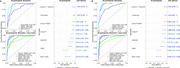 Figure 1
Peer Reviews
No public reviews on file for this paper yet. If you reviewed it on a platform where reviews are public (OpenReview, ICLR, NeurIPS, ICML), you can paste yours below so the community can read it here.
Videos
No videos yet. Explain this paper in a talk, walkthrough, or lecture? Add one.
Taxonomy
TopicsDementia and Cognitive Impairment Research · Intracerebral and Subarachnoid Hemorrhage Research · Alzheimer's disease research and treatments