Anti-survival of motor neuron antibodies in rheumatic and musculoskeletal diseases: prevalence, clinical associations, and biomarker potential, with novel insights into disease activity in SLE
Yuki Imai, Masaru Takeshita, Koji Suzuki, Hiroyuki Fukui, Kazunori Furuhashi, Kotaro Matsumoto, Jun Kikuchi, Keiko Yoshimoto, Yuko Kaneko

TL;DR
Anti-SMN antibodies are common in MCTD and SLE, and their levels correlate with disease activity and immune-related symptoms, suggesting potential as biomarkers for monitoring and stratifying rheumatic diseases.
Contribution
The study reveals that anti-SMN antibody levels correlate with immune complex-related manifestations and disease activity in SLE, a novel insight.
Findings
Anti-SMN antibodies were detected in 36.7% of MCTD, 10.6% of SLE, and 2.4% of systemic sclerosis patients.
In SLE, antibody-positive patients showed higher disease activity and immune-related complications compared to antibody-negative patients.
Anti-SMN antibody titers decreased after treatment and increased upon relapse, indicating their potential for monitoring disease progression.
Abstract
Anti-survival of motor neuron (SMN) antibodies have recently been identified in rheumatic and musculoskeletal diseases (RMDs), notably mixed connective tissue disease (MCTD). However, their immunological characteristics, prevalence, and clinical relevance beyond MCTD remain poorly understood. This study aimed to elucidate the clinical significance of anti-SMN antibodies in a wide spectrum of RMDs. We assessed anti-SMN antibodies and antibody-producing cells using Western blotting and immunofluorescence staining with recombinant SMN complexes. Serum anti-SMN antibody titers were measured using a recombinant SMN complex-bound magnetic bead assay in 906 serum samples from patients with 16 types of RMDs and healthy controls. Clinical associations and treatment responses were analyzed. Western blotting using patients’ sera confirmed SMN-specific antibodies. Immunofluorescence staining…
Genes, proteins, chemicals, diseases, species, mutations and cell lines named across the full text — each resolved to its canonical identifier and authoritative record.
Click any figure to enlarge with its caption.
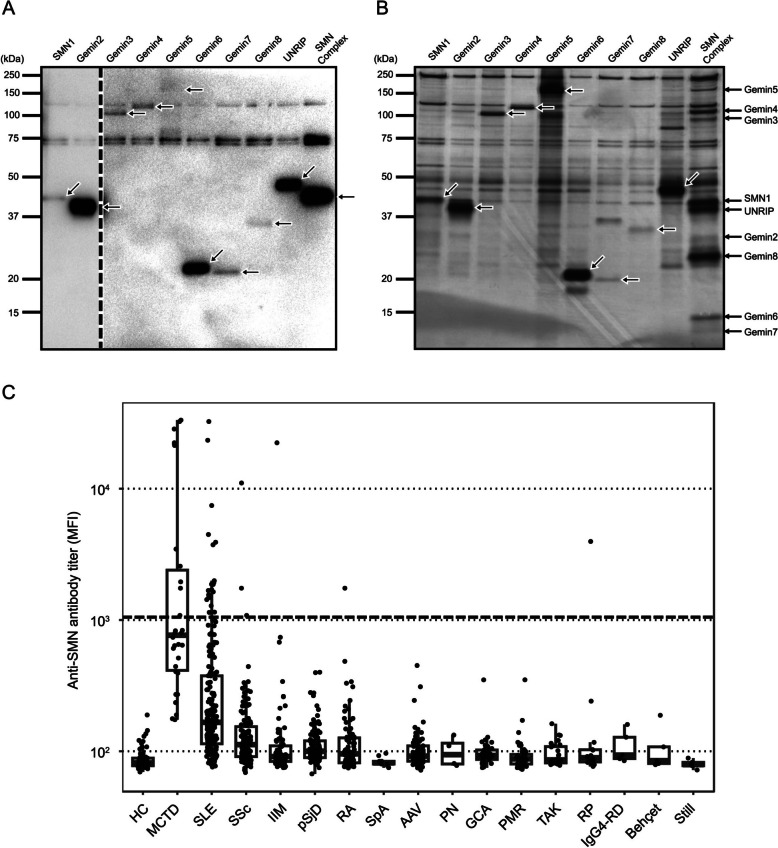 Figure 1
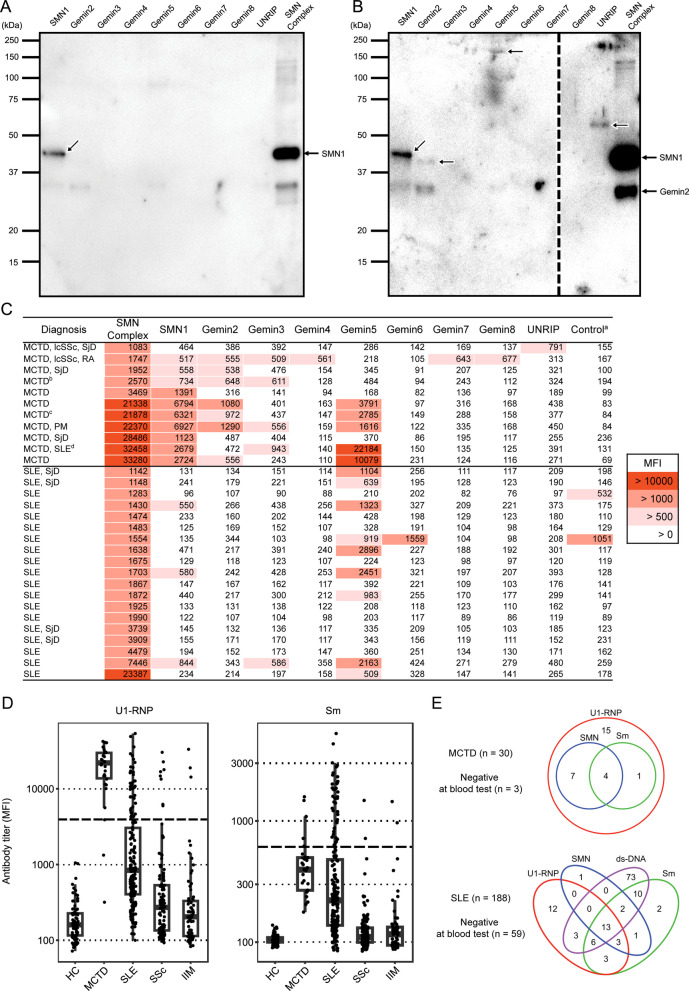 Figure 2
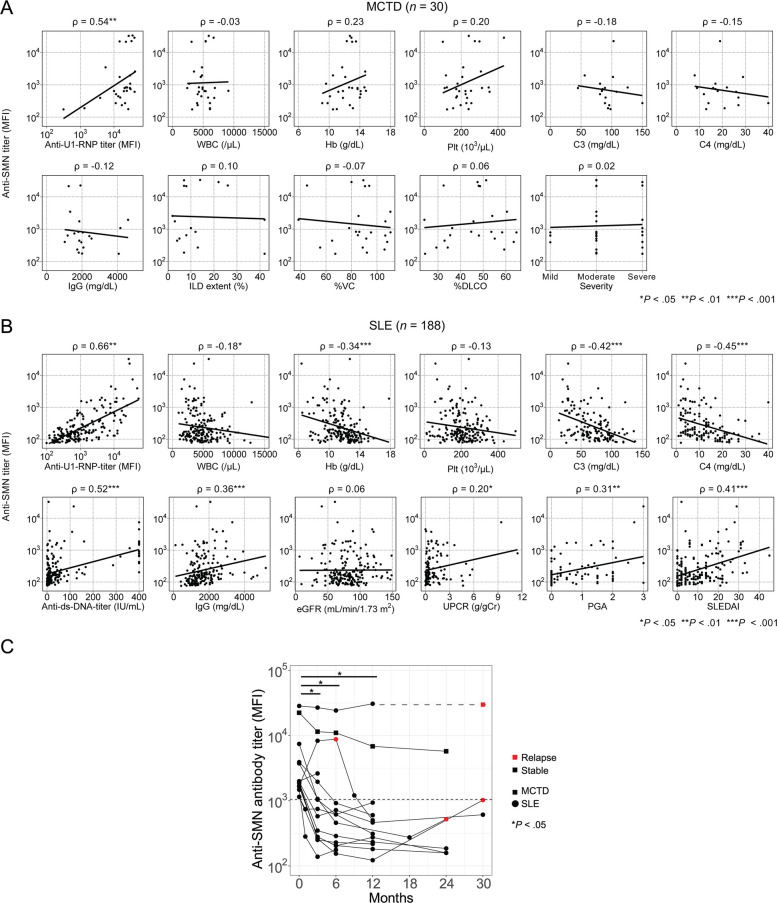 Figure 3
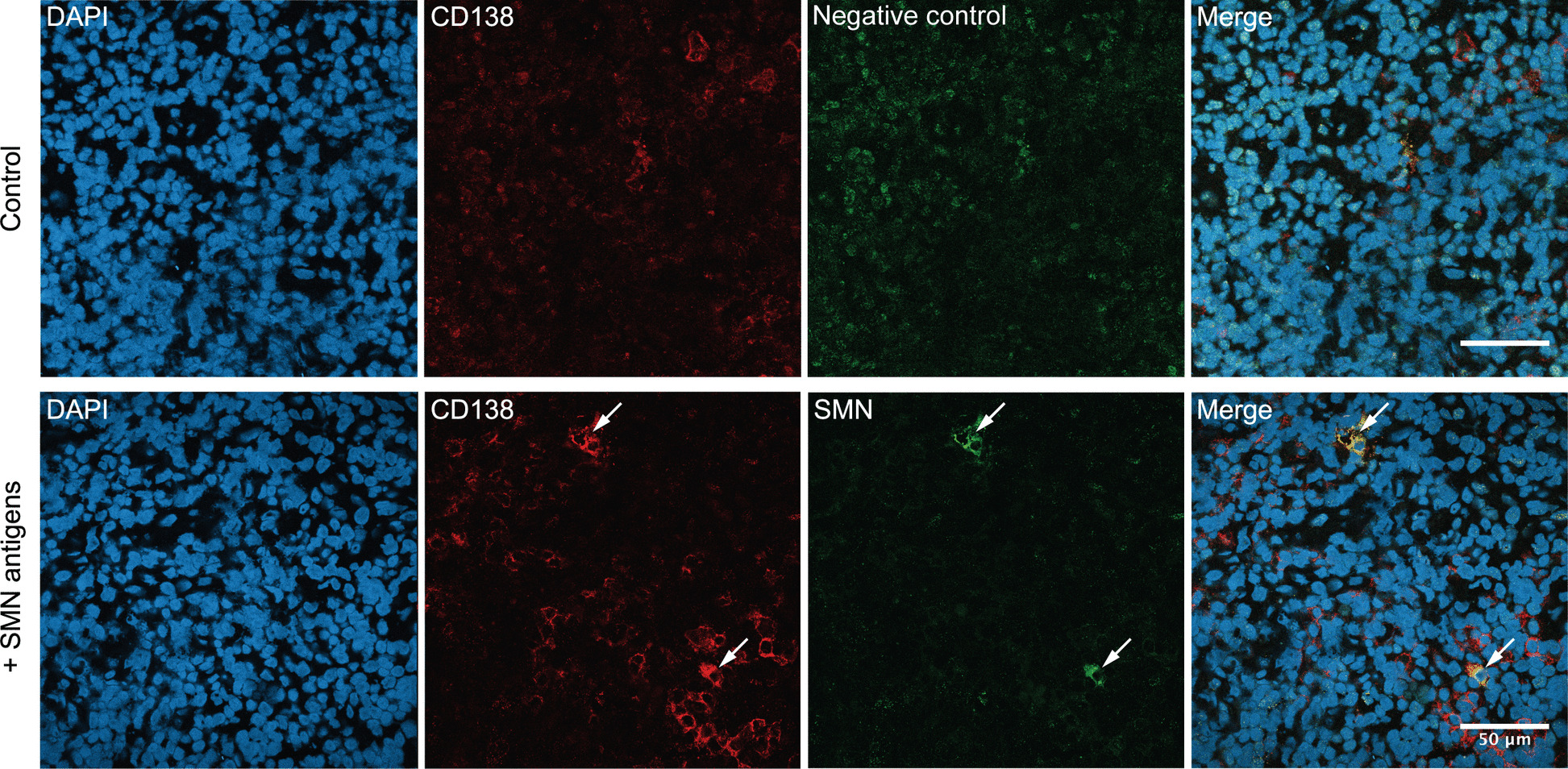 Figure 4
Peer Reviews
No public reviews on file for this paper yet. If you reviewed it on a platform where reviews are public (OpenReview, ICLR, NeurIPS, ICML), you can paste yours below so the community can read it here.
Videos
No videos yet. Explain this paper in a talk, walkthrough, or lecture? Add one.
Taxonomy
TopicsPeripheral Neuropathies and Disorders · Amyotrophic Lateral Sclerosis Research · Inflammatory Myopathies and Dermatomyositis