Molecular characterization of livestock-associated ticks and tick-borne bacteria in Xinjiang, northwestern China
Haipeng Tan, Xiaonan Dong, Jiamei Kang, Nan Bu, Yishuai Zhang, Zehao Qi, Zixuan Li, Zilong Zhang, Xuyang Zhang, Huidong Wang, Yulin Ding, Yonghong Liu, Li Zhao

TL;DR
This study identifies tick species and tick-borne bacteria in Xinjiang, China, highlighting zoonotic risks and the need for improved surveillance.
Contribution
First comprehensive molecular survey of livestock-associated ticks and their pathogens in Xinjiang, China.
Findings
Seven tick species were identified, with Rickettsia DNA detected in 50.9% of pools.
Rickettsia massiliae was found in R. turanicus eggs and larvae, indicating transovarial transmission.
Emerging pathogens like Anaplasma capra and Borrelia miyamotoi were detected in ticks from livestock.
Abstract
Xinjiang Uygur Autonomous Region represents a critical pastoral zone at the livestock–tick–human interface in northwestern China, yet molecular data on tick-borne pathogens in this region remain scarce. Between 2017 and 2018, 6172 ticks were collected from cattle, sheep, goats, horses, and dogs across 18 counties in Xinjiang. Tick species identification was performed through morphological examination and cytochrome oxidase I (COI) gene barcoding. Pooled samples (n = 55) were screened using polymerase chain reaction (PCR) and sequencing targeting Rickettsia (glutamate transporter A [gltA], outer membrane protein A [ompA] genes), Anaplasma (16S ribosomal RNA [16S rRNA]), Borrelia (heat shock protein GroEL [groEL]), and broad-range bacterial diversity (16S rRNA). Seven tick species were identified: Alveonasus lahorensis (33.7%), Dermacentor marginatus (32.3%), Rhipicephalus turanicus…
Genes, proteins, chemicals, diseases, species, mutations and cell lines named across the full text — each resolved to its canonical identifier and authoritative record.
Click any figure to enlarge with its caption.
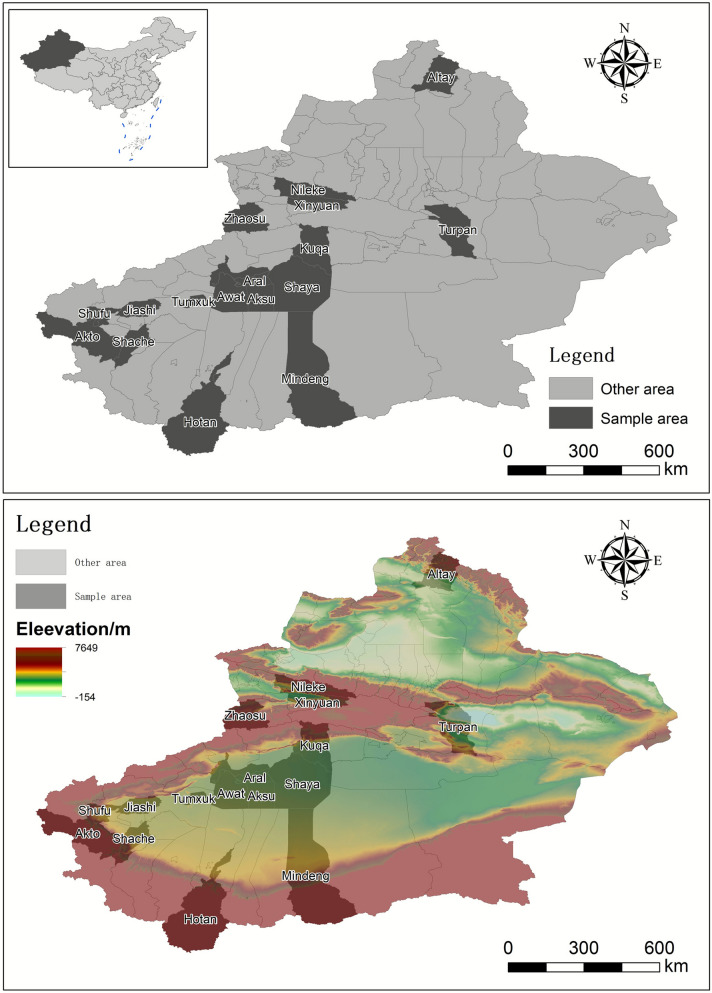 Figure 1
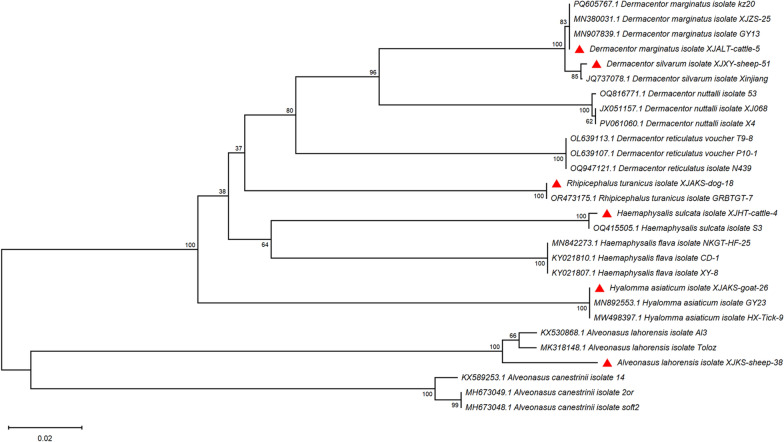 Figure 2
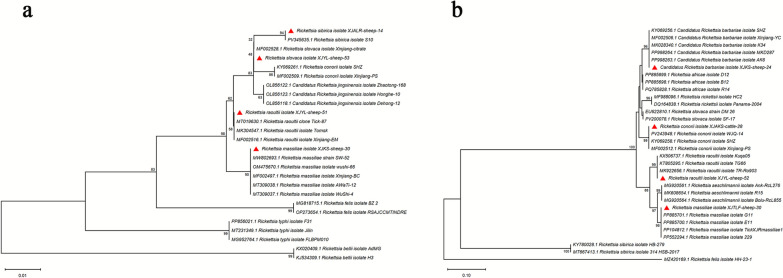 Figure 3
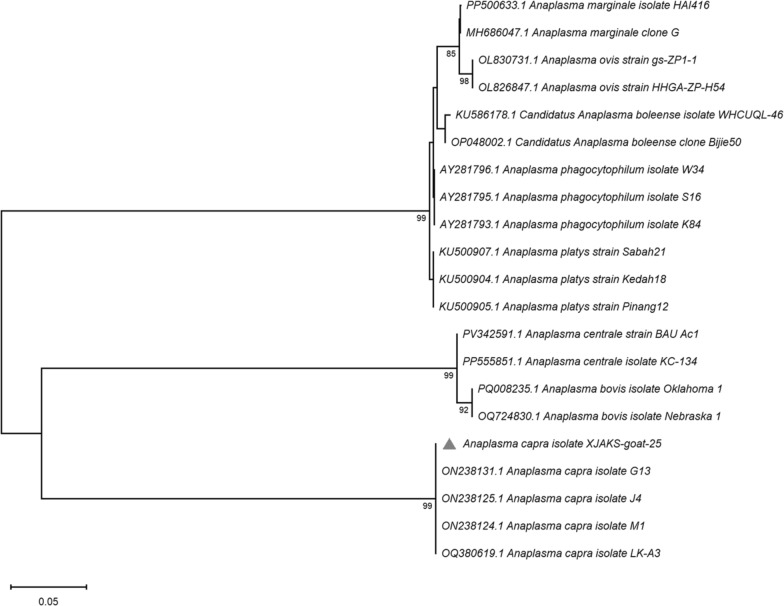 Figure 4
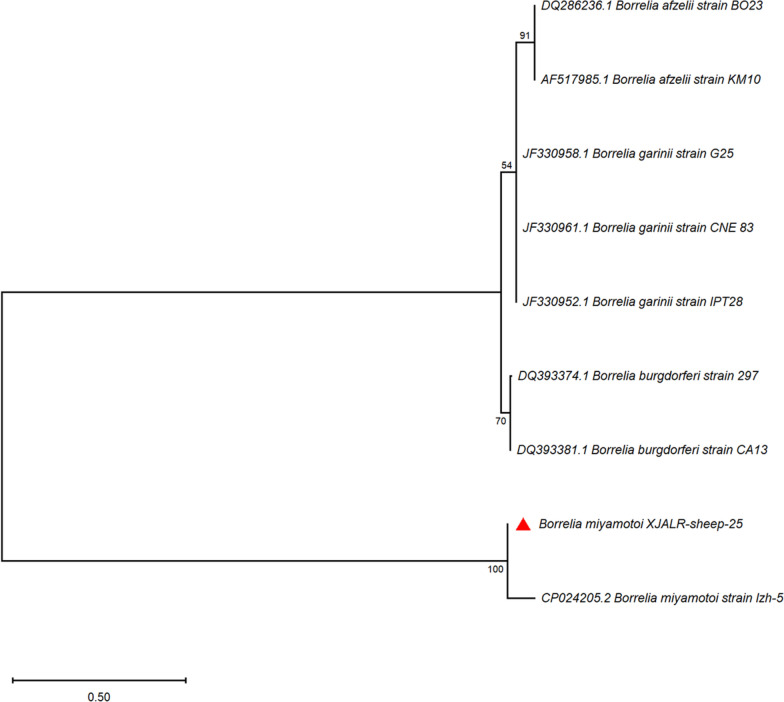 Figure 5
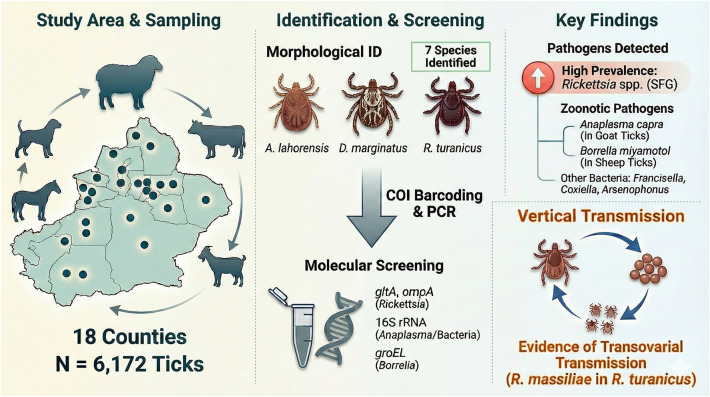 Figure 6
Peer Reviews
No public reviews on file for this paper yet. If you reviewed it on a platform where reviews are public (OpenReview, ICLR, NeurIPS, ICML), you can paste yours below so the community can read it here.
Videos
No videos yet. Explain this paper in a talk, walkthrough, or lecture? Add one.
Taxonomy
TopicsVector-borne infectious diseases · Vector-Borne Animal Diseases · Zoonotic diseases and public health