BRRIAR lncRNA alters breast cancer risk by modulating interferon signaling in cis and in trans
Haran Sivakumaran, Sneha Nair, Mainá Bitar, Xue Lu, Lu Wang, Ji Liu, Deshapriya S. Karunarathne, P. Prakrithi, Sebastien Jacquelin, Isela Sarahi Rivera, Kristine M. Hillman, Susanne Kaufmann, Rebekah Ziegman, Wei Shi, Sarah Alexandrou, C. Elizabeth Caldon, Rakesh N. Veedu

TL;DR
The lncRNA BRRIAR influences breast cancer risk by boosting immune responses through interferon signaling, offering a new therapeutic approach for estrogen receptor-positive breast cancer.
Contribution
BRRIAR is identified as a novel lncRNA that modulates interferon signaling both in cis and in trans, linking genetic risk to cancer immunosurveillance.
Findings
BRRIAR is a key target gene at the 3p26 breast cancer risk region and is primarily expressed in ER+ breast tumors.
BRRIAR regulates BHLHE40 in cis and activates RIG-I in trans, triggering interferon signaling and inducing apoptosis in ER+ breast cancer cells.
Overexpression of BRRIAR promotes immune activation in human PBMCs and shows therapeutic potential in ER+ breast cancer xenograft models.
Abstract
Interferons (IFNs) are key cytokines that drive immune responses against infections and cancer, yet few therapies have successfully leveraged IFN signaling for cancer treatment. Long noncoding RNAs (lncRNAs) are emerging as promising therapeutic candidates, but their roles in immune modulation remain largely unexplored. Here, we functionally characterize a breast cancer-associated lncRNA, BRRIAR, which primes the IFN signaling pathway in specific cancer contexts and represents a potential therapeutic strategy for estrogen receptor-positive (ER+) breast cancer. BRRIAR expression and subcellular localization were examined using qPCR, in situ hybridization, single-cell RNA sequencing and spatial transcriptomics. BRRIAR target genes were identified through CRISPR interference, chromatin interaction assays and ChIP sequencing. Mechanistic studies in ER + breast cancer cells included…
Genes, proteins, chemicals, diseases, species, mutations and cell lines named across the full text — each resolved to its canonical identifier and authoritative record.
Click any figure to enlarge with its caption.
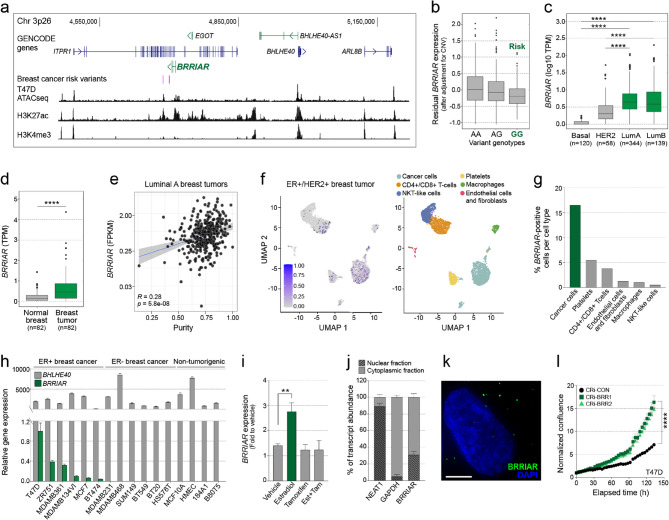 Figure 1
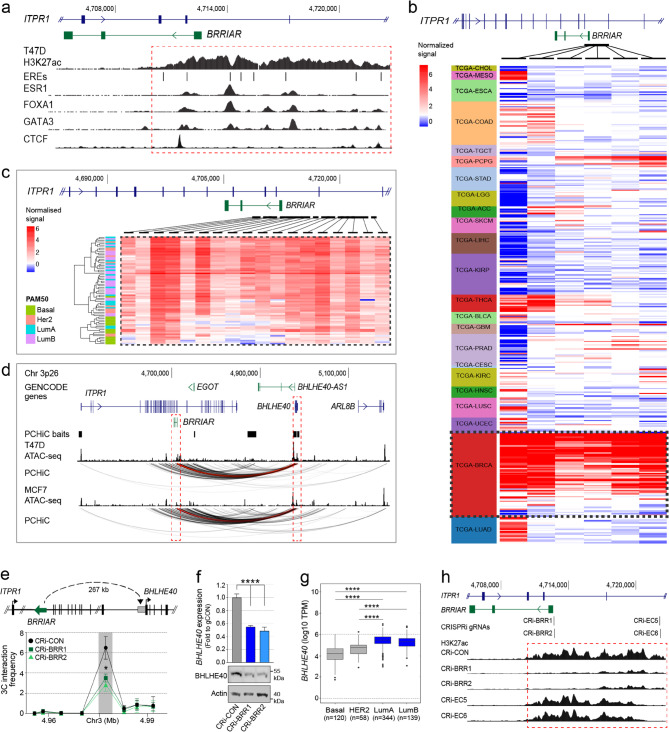 Figure 2
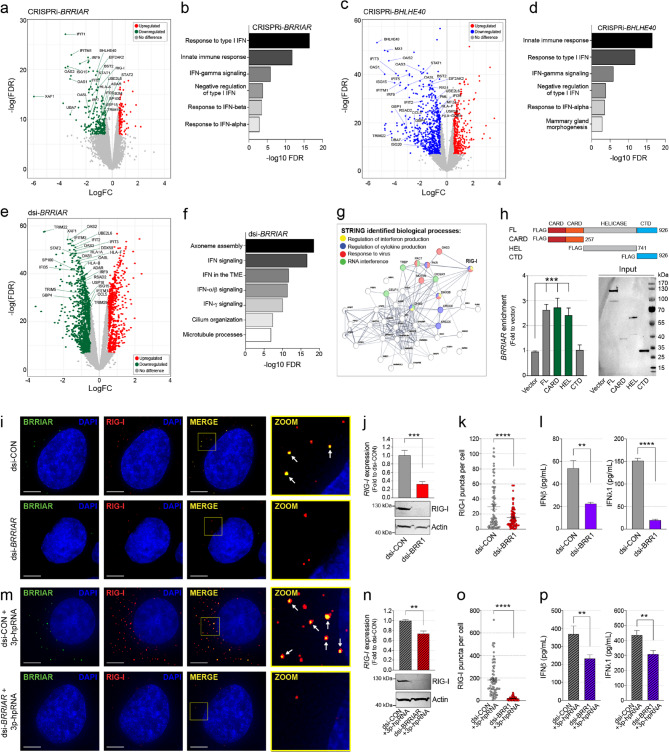 Figure 3
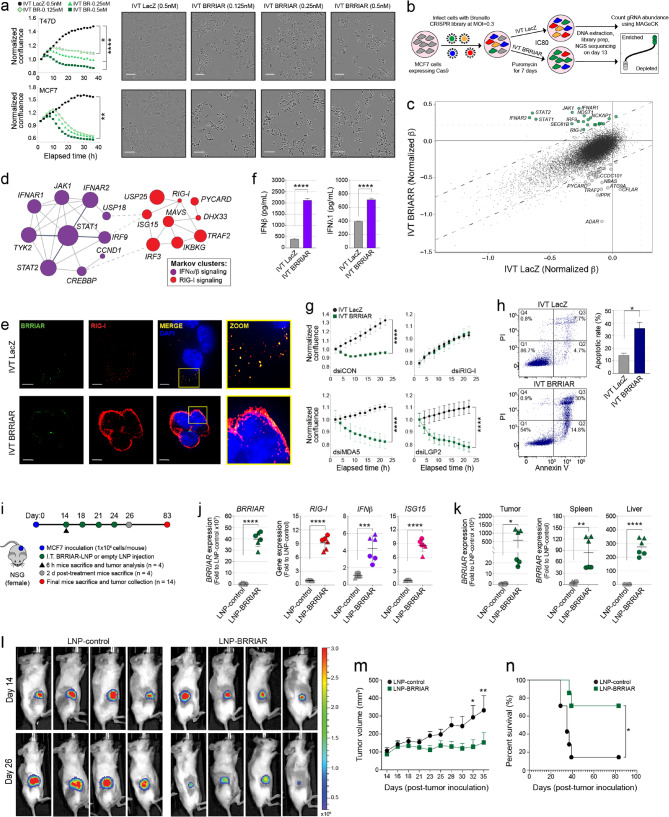 Figure 4
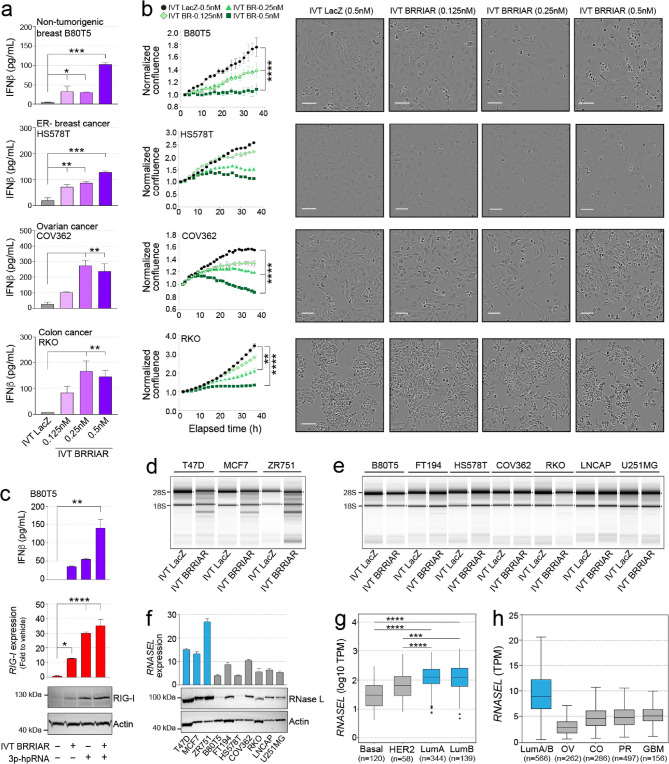 Figure 5
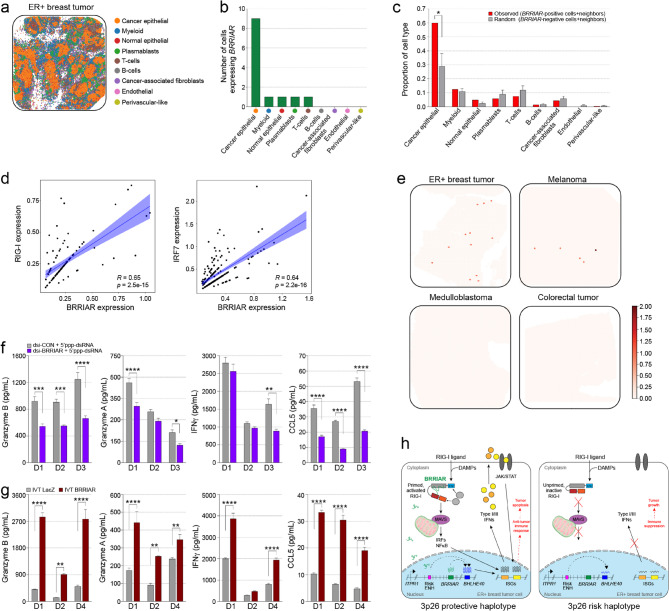 Figure 6
Peer Reviews
No public reviews on file for this paper yet. If you reviewed it on a platform where reviews are public (OpenReview, ICLR, NeurIPS, ICML), you can paste yours below so the community can read it here.
Videos
No videos yet. Explain this paper in a talk, walkthrough, or lecture? Add one.
Taxonomy
TopicsCancer-related molecular mechanisms research · interferon and immune responses · RNA regulation and disease