Fecal incontinence in hospitalized bipolar disorder patients: prevalence, gender disparities, and associations with demographic and pharmacological factors
Shayan Ashrafi, Arvin Hedayati, Bita Karimi Kordestani, Hossein Najafzadeh

TL;DR
This study finds that nearly half of hospitalized bipolar disorder patients experience fecal incontinence, with significant gender disparities and medication-related risk factors.
Contribution
The study identifies fecal incontinence as a previously underrecognized complication in bipolar disorder patients and highlights gender and medication-specific risk factors.
Findings
Fecal incontinence prevalence was 48.5% among hospitalized bipolar disorder patients.
Female gender was the strongest predictor of fecal incontinence (OR = 7.71).
Medications like haloperidol and quetiapine increased incontinence risk, while olanzapine was protective.
Abstract
To investigate the prevalence and associated factors of fecal incontinence among hospitalized patients with bipolar disorder, examining demographic, clinical, and pharmacological determinants to inform evidence-based clinical management strategies. This retrospective cross-sectional study analyzed 200 hospitalized bipolar disorder patients (50% male, 50% female; mean age 37.63 ± 9.67 years) recruited from educational treatment centers affiliated with Shiraz University of Medical Sciences. Fecal incontinence severity was assessed using standardized Vaizey and Wexner scoring systems. Comprehensive data collection included demographic characteristics, psychiatric medication use across four therapeutic classes (antidepressants, mood stabilizers, first- and second-generation antipsychotics), illness duration, bipolar disorder subtypes, and relevant medical history. Statistical analyses…
Genes, proteins, chemicals, diseases, species, mutations and cell lines named across the full text — each resolved to its canonical identifier and authoritative record.
Click any figure to enlarge with its caption.
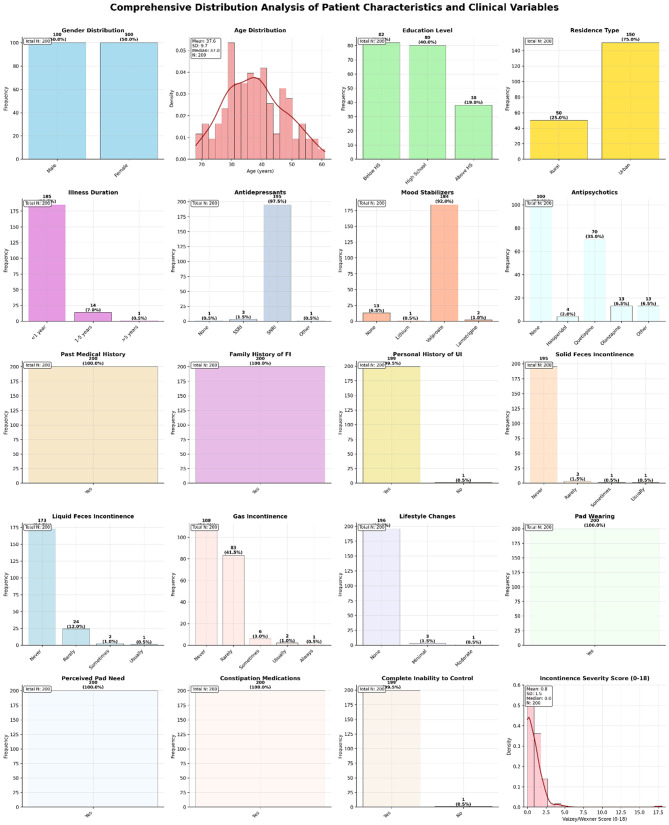 Figure 1
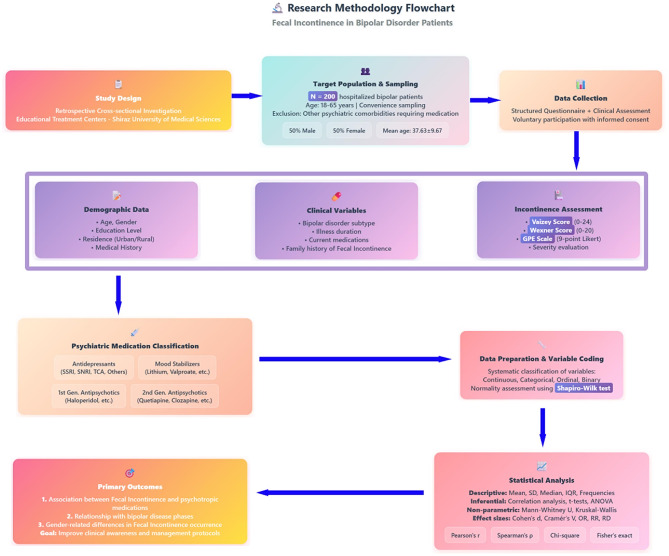 Figure 2
Peer Reviews
No public reviews on file for this paper yet. If you reviewed it on a platform where reviews are public (OpenReview, ICLR, NeurIPS, ICML), you can paste yours below so the community can read it here.
Videos
No videos yet. Explain this paper in a talk, walkthrough, or lecture? Add one.
Taxonomy
TopicsGastrointestinal motility and disorders · Pelvic floor disorders treatments · Gastroesophageal reflux and treatments