Zhimu-Huangbai codecoction for the treatment of type II diabetes mellitus through its self-assembling nanoparticles
Wenlong Nie, Meifang Jiang, Yin Li, Jinshuai Lan, Zhe Li, Zhijun Bi, Donghao Gu, Minquan Zhang, Yue Ding, Tong Zhang

TL;DR
This study shows that natural nanoparticles in a traditional Chinese medicine decoction help treat type 2 diabetes and improve drug absorption.
Contribution
The study identifies natural nanoparticles in Zhimu-Huangbai decoction as key to its anti-diabetic effects and enhanced bioavailability.
Findings
N-ZBD nanoparticles significantly reduced blood glucose and lipid levels in T2DM rats.
N-ZBD enhanced intestinal absorption and bioavailability of active compounds compared to free drugs.
N-ZBD showed pharmacokinetic profiles comparable to the full decoction but with improved metrics.
Abstract
Traditional Chinese medicine (TCM) decoctions represent a complex system comprising multiple phases, and their therapeutic effects cannot be fully elucidated solely at the molecular level. The nanophase within TCM decoctions plays a significant role in mediating their pharmacological activities. Zhimu and Huangbai herbal decoction (ZBD), traditionally used to treat type 2 diabetes mellitus (T2DM), is a formulation combining Rhizoma Anemarrhenae and Cortex phellodendri chinensis. Our prior research identified natural nanoparticles (N-ZBD) within ZBD. However, the role of these nanoparticles in ZBD’s anti-T2DM effects and their potential impact on the oral bioavailability of its active components remain unclear. Therefore, this study aimed to examine the anti-T2DM effects of N-ZBD and to assess whether N-ZBD could enhance the bioavailability of its primary active compounds. Initially, we…
Genes, proteins, chemicals, diseases, species, mutations and cell lines named across the full text — each resolved to its canonical identifier and authoritative record.
Click any figure to enlarge with its caption.
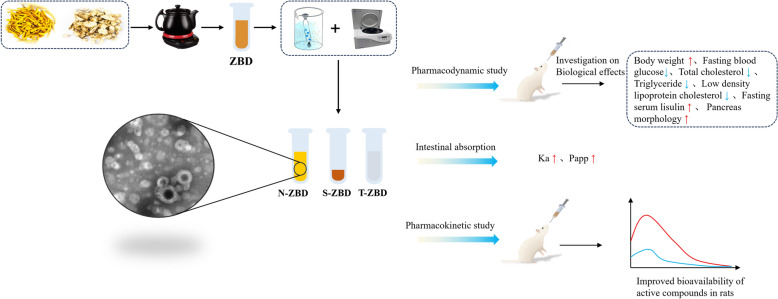 Figure 1
 Figure 2
 Figure 3
 Figure 4
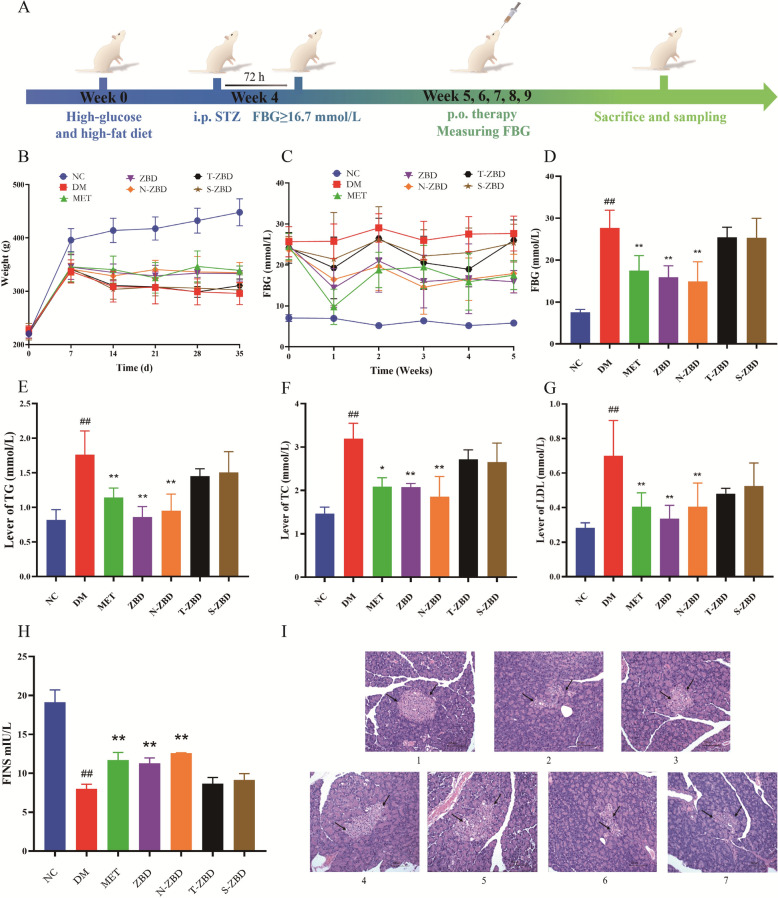 Figure 5
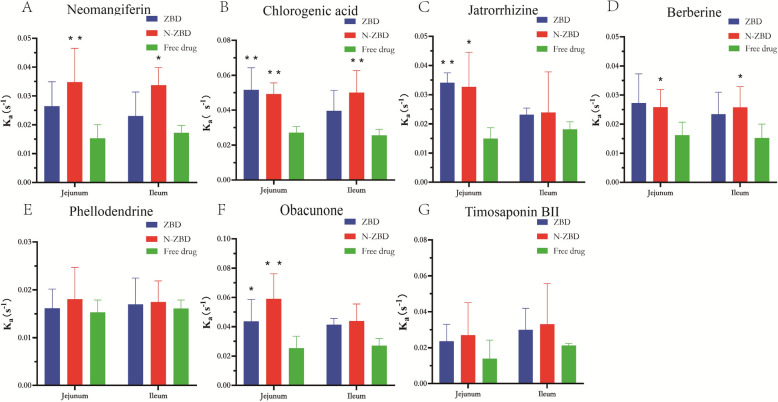 Figure 6
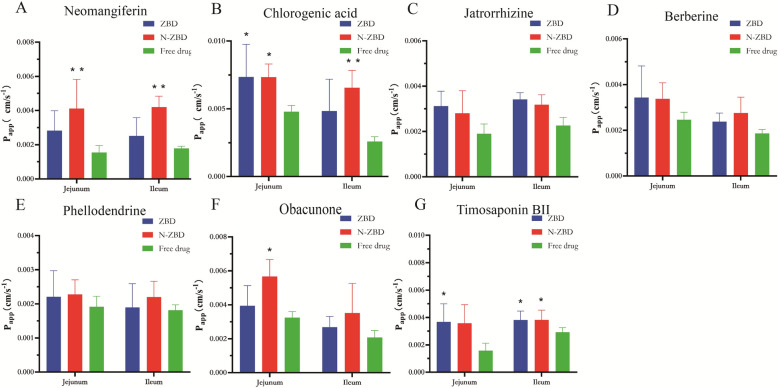 Figure 7
 Figure 8
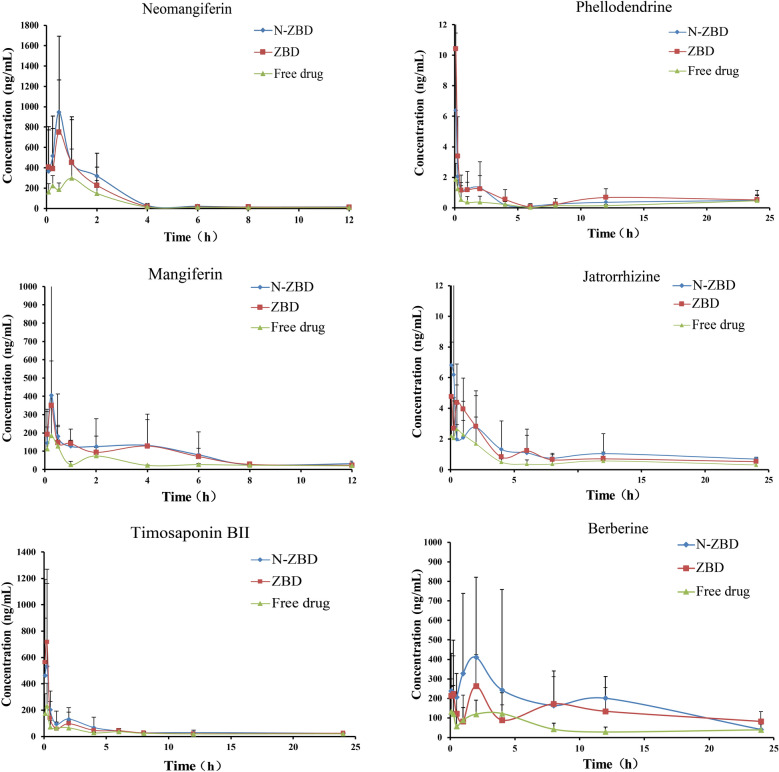 Figure 9
Peer Reviews
No public reviews on file for this paper yet. If you reviewed it on a platform where reviews are public (OpenReview, ICLR, NeurIPS, ICML), you can paste yours below so the community can read it here.
Videos
No videos yet. Explain this paper in a talk, walkthrough, or lecture? Add one.
Taxonomy
TopicsBerberine and alkaloids research · Plant-based Medicinal Research · Pancreatic function and diabetes