Associations between wearables vital parameters and self-perceived mood—an ecological momentary assessment study among healthy adolescents
Luisa Lutz, Polina Veltmann, Romain Meisterhans, Marco Giurgiu

TL;DR
This study explores how wearable devices can track physical activity and mood in adolescents, finding that more movement is linked to better mood.
Contribution
The study provides novel insights into the relationship between wearable-derived physical activity and self-reported mood in adolescents.
Findings
Step counts, standing time, and exercise time are positively associated with daily mood.
Sedentary time and sedentary bouts are negatively linked to momentary mood.
Self-reported sleep quality, but not sleep duration, is positively associated with daily mood.
Abstract
The prevalence of mental illnesses among adolescents has increased over the past decade. Lifestyle factors, such as regular exercise or sleep behavior can play a significant role in the prevalence of mental health. Today, passive mobile sensing or smartwatches offer valuable insights into the relationships between device-derived vital parameters (e.g., steps, exercise, sleep, heart rate) and self-reported mental health indicators, such as mood. However, the link between vital parameters and self-reported mood in daily life among adolescents remains understudied. A total of 53 adolescents participated in a two-week ambulatory assessment study. Participants were equipped with a wrist-worn Apple Watch and a research-grade thigh-worn accelerometer to continuously measure physical behavior in daily life. Concurrently, participants rated momentary mood up to six times a day on a…
Genes, proteins, chemicals, diseases, species, mutations and cell lines named across the full text — each resolved to its canonical identifier and authoritative record.
Click any figure to enlarge with its caption.
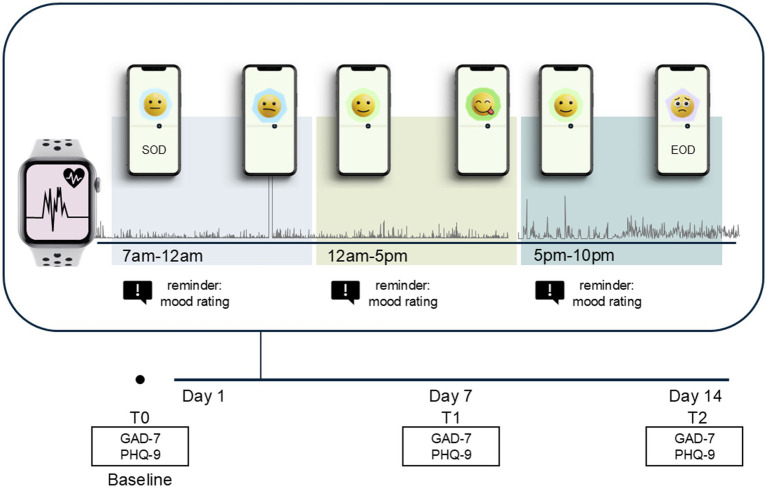 Figure 1
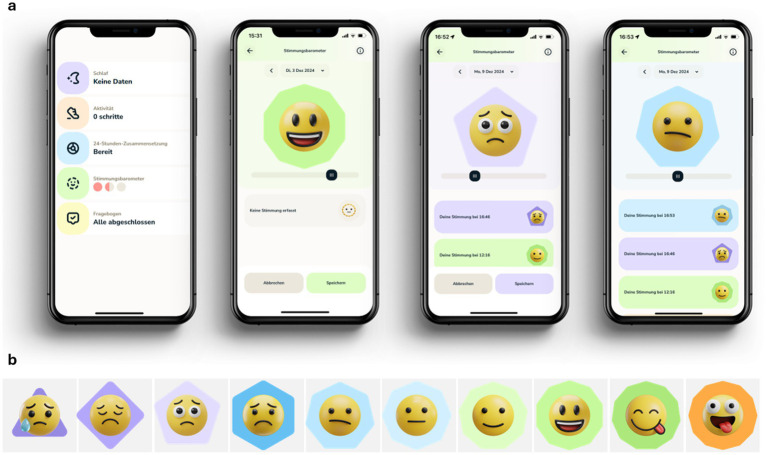 Figure 2
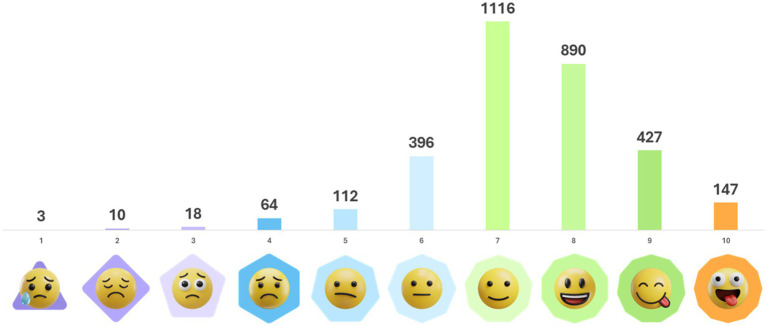 Figure 3
Peer Reviews
No public reviews on file for this paper yet. If you reviewed it on a platform where reviews are public (OpenReview, ICLR, NeurIPS, ICML), you can paste yours below so the community can read it here.
Videos
No videos yet. Explain this paper in a talk, walkthrough, or lecture? Add one.
Taxonomy
TopicsDigital Mental Health Interventions · Sleep and related disorders · Mental Health via Writing