Development of a new quantitative RT-PCR to detect lymphocytic choriomeningitis virus
Laura Herrero, Nuria Labiod, Francisca Molero, Arantxa Potente, María Paz Sánchez-Seco, Ana Vázquez

TL;DR
Researchers developed a new RT-qPCR method to detect all strains of lymphocytic choriomeningitis virus, improving diagnosis and surveillance.
Contribution
A novel RT-qPCR method was developed to detect all five LCMV lineages with high sensitivity and specificity.
Findings
The RT-qPCR method can detect all five LCMV lineages with a limit of detection of 5.6 genome copies/μL.
The method includes an internal amplification control to prevent false negatives and does not cross-react with other arenaviruses.
Abstract
Lymphocytic choriomeningitis virus (LCMV) is a neglected rodent-borne virus, with a worldwide distribution. The common mouse Mus musculus acts as reservoir and vector in the biological cycle of the virus. Surveillance of LCMV infection in mice is of importance as they are a widely used animal model in research and, through contact with them or their fluids, humans can be infected. Although most human cases are asymptomatic, LCMV infection can cause mild to severe, even fatal, and new diagnostic tools need to be developed to improve its detection. In the present work we report the development of a new method for the detection of LCMV RNA by quantitative reverse transcription polymerase chain reaction (RT-qPCR), able to detect all LCMV strains described to date. RT-qPCR targeting the S segment was developed and evaluated. Specificity and sensitivity were determined, and its limit of…
Genes, proteins, chemicals, diseases, species, mutations and cell lines named across the full text — each resolved to its canonical identifier and authoritative record.
Click any figure to enlarge with its caption.
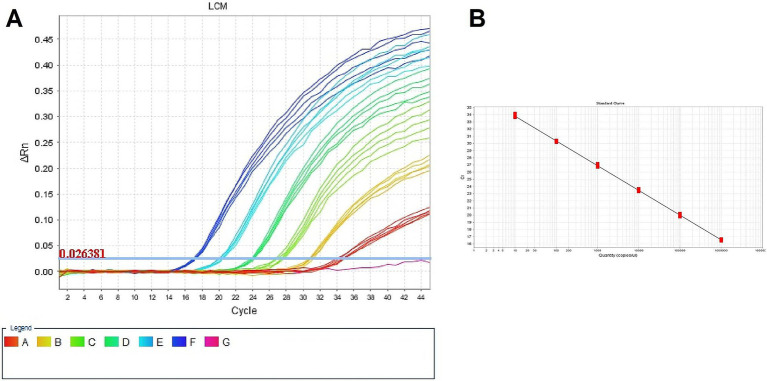 Figure 1
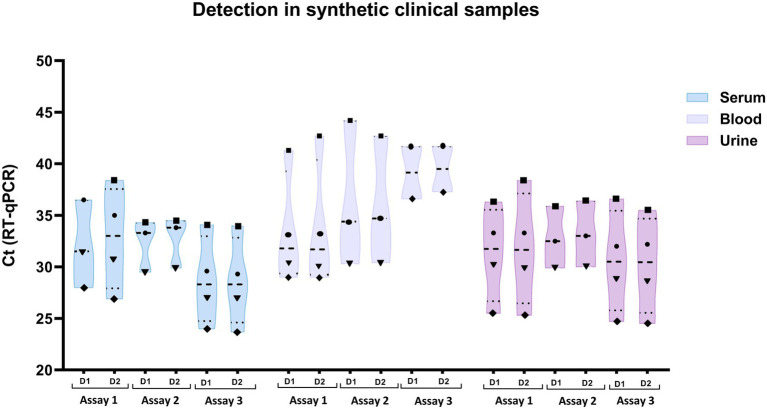 Figure 2
Peer Reviews
No public reviews on file for this paper yet. If you reviewed it on a platform where reviews are public (OpenReview, ICLR, NeurIPS, ICML), you can paste yours below so the community can read it here.
Videos
No videos yet. Explain this paper in a talk, walkthrough, or lecture? Add one.
Taxonomy
TopicsViral Infections and Outbreaks Research · SARS-CoV-2 and COVID-19 Research · Respiratory viral infections research