High-flow tracheal therapy vs. tracheostomy mask in weaning: insights from a propensity-matched cohort
Ana G. López-Rubio, Yennifer Torres-Suárez, Diana C. Ortiz-Moreno, Camilo A. Pérez-Velázquez, Laura M. Castillo-Morales, Andrés Felipe Mora-Salamanca, Jorge I. Alvarado-Sánchez

TL;DR
This study compares high-flow tracheal therapy and tracheostomy mask therapy for weaning patients off mechanical ventilation, finding no significant difference in weaning duration.
Contribution
The study provides new clinical insights into the effectiveness of high-flow tracheal therapy for post-tracheostomy weaning using a propensity-matched cohort.
Findings
High-flow tracheal therapy did not reduce post-tracheostomy weaning duration compared to conventional oxygen therapy.
Total mechanical ventilation time was longer in the high-flow tracheal therapy group.
Propensity score matching balanced baseline characteristics between groups.
Abstract
Difficult weaning from mechanical ventilation remains a major challenge in intensive care units (ICUs), particularly among patients requiring prolonged respiratory support. High-flow tracheal therapy (HFTT) may improve gas exchange, humidification, and comfort in tracheostomized patients, but its clinical impact on weaning duration is uncertain. We conducted a retrospective cohort study including critically ill adult patients who underwent tracheostomy between 2020 and 2023. Patients received either HFTT or conventional oxygen therapy via tracheostomy mask. The primary outcome was post-tracheostomy mechanical ventilation duration, defined as the number of days from tracheostomy to successful ventilatory support withdrawal. Propensity score matching was performed using age, sex, Sequential Organ Failure Assessment (SOFA) score, presence of acute respiratory distress syndrome (ARDS), and…
Genes, proteins, chemicals, diseases, species, mutations and cell lines named across the full text — each resolved to its canonical identifier and authoritative record.
Click any figure to enlarge with its caption.
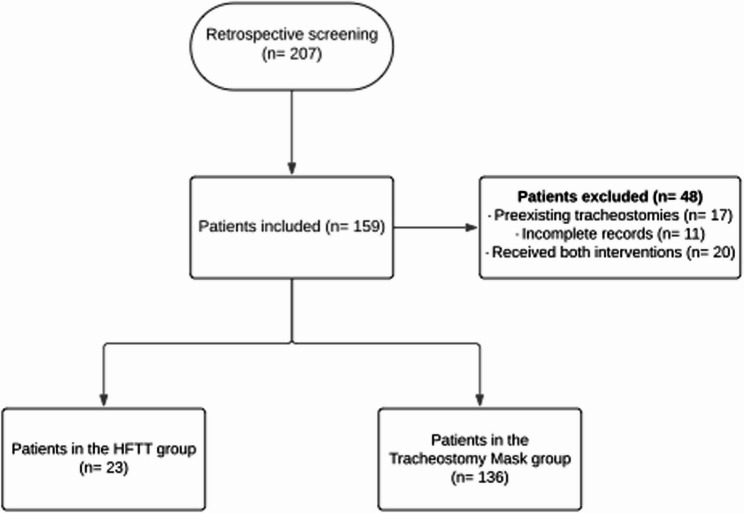 Figure 1
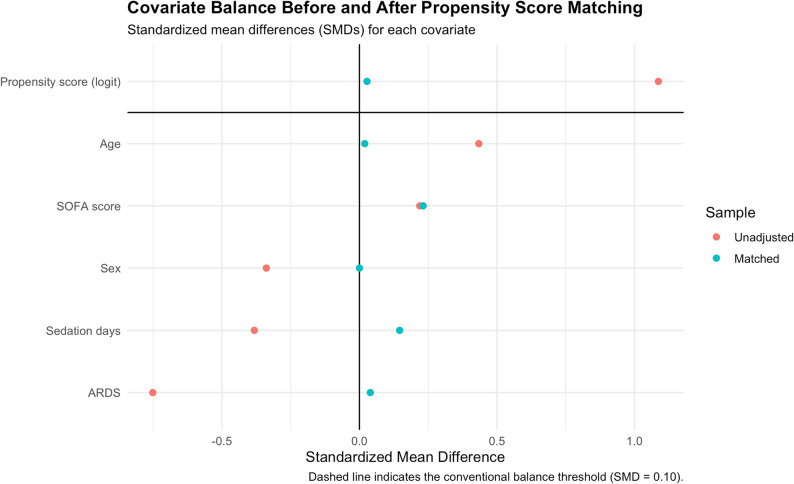 Figure 2
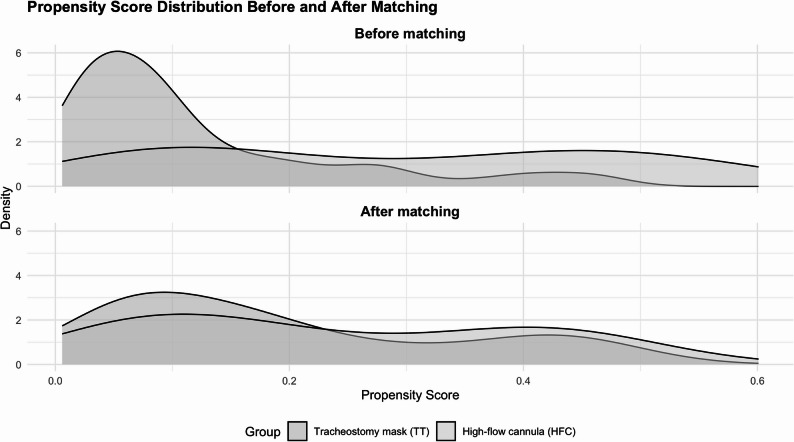 Figure 3
Peer Reviews
No public reviews on file for this paper yet. If you reviewed it on a platform where reviews are public (OpenReview, ICLR, NeurIPS, ICML), you can paste yours below so the community can read it here.
Videos
No videos yet. Explain this paper in a talk, walkthrough, or lecture? Add one.
Taxonomy
TopicsTracheal and airway disorders · Dysphagia Assessment and Management · Airway Management and Intubation Techniques