Efficacy and safety of transcatheter arterial embolization for lower gastrointestinal bleeding: a systematic review and meta-analysis of 58 clinical trials
Qiulian Sun, Jiefei Cheng, XueLei Zhang, Xiangzhong Huang, Ling Tang, Jingjing Li, Dongqing Ren, Xinjian Xu, Delei Cheng

TL;DR
This study reviews 58 clinical trials to evaluate the effectiveness and safety of transcatheter arterial embolization for treating lower gastrointestinal bleeding, finding it to be generally effective but with notable risks.
Contribution
The study provides a comprehensive meta-analysis of TAE for LGIB, highlighting recent improvements in efficacy and safety since 2010.
Findings
TAE has a high technical success rate of 97.7% and clinical success rate of 75.0% for treating LGIB.
The rebleeding rate is 17.3%, and major complications occur in 4.3% of cases.
Since 2010, ischemic events have decreased from 12.7% to 6.3%, indicating improved safety.
Abstract
Acute lower gastrointestinal bleeding (LGIB) is a common and life-threatening condition, particularly in elderly patients, characterized by high morbidity and mortality rates. While transcatheter arterial embolization (TAE) has been widely adopted as an essential interventional treatment, its efficacy and safety have yet to be thoroughly and systematically evaluated. This study aims to assess the safety, efficacy, and clinical outcomes of TAE for acute LGIB through a meta-analysis, thereby providing valuable evidence to inform clinical decision-making. A comprehensive search was conducted across PubMed, Embase, Web of Science, and Cochrane databases. Studies meeting predefined criteria were selected, and key clinical outcomes, including the technical success rate, clinical success rate, rebleeding rate, and complication rate of TAE in LGIB treatment, were extracted. A random-effects…
Genes, proteins, chemicals, diseases, species, mutations and cell lines named across the full text — each resolved to its canonical identifier and authoritative record.
Click any figure to enlarge with its caption.
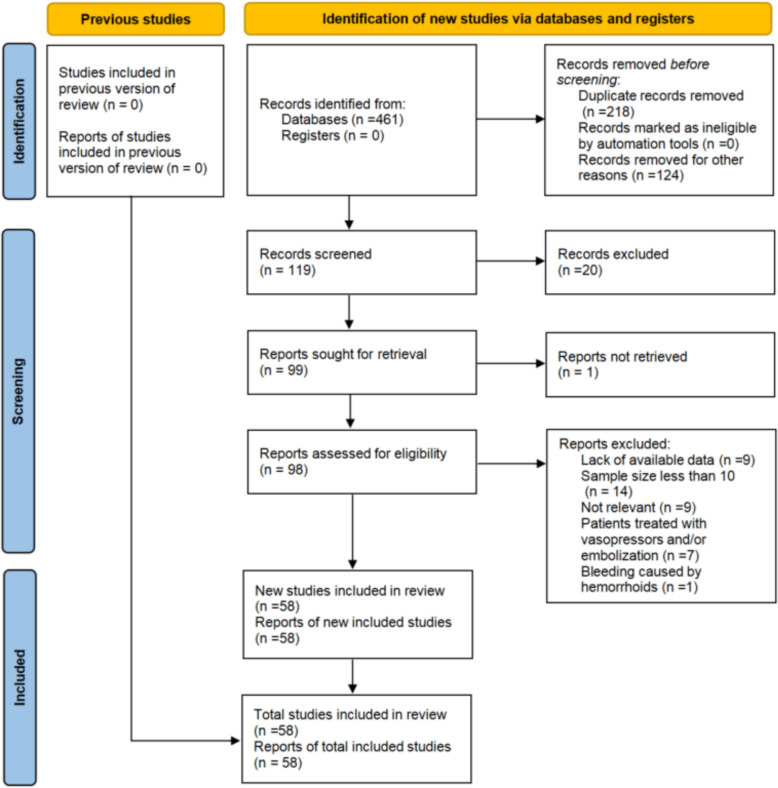 Figure 1
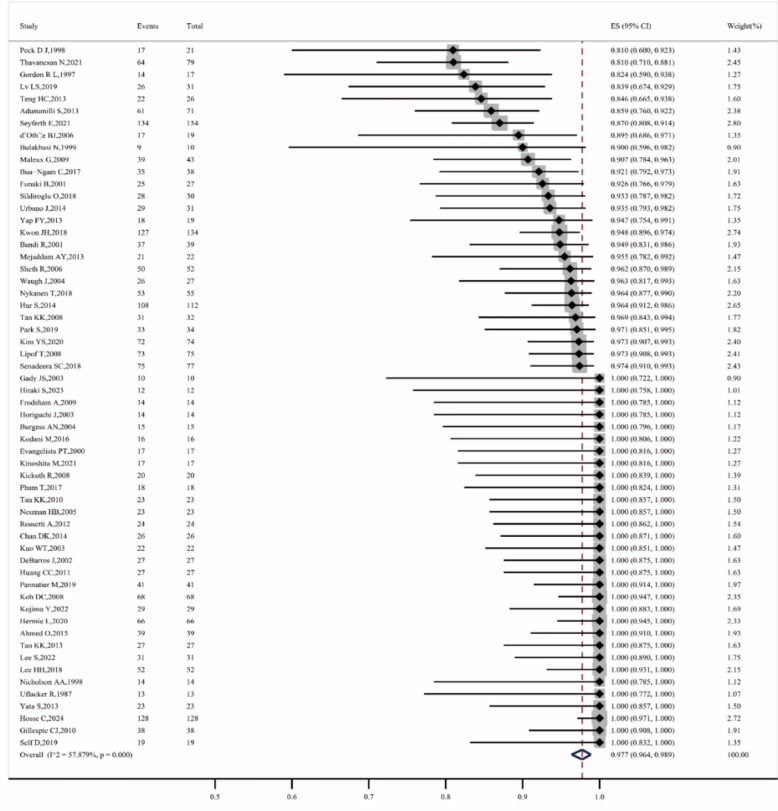 Figure 2
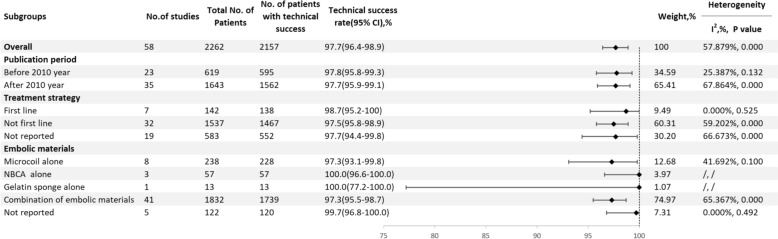 Figure 3
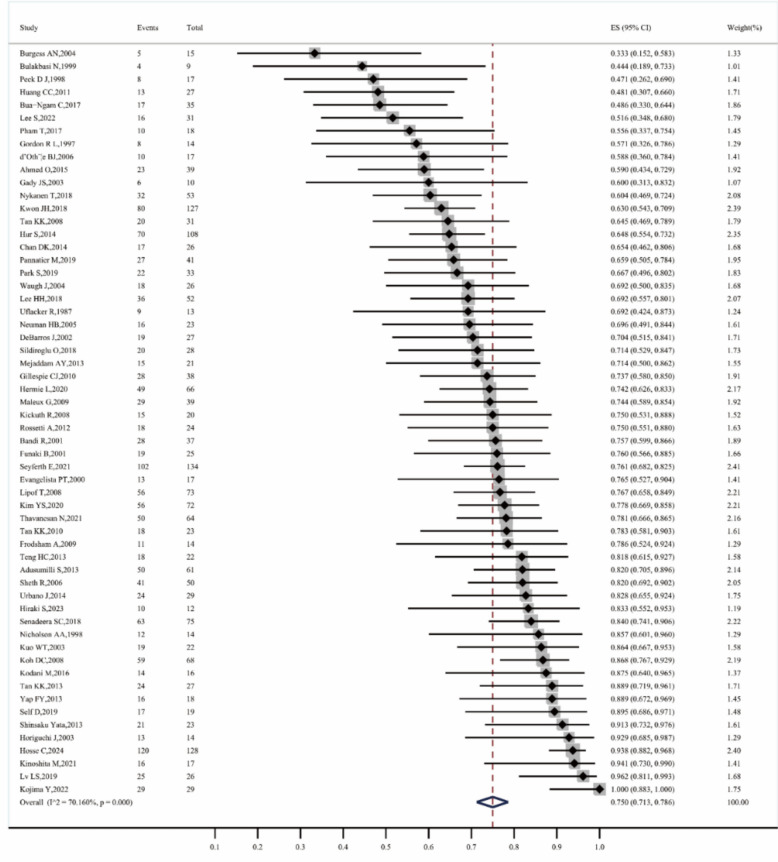 Figure 4
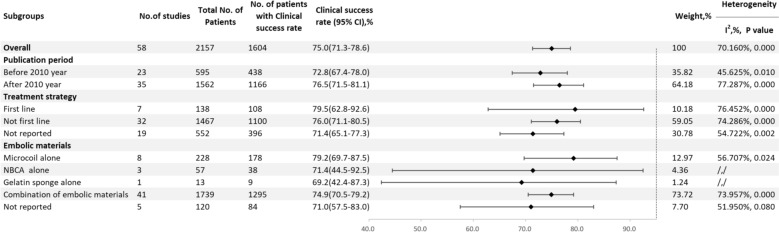 Figure 5
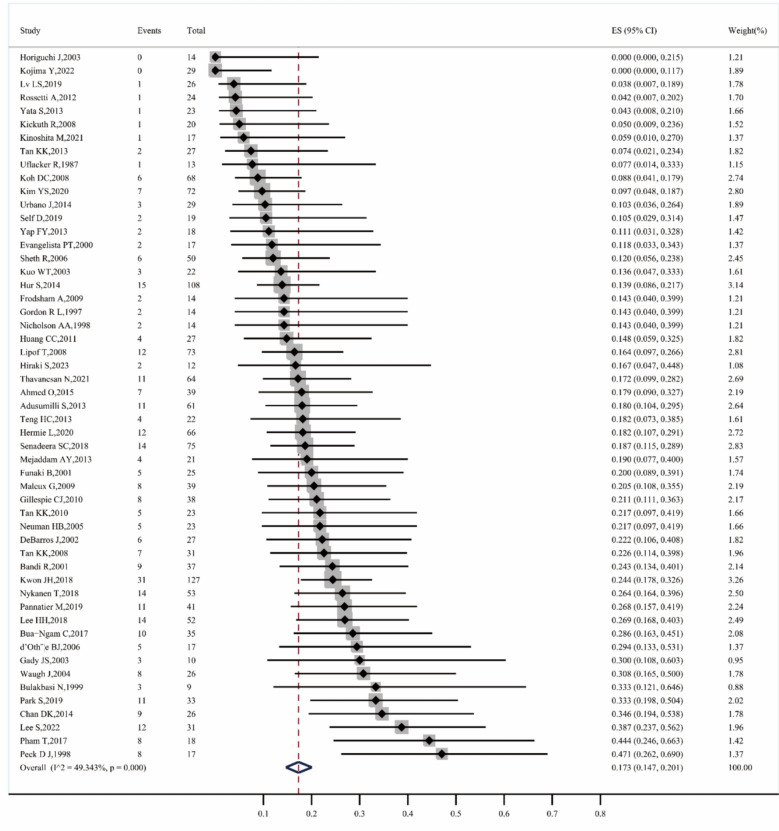 Figure 6
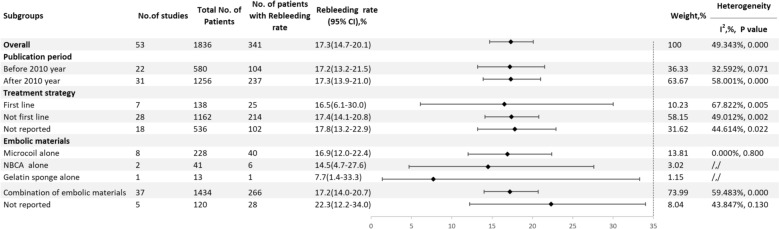 Figure 7
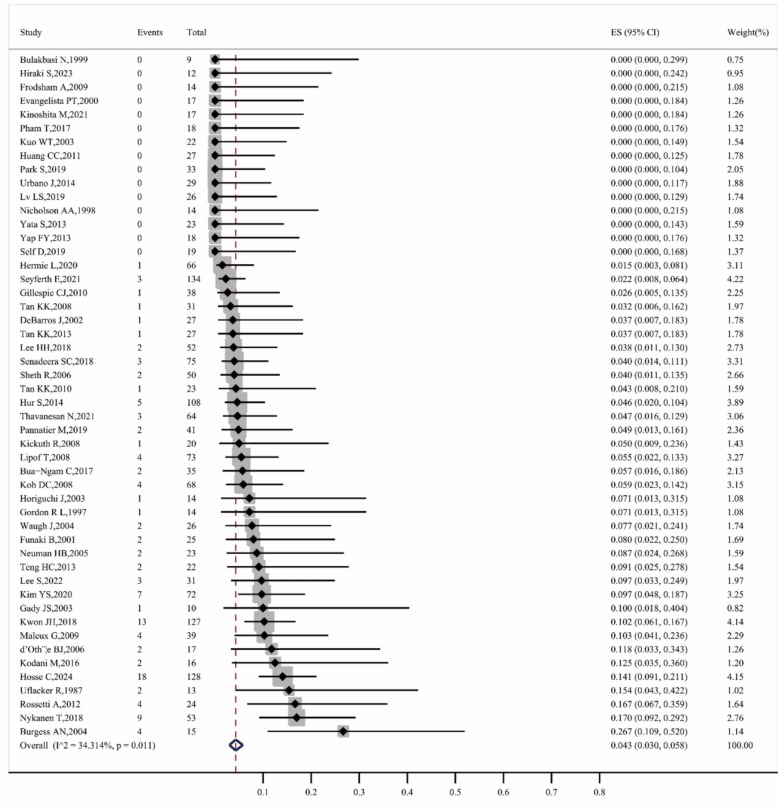 Figure 8
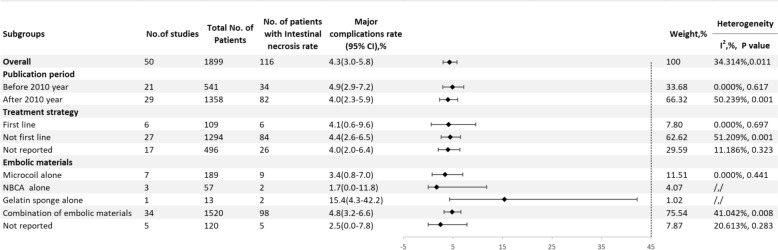 Figure 9
Peer Reviews
No public reviews on file for this paper yet. If you reviewed it on a platform where reviews are public (OpenReview, ICLR, NeurIPS, ICML), you can paste yours below so the community can read it here.
Videos
No videos yet. Explain this paper in a talk, walkthrough, or lecture? Add one.
Taxonomy
TopicsGastrointestinal Bleeding Diagnosis and Treatment · Abdominal vascular conditions and treatments · Vascular Anomalies and Treatments