Predicting five-year comorbid bipolar disorder after attention-deficit/hyperactivity disorder diagnosis: a population-based machine learning approach
Yen-Shan Yang, Chih-Wei Hsu, Liang-Jen Wang, Kuo-Chuan Hung, Yang-Chieh Brian Chen, Chih-Sung Liang, Mu-Hong Chen

TL;DR
This study uses machine learning to predict which ADHD patients are at risk of developing bipolar disorder within five years, using healthcare data from Taiwan.
Contribution
A novel machine learning model was developed to predict comorbid bipolar disorder in ADHD patients using real-world health data.
Findings
The model achieved a high ROC-AUC of 0.90 in predicting BD comorbidity after ADHD diagnosis.
Key predictors included older age at ADHD onset, medication patterns, and changes in psychiatric visit frequency.
Protective factors included having offspring with schizophrenia-spectrum disorders and fewer respiratory infections post-diagnosis.
Abstract
Early detection and accurate prediction of bipolar disorders (BDs) comorbidity in individuals with attention-deficit/hyperactivity disorder (ADHD) are clinically critical. This study used machine-learning methods to identify features predictive of subsequent BD among patients initially diagnosed with ADHD. We analyzed claims from the Taiwan National Health Insurance Research Database (2000–2013) and included patients aged ≥ 12 years with at least two diagnoses of ADHD. Predictor features included demographics (sex, age at ADHD onset), healthcare utilization (psychiatric outpatient visit counts), comorbidities (International Classification of Diseases–coded diagnoses), psychiatric medications (Anatomical Therapeutic Chemical–coded prescriptions), and family psychiatric history. All features were extracted from prespecified windows around the ADHD diagnosis date (index date). The primary…
Genes, proteins, chemicals, diseases, species, mutations and cell lines named across the full text — each resolved to its canonical identifier and authoritative record.
Click any figure to enlarge with its caption.
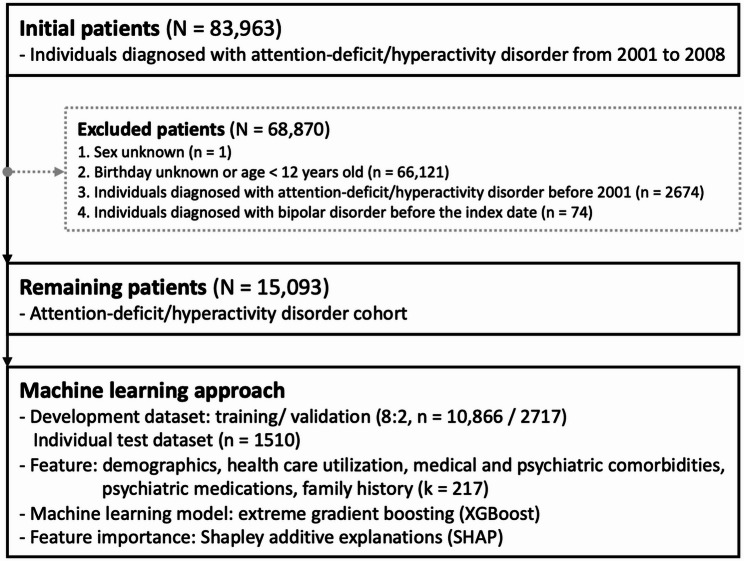 Figure 1
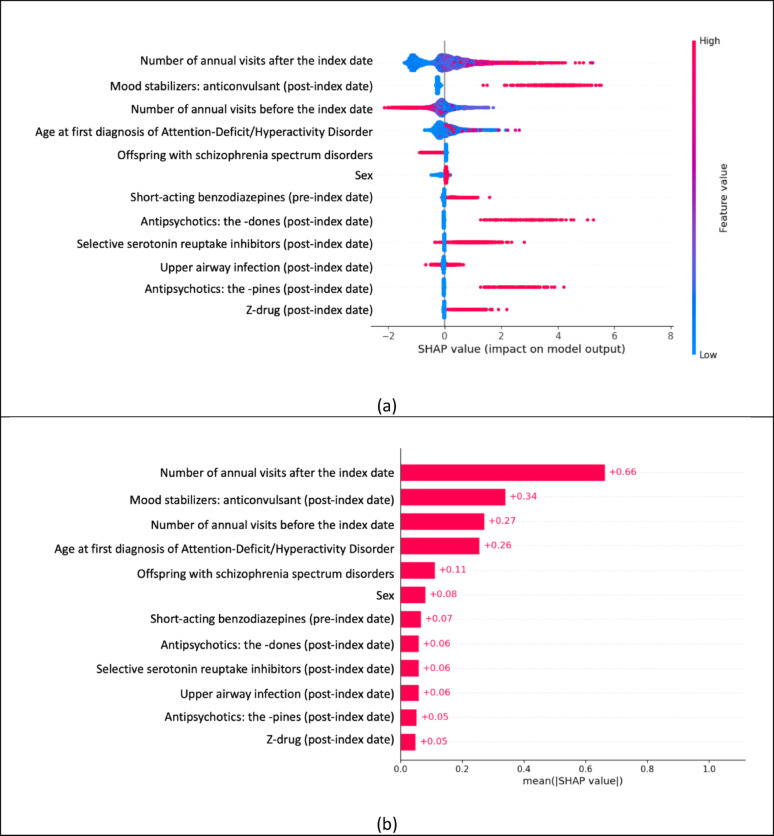 Figure 2
Peer Reviews
No public reviews on file for this paper yet. If you reviewed it on a platform where reviews are public (OpenReview, ICLR, NeurIPS, ICML), you can paste yours below so the community can read it here.
Videos
No videos yet. Explain this paper in a talk, walkthrough, or lecture? Add one.
Taxonomy
TopicsBipolar Disorder and Treatment · Attention Deficit Hyperactivity Disorder · Phosphodiesterase function and regulation