Plasma Aβ40, Aβ42, Aβ42/40 ratio, tau, p‐tau181, p‐tau217 and NfL biomarkers to discriminate the prodromal stage of dementia along the continuum of cognitive impairment: Sex differences in the CompAS study
Ana I. Rodríguez‐Pérez, Juan J. Ansede‐Bermejo, Cristina Lojo‐Seoane, Maria Campos‐Magdaleno, Ana Nieto‐Vieites, Alba Felpete, Santiago Galdo‐Álvarez, Mónica Lindín, Águeda Rojo‐Pantoja, M. José Moreno‐Carretero, Jose M. Aldrey, Carlos Spuch, Juan M. Pías‐Peleteiro

TL;DR
This study found that plasma biomarkers like p-tau181 and p-tau217 can help distinguish early dementia stages, but their effectiveness varies by sex.
Contribution
The study reveals sex-specific differences in the diagnostic utility of p-tau181 and p-tau217 for MCI in Alzheimer's continuum.
Findings
p-tau217 was valid for both women and men in distinguishing MCI from preclinical stages.
p-tau181 showed significant predictive association with MCI only in women.
Sex differences in biomarker concentrations may affect diagnostic accuracy if not considered.
Abstract
Plasma Aβ40, Aβ42, Aβ42/40 ratio, tau, p‐tau181, p‐tau217, and NfL have been proposed as possible valid early blood biomarkers for Alzheimer's Dementia (AD) (Simren et al., 2021). Although sex differences in some biomarkers (e.g., p‐Tau‐181) were suggested in some studies (Tsiknia et al., 2022), this issue remains largely unexplored. Our aim was cross‐sectionally analyze predictive associations of the biomarkers to differentiate MCI from preclinical stages (CU, SCD) of the AD continuum in both women and men. Sample consisted of 145 participants (CU=20; SCD=57; MCI=68), mostly women (73.7%) and with age media above 70 years (M = 70.39; SD = 9.62) (see Table 1 for sample descriptives). Peripheral blood samples drawn into EDTA tubes, centrifuged, and plasma samples aliquoted and kept at –80◦C according to standardized biobanking protocols. Approximately seven months after storage, the…
Genes, proteins, chemicals, diseases, species, mutations and cell lines named across the full text — each resolved to its canonical identifier and authoritative record.
Click any figure to enlarge with its caption.
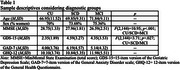 Figure 1
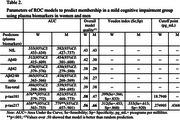 Figure 2
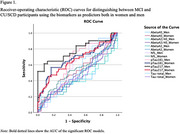 Figure 3
Peer Reviews
No public reviews on file for this paper yet. If you reviewed it on a platform where reviews are public (OpenReview, ICLR, NeurIPS, ICML), you can paste yours below so the community can read it here.
Videos
No videos yet. Explain this paper in a talk, walkthrough, or lecture? Add one.
Taxonomy
TopicsDementia and Cognitive Impairment Research · Alzheimer's disease research and treatments · Neurological Disease Mechanisms and Treatments