Age‐related amyloid‐β dynamics modeled with the generalized additive model for location, scale, and shape (GAMLSS) across diverse populations: cross‐sectional trajectories and longitudinal validation
Min Young Chun, Sungjoo Lee, Michael S. W. Weiner, Suzanne E. Schindler, Daeun Shin, Heekyung Kang, Sohyun YIM, Eun Hye Lee, Kyunga Kim, Hee Jin Kim, Duk L. Na, Jun Pyo Kim, Sang Won Seo

TL;DR
This study models how amyloid-beta levels change with age in different populations and finds that non-Hispanic Whites show steeper increases compared to Koreans.
Contribution
The study introduces a validated statistical model for age-related amyloid-beta trajectories using cross-sectional data and validates it with longitudinal data.
Findings
Amyloid-beta levels increase with age in the upper percentiles for both Koreans and non-Hispanic Whites.
Non-Hispanic Whites showed steeper amyloid-beta accumulation trajectories, especially among APOE ε4 carriers.
The statistical model was validated using longitudinal data, confirming its reliability.
Abstract
Alzheimer's disease is characterized by early amyloid‐β (Aβ) accumulation, even in cognitively unimpaired (CU) individuals, yet age‐related Aβ trajectories remain poorly understood. We developed and validated age‐related Aβ positron emission tomography ( trajectories using a statistical model in CU individuals, and examined the effects of sex and APOE ε4. We analyzed 849 CU Korean participants and 521 CU non‐Hispanic Whites (NHWs) after propensity score matching. Age‐related Aβ PET trajectories were modeled using the generalized additive model for location, scale, and shape (GAMLSS) based on cross‐sectional data and validated with longitudinal data. Subgroup analyses explored the influence of APOE ε4 and sex on age‐related Aβ PET trajectories. The age‐related centile curves of Aβ PET centiloid values showed stable distributions in the lower percentiles. Aβ values increased with age in…
Genes, proteins, chemicals, diseases, species, mutations and cell lines named across the full text — each resolved to its canonical identifier and authoritative record.
Click any figure to enlarge with its caption.
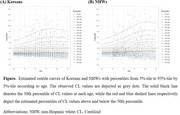 Figure 1
Peer Reviews
No public reviews on file for this paper yet. If you reviewed it on a platform where reviews are public (OpenReview, ICLR, NeurIPS, ICML), you can paste yours below so the community can read it here.
Videos
No videos yet. Explain this paper in a talk, walkthrough, or lecture? Add one.
Taxonomy
TopicsDementia and Cognitive Impairment Research · Alzheimer's disease research and treatments · Functional Brain Connectivity Studies