Association of imaging markers and overall burden of cerebral small vessel disease with cognition in COMPASS‐ND
Dylan X. Guan, Zahinoor Ismail, Graham A. McLeod, Shahab Marzoughi, Eric E. Smith, Aravind Ganesh

TL;DR
This study finds that higher cerebral small vessel disease burden, as seen on brain MRI scans, is linked to worse cognitive performance across a range of neurocognitive conditions.
Contribution
The study introduces specific CSVD scores for global, CAA-specific, and HTNA-specific disease burden and shows their distinct associations with cognition.
Findings
Global, CAA, and HTNA CSVD scores are all linked to worse cognitive outcomes like lower MoCA scores and higher dementia severity ratings.
Higher global and HTNA-specific CSVD scores are associated with increased odds of more severe cognitive diagnoses.
CAA-specific CSVD score did not show a significant association with cognitive diagnosis severity.
Abstract
Cerebral small vessel disease (CSVD) is the most common cause of vascular cognitive impairment, but its relationship to cognition across the neurocognitive spectrum is not fully understood. CSVD burden can be inferred from several magnetic resonance imaging (MRI) markers, which can be combined to generate a CSVD score. We investigated the association between CSVD score with various cognitive measures. Baseline data from 972 participants [Table 1] from the Comprehensive Assessment of Neurodegeneration and Dementia (COMPASS‐ND) study were analyzed [11.9% cognitively unimpaired [CU], 14.7% subjective cognitive decline [SCD], 36.4% mild cognitive impairment [MCI], 36.9% dementia). Brain MRI scans were visually rated for Standards for Reporting Vascular Changes on Neuroimaging (STRIVE)‐based evidence of vascular brain injury (lacunes, microbleeds, white matter hyperintensities [WMH],…
Genes, proteins, chemicals, diseases, species, mutations and cell lines named across the full text — each resolved to its canonical identifier and authoritative record.
Click any figure to enlarge with its caption.
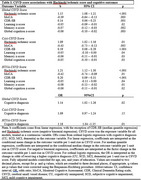 Figure 1
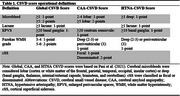 Figure 2
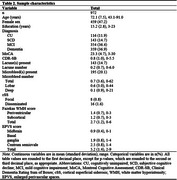 Figure 3
Peer Reviews
No public reviews on file for this paper yet. If you reviewed it on a platform where reviews are public (OpenReview, ICLR, NeurIPS, ICML), you can paste yours below so the community can read it here.
Videos
No videos yet. Explain this paper in a talk, walkthrough, or lecture? Add one.
Taxonomy
TopicsIntracerebral and Subarachnoid Hemorrhage Research · Dementia and Cognitive Impairment Research · Neurological Disease Mechanisms and Treatments