Current Trends in Duchenne Muscular Dystrophy Research and Therapy: 3D Cardiac Modelling
Marta Przymuszała, Marta Białobrzeska, Józef Dulak, Urszula Florczyk‐Soluch

TL;DR
Researchers are exploring new therapies for Duchenne muscular dystrophy, focusing on restoring dystrophin and using 3D cardiac models to better understand and treat heart complications.
Contribution
The paper highlights advances in 3D cardiac modeling using hiPSC-derived cardiomyocytes and the potential of combining dystrophin-restoring strategies with cardiac-targeted therapies.
Findings
3D cardiac models derived from patient-specific hiPSCs offer insights into DMD pathophysiology and therapeutic testing.
Current therapies face challenges in cardiac targeting, safety, and scalability.
Combining dystrophin restoration with cardiac-specific delivery strategies is a promising future direction.
Abstract
Duchenne muscular dystrophy (DMD), caused by dystrophin deficiency, presents a multifaceted challenge that affects both skeletal muscle function and cardiomyocyte homeostasis, causing progressive degeneration and life‐threatening cardiac complications by adolescence. Current treatments fail to prevent poor prognoses, and while FDA‐approved therapies show promise in targeting dystrophin restoration, including RNA‐based approaches and microdystrophin gene therapy, clinical evidence supporting their efficacy remains limited. Substantial challenges persist, particularly in achieving effective cardiac targeting, ensuring long‐term safety and developing scalable treatments. Alternative therapies addressing muscle and cardiac pathophysiology are being explored alongside dystrophin‐based approaches. DMD treatment is increasingly focusing on heart targeting with optimized cardiac‐specific…
Genes, proteins, chemicals, diseases, species, mutations and cell lines named across the full text — each resolved to its canonical identifier and authoritative record.
Click any figure to enlarge with its caption.
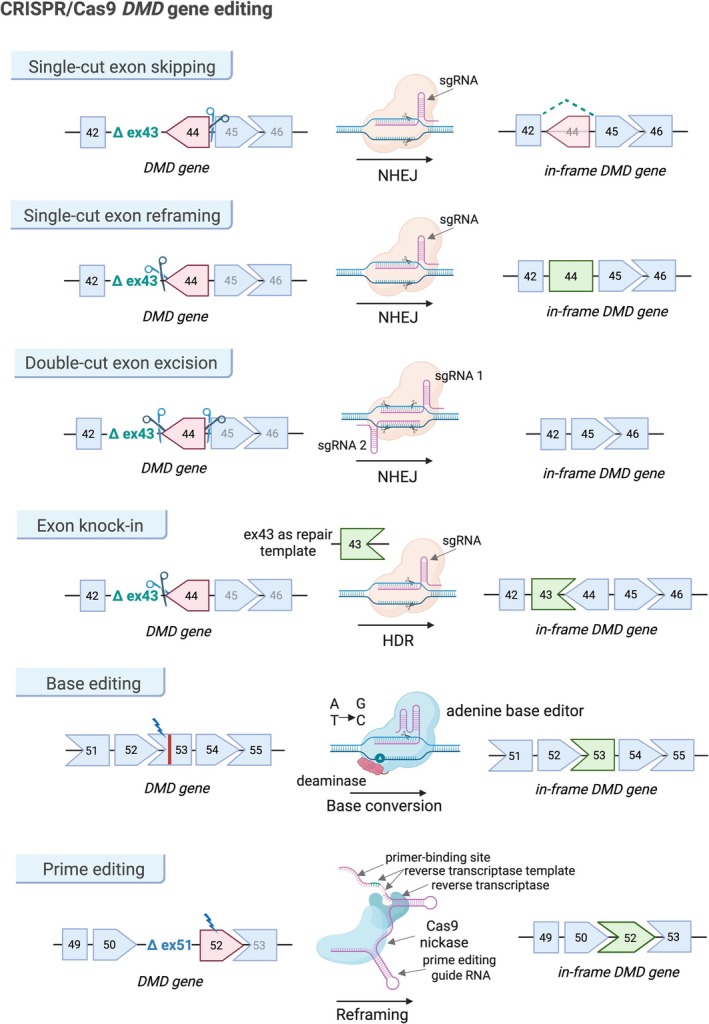 Figure 1
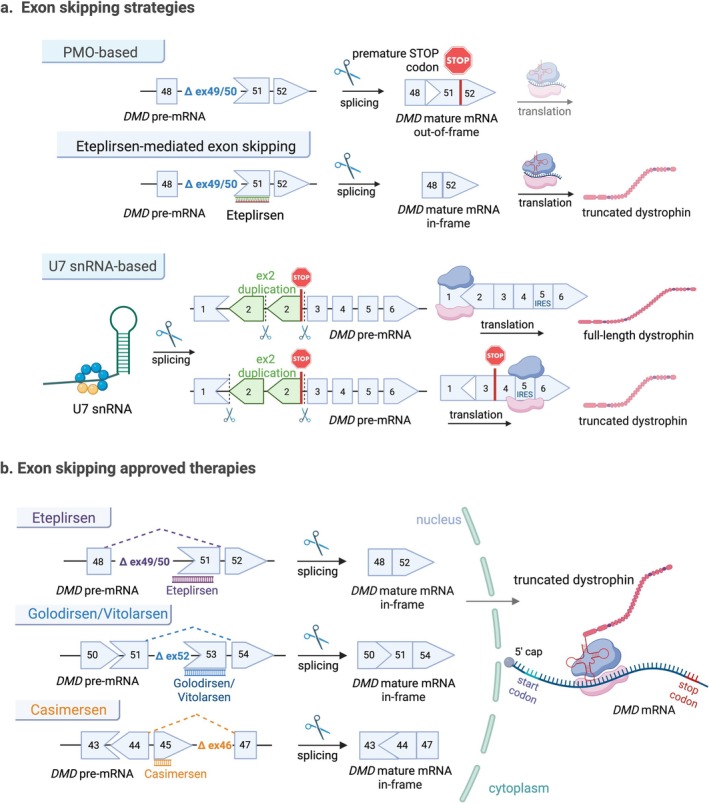 Figure 2
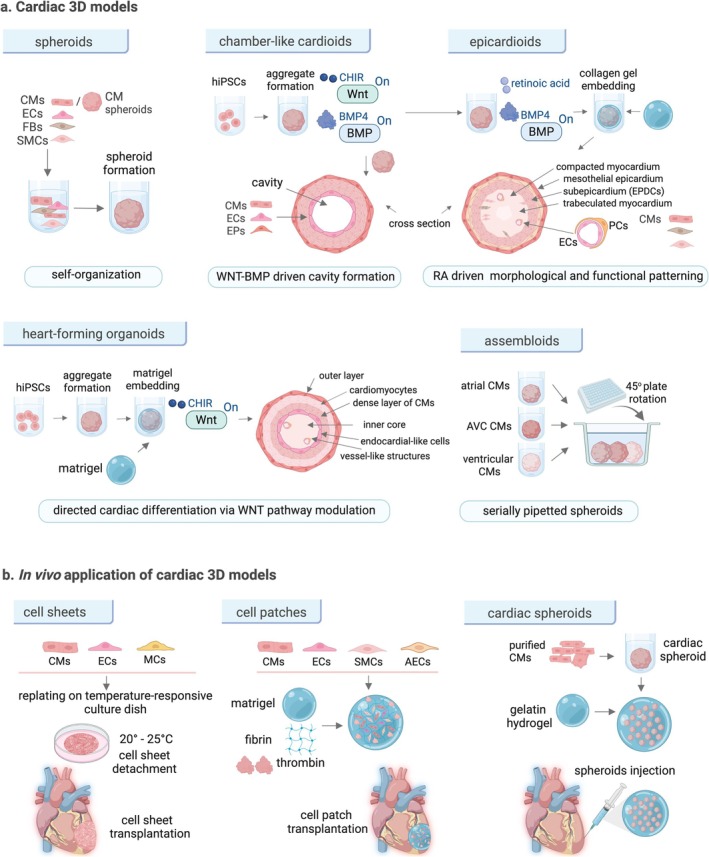 Figure 3
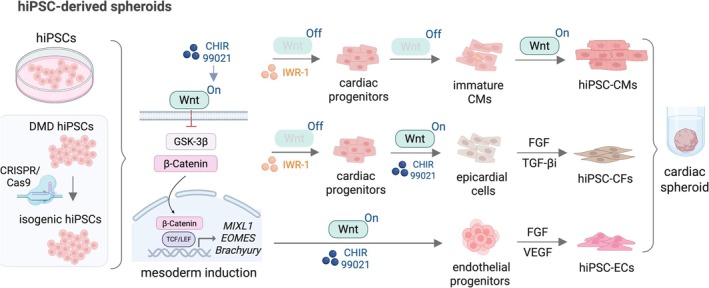 Figure 4
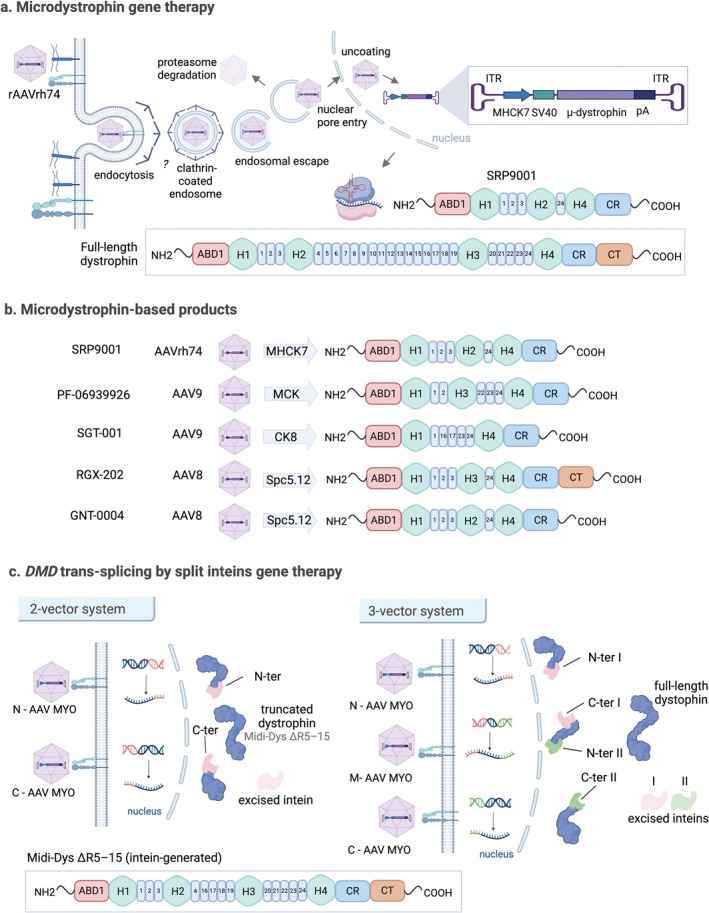 Figure 5
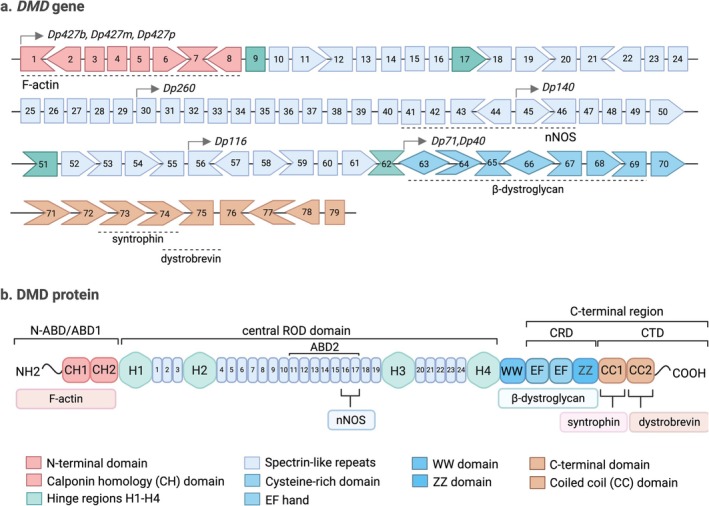 Figure 6
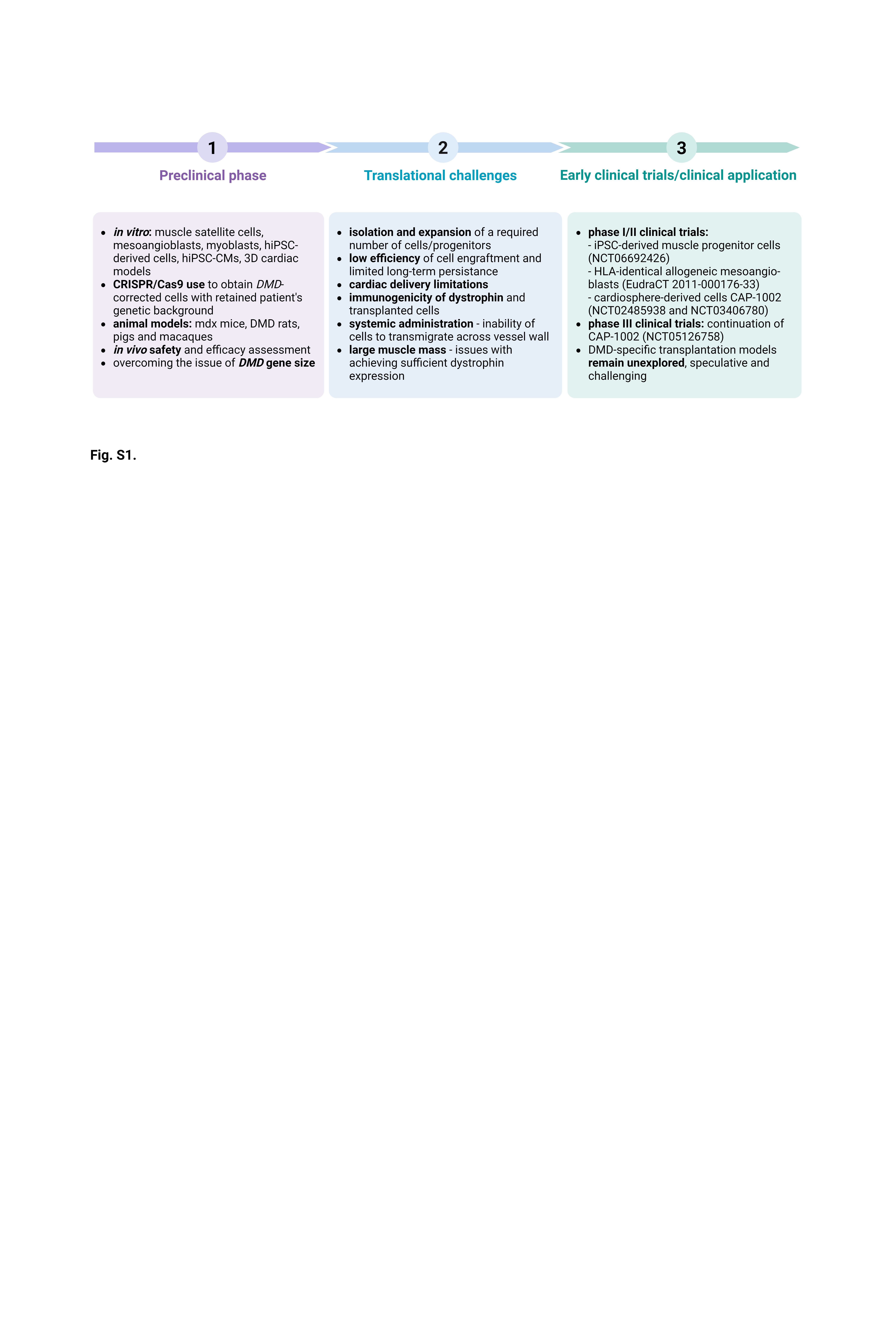 Figure 7
Peer Reviews
No public reviews on file for this paper yet. If you reviewed it on a platform where reviews are public (OpenReview, ICLR, NeurIPS, ICML), you can paste yours below so the community can read it here.
Videos
No videos yet. Explain this paper in a talk, walkthrough, or lecture? Add one.
Taxonomy
TopicsMuscle Physiology and Disorders · Pluripotent Stem Cells Research · Tissue Engineering and Regenerative Medicine