Mechanism of Self-Assembly of the Gonadropin Releasing Hormone Antagonist Teverelix into Amyloid Fibrils
Xinyang Li, Louise C. Serpell, Jens T. Bukrinski, Francois Boutignon, Carol M. MacLean, Sophie E. Jackson

TL;DR
This paper studies how teverelix, a cancer treatment, forms amyloid-like fibrils, which may explain its long-lasting effect in the body.
Contribution
The first detailed biophysical study of teverelix fibril formation and its mechanism.
Findings
Teverelix forms amyloid-like fibrils with a larger inter-β-sheet packing distance due to non-natural side chains.
Fibrillation rate depends on pH, peptide concentration, and trifluoroacetic acid levels.
A nucleation–polymerization mechanism is proposed for teverelix fibril formation.
Abstract
Teverelix is a short non-natural peptide, which is a gonadotropin releasing hormone antagonist and used as a treatment for prostate cancer. Teverelix is formulated as a trifluoroacetic acid salt, which, at the high concentrations used for parenteral injection, forms a microcrystalline suspension. At low concentrations and immediately after injection, teverelix self-assembles into a fibrillar species thought to be important for the slow-release kinetics and long-acting action of this peptide in vivo. In this paper, we confirmed the amyloid-like identity of teverelix fibrils using X-ray fiber diffraction and transmission electron microscopy. The inter-β-sheet packing distance was found to be larger than that of typical amyloid fibrils and this was attributed to the large non-natural side chains within the peptide. Using data from numerous biophysical experiments, a model of the structure…
Genes, proteins, chemicals, diseases, species, mutations and cell lines named across the full text — each resolved to its canonical identifier and authoritative record.
Click any figure to enlarge with its caption.
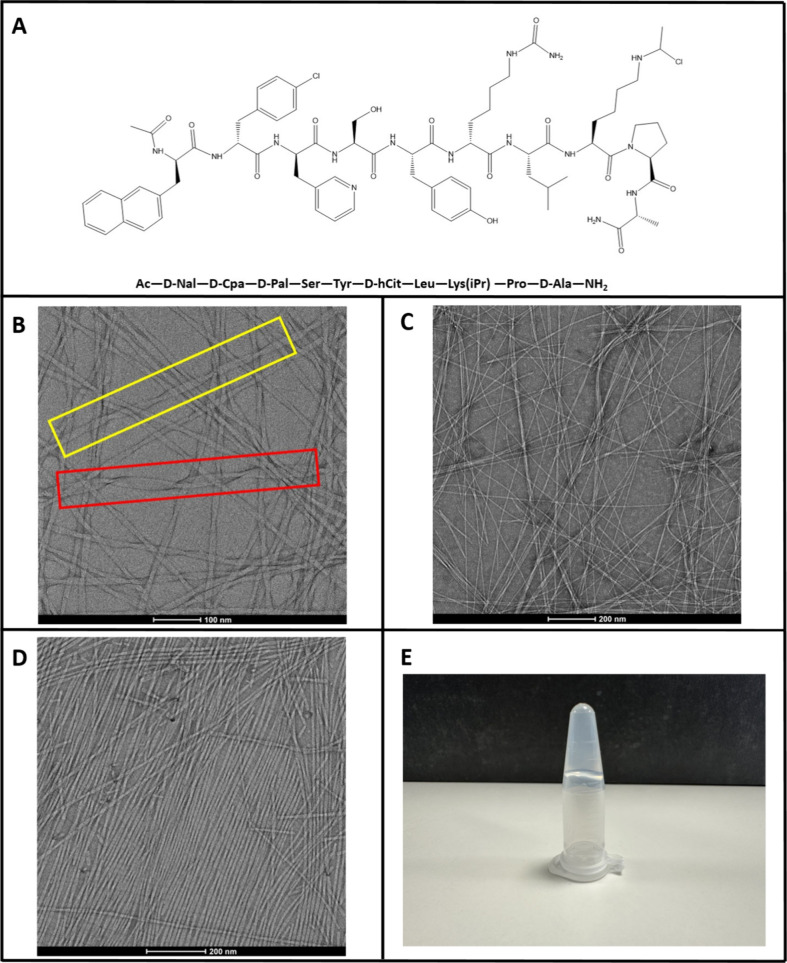 Figure 1
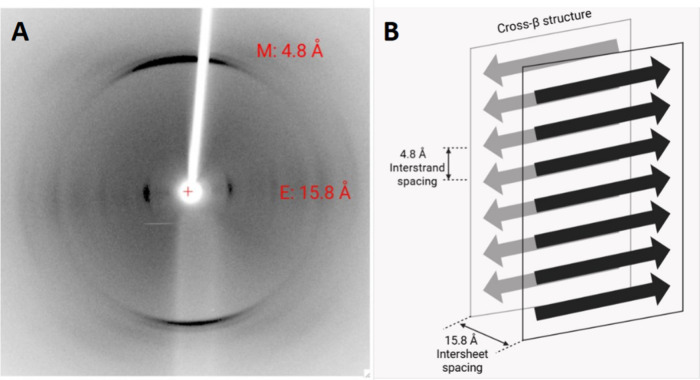 Figure 2
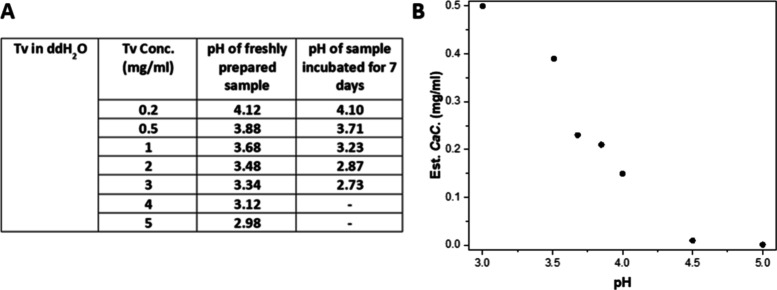 Figure 3
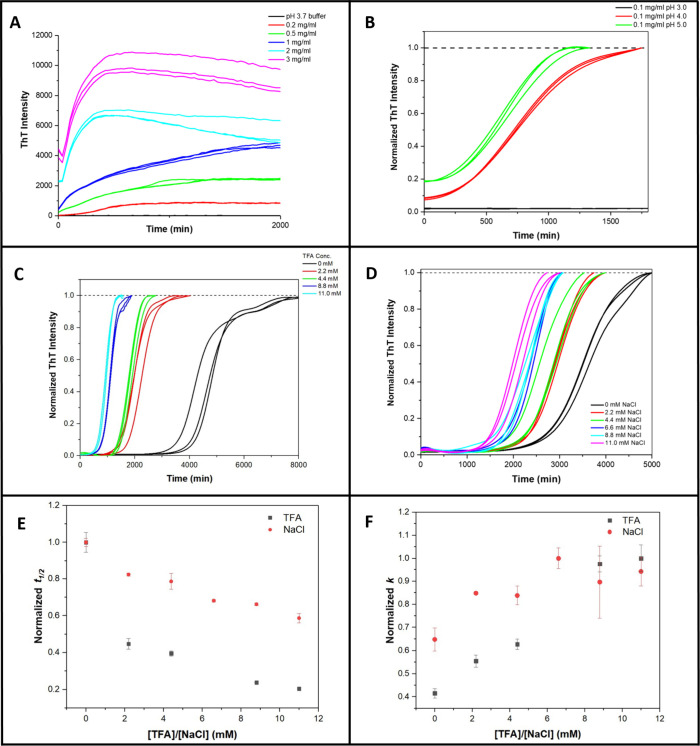 Figure 4
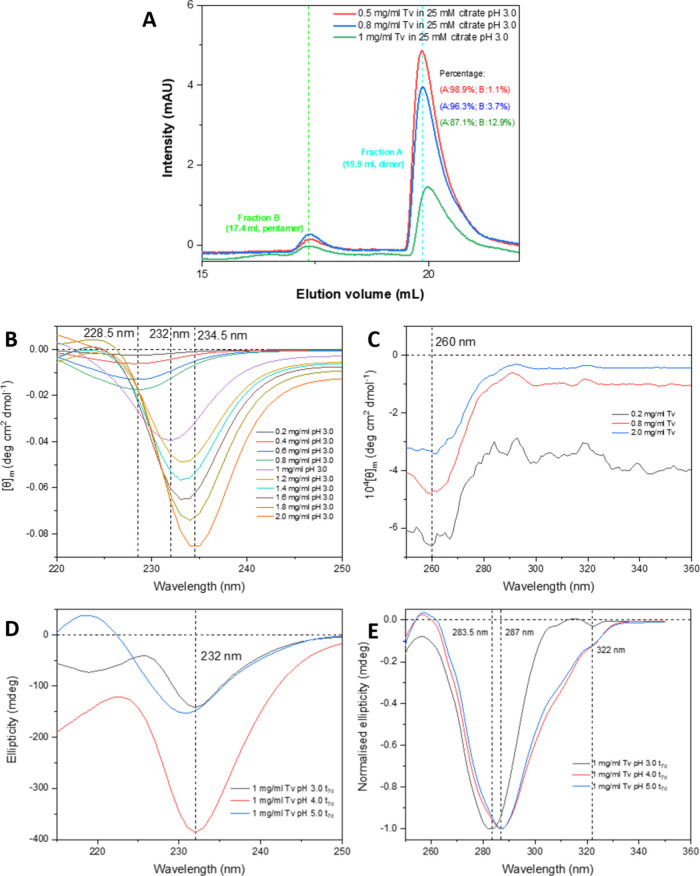 Figure 5
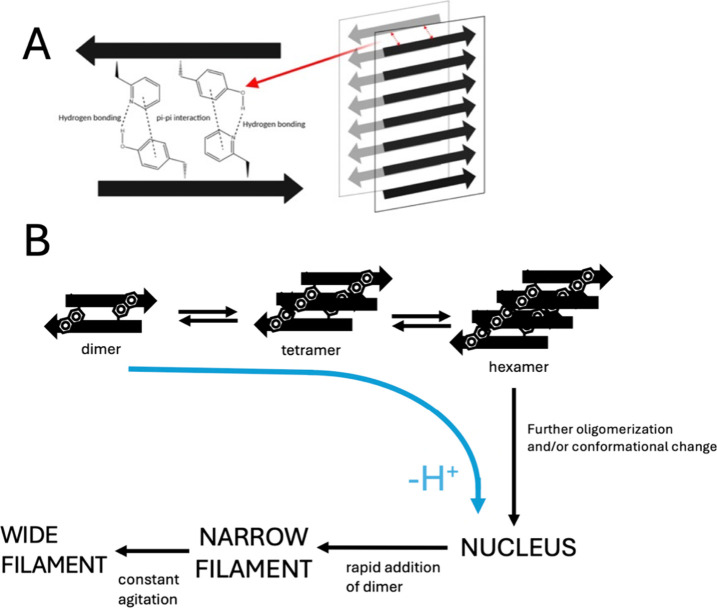 Figure 6
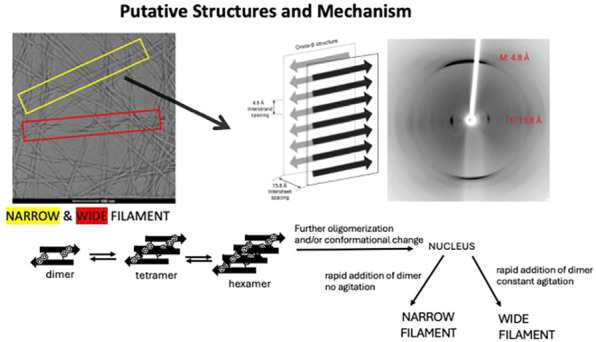 Figure 7
 Figure 8
 Figure 9
 Figure 10
Peer Reviews
No public reviews on file for this paper yet. If you reviewed it on a platform where reviews are public (OpenReview, ICLR, NeurIPS, ICML), you can paste yours below so the community can read it here.
Videos
No videos yet. Explain this paper in a talk, walkthrough, or lecture? Add one.
Taxonomy
TopicsSupramolecular Self-Assembly in Materials · Alzheimer's disease research and treatments · Surfactants and Colloidal Systems