Anal Extrusion of Ventriculoperitoneal Shunt Distal Catheter: A Case Report and Literature Review
Jasmine Ahmed Alturaiki, Eissa Alousi, Mustafa Alhelal, Ali Alkhamees, Awn Alessa, Ibrahim Alahmed, Abdulsalam Mohammed Aleid

TL;DR
A rare case of a ventriculoperitoneal shunt catheter extruding through the anus in an infant is reported, emphasizing the importance of early detection and surgical intervention.
Contribution
This case report presents a rare instance of asymptomatic anal extrusion of a VPS catheter in an infant with myelomeningocele.
Findings
Anal extrusion of a VPS catheter was discovered in an asymptomatic infant with myelomeningocele and hydrocephalus.
Surgical removal of the catheter and bowel repair, along with antibiotic prophylaxis, led to successful recovery and resolved hydrocephalus.
The case highlights the importance of caregiver vigilance and prompt surgical intervention to prevent life-threatening infections.
Abstract
The standard treatment for hydrocephalus is often the placement of a ventriculoperitoneal shunt (VPS), especially in patients with myelomeningocele (MMC). This case report aimed to enrich the existing knowledge by presenting a rare instance of asymptomatic anal extrusion of a VPS catheter in an infant, along with a review of the relevant literature. A 2-month-old male infant with myelomeningocele (MMC) and hydrocephalus presented with asymptomatic anal extrusion of his ventriculoperitoneal shunt (VPS) catheter, discovered by his mother. Emergency imaging revealed distal catheter migration through the rectosigmoid junction. Surgical management included (1) laparoscopic-assisted catheter removal with bowel repair using Vicryl sutures, (2) intraoperative external ventricular drain (EVD) placement, and (3) 14-day antibiotic prophylaxis. Cerebrospinal fluid analysis remained normal…
Genes, proteins, chemicals, diseases, species, mutations and cell lines named across the full text — each resolved to its canonical identifier and authoritative record.
Click any figure to enlarge with its caption.
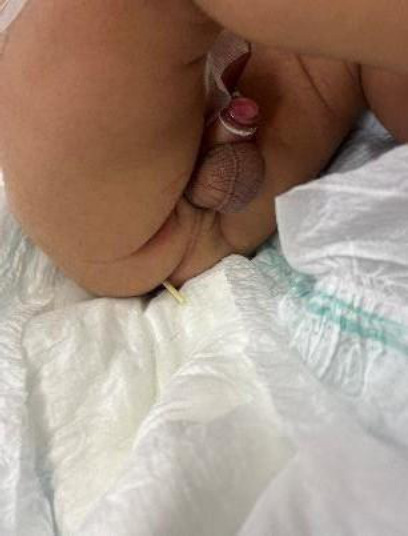 Figure 1
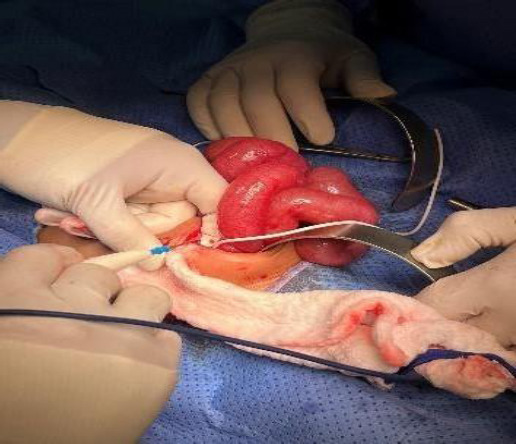 Figure 2
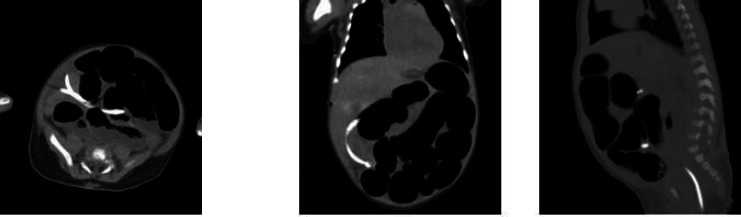 Figure 3
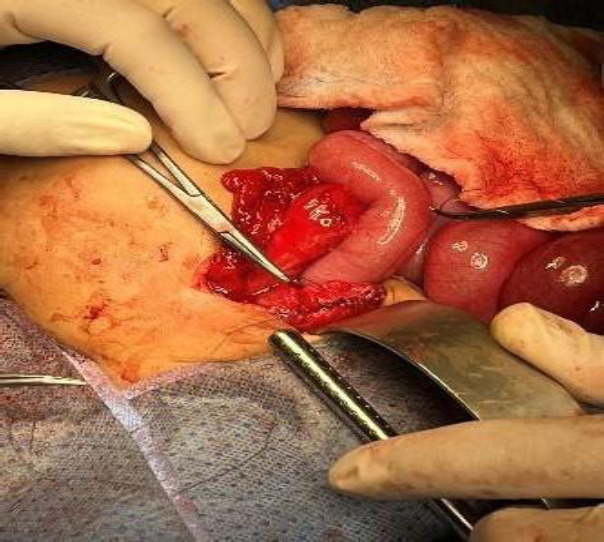 Figure 4
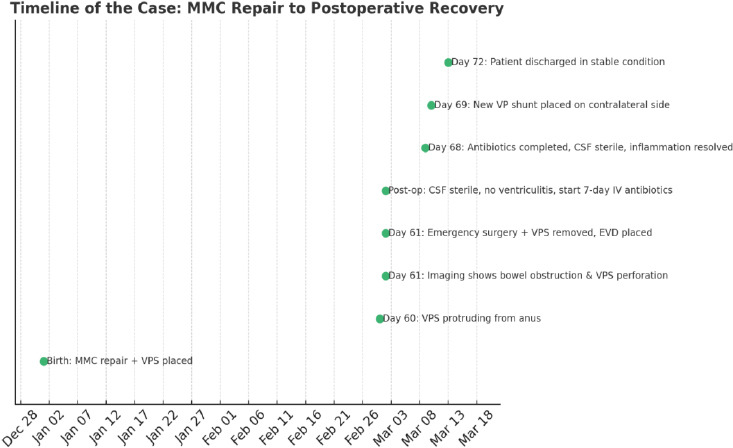 Figure 5
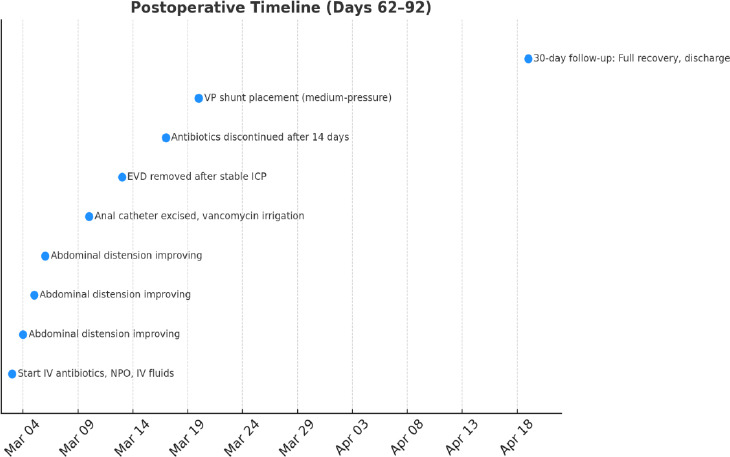 Figure 6
Peer Reviews
No public reviews on file for this paper yet. If you reviewed it on a platform where reviews are public (OpenReview, ICLR, NeurIPS, ICML), you can paste yours below so the community can read it here.
Videos
No videos yet. Explain this paper in a talk, walkthrough, or lecture? Add one.
Taxonomy
TopicsCerebrospinal fluid and hydrocephalus · Spinal Dysraphism and Malformations · Fetal and Pediatric Neurological Disorders