An innovative gamified gait biofeedback interface targeting propulsion: feasibility and preliminary effects
Bennett L Alterman, Alexandra Slusarenko, Minuk Kim, Zahin Alam, Deborah Fowler, Shilpa Krishnan, Maribeth Gandy Coleman, Steven L Wolf, Trisha M Kesar

TL;DR
A new gamified gait biofeedback system was tested to improve walking after stroke, showing promising biomechanical and engagement outcomes.
Contribution
Introduces a novel gamified gait biofeedback interface and evaluates its feasibility and preliminary effects in stroke survivors.
Findings
Gamified biofeedback increased key gait biomechanics more than no feedback, with moderate to large effect sizes.
Gamified biofeedback induced higher physiological intensity and mental demand compared to conventional biofeedback.
Participants rated gamified biofeedback as more novel and engaging than conventional biofeedback.
Abstract
Enhancing the efficacy of gait rehabilitation is an important area of need as most persons with a history of stroke continue to experience gait deficits following discharge from rehabilitation. Incorporating gamification and real-time biofeedback into gait retraining may provide benefits by increasing engagement and salience of stepping practice to target specific gait parameters, maximizing therapeutic impact on walking function. The objective of this study was to evaluate the feasibility and preliminary effects of a novel, customized, gamified gait biofeedback interface specifically designed to enhance propulsion during gait training. A repeated-measures design was used to compare 3 speed-matched treadmill walking bouts: (1) walking without biofeedback (noBF); (2) walking while receiving simple, real-time audiovisual conventional biofeedback (cBF); and (3) walking while receiving…
Genes, proteins, chemicals, diseases, species, mutations and cell lines named across the full text — each resolved to its canonical identifier and authoritative record.
Click any figure to enlarge with its caption.
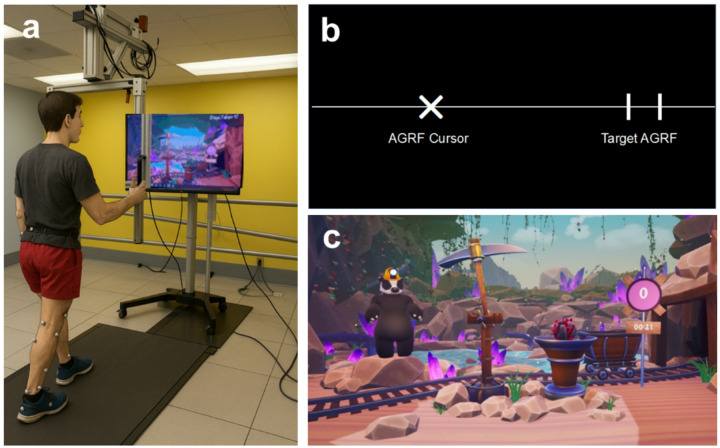 Figure 1
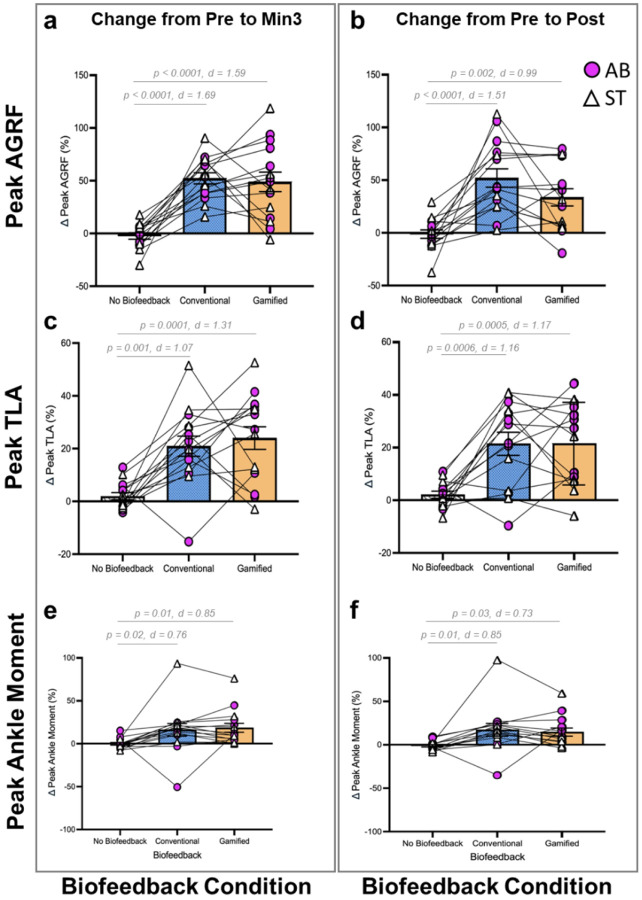 Figure 2
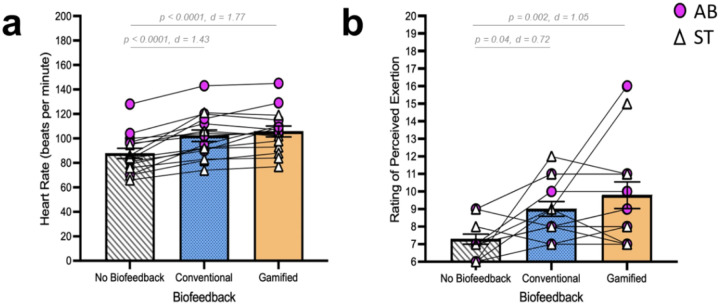 Figure 3
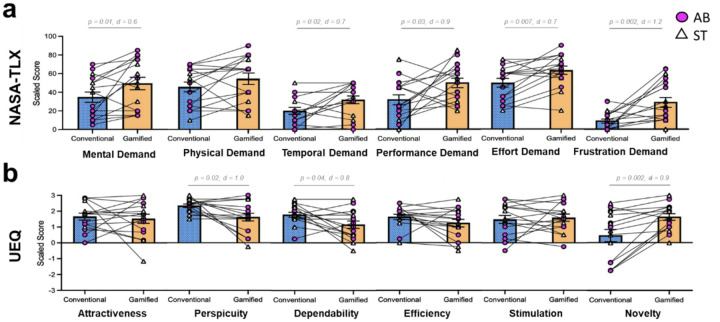 Figure 4
Peer Reviews
No public reviews on file for this paper yet. If you reviewed it on a platform where reviews are public (OpenReview, ICLR, NeurIPS, ICML), you can paste yours below so the community can read it here.
Videos
No videos yet. Explain this paper in a talk, walkthrough, or lecture? Add one.
Taxonomy
TopicsEEG and Brain-Computer Interfaces · Muscle activation and electromyography studies · Stroke Rehabilitation and Recovery