“Six months is a lot of time to lie”: Anticipated stigma, disclosure and treatment preferences among participants in a tuberculosis therapeutic trial
Faith Mugodhi, Cecilia Kanyama, Francis Makiya, John Metcalfe, Charity Potani, Kimberly K. Scarsi, Isabelle Weir, Jennifer Furin

TL;DR
This study explores how people with tuberculosis (TB) feel about shorter treatment regimens that include a drug causing skin discoloration, and how this affects their willingness to disclose their TB status.
Contribution
The study introduces a method to assess treatment preferences and disclosure concerns in TB trials using qualitative insights.
Findings
Most participants preferred shorter TB treatment despite potential skin discoloration.
Concerns about inadvertent disclosure and perceived treatment potency influenced preference for longer regimens.
Qualitative preference assessments can be effectively integrated into TB therapeutic trials.
Abstract
Tuberculosis (TB) is a leading cause of morbidity and mortality around the world. TB treatment is complex and clinical research has focused on shortening duration. Understanding patient preferences around treatment shortening is an important field of study, especially is shorter regimens contain drugs that have side effects that are challenging for people receiving treatment. Clofazimine, a drug that can cause skin hyperpigmentation has been proposed as a component of shorter TB treatment regimens. Concerns about hyperpigmentation and its impact on disclosure have been raised as issues that could make such treatment unacceptable. This was an exploratory, qualitative sub-study using in-depth interviews (IDIs) among purposively selected participants in the CLO-FAST trial (NCT04311502). CLO-FAST randomized participants to receive a standard, 6-month TB treatment regimen or a 3-month…
Genes, proteins, chemicals, diseases, species, mutations and cell lines named across the full text — each resolved to its canonical identifier and authoritative record.
Click any figure to enlarge with its caption.
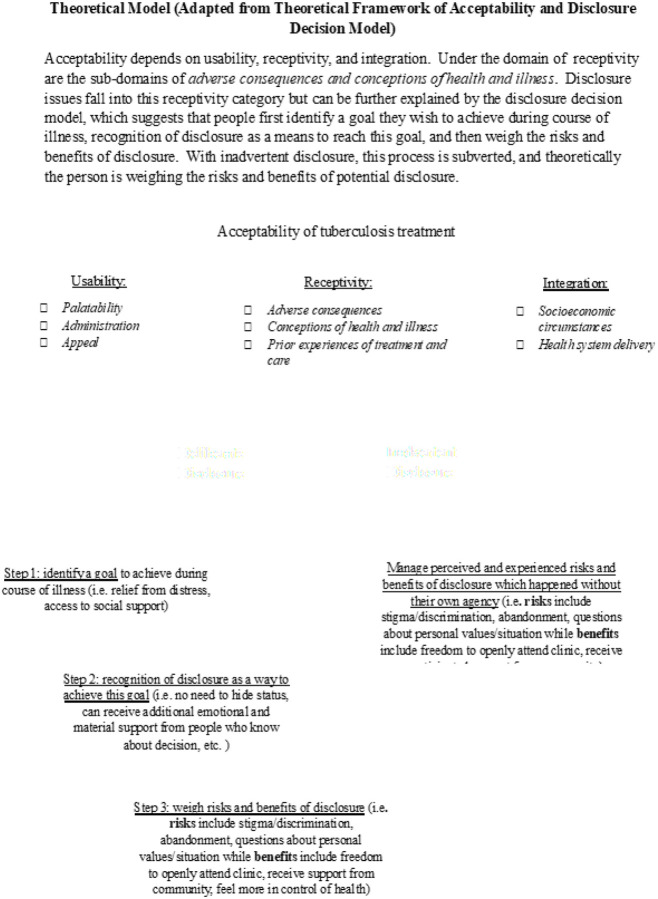 Figure 1
Peer Reviews
No public reviews on file for this paper yet. If you reviewed it on a platform where reviews are public (OpenReview, ICLR, NeurIPS, ICML), you can paste yours below so the community can read it here.
Videos
No videos yet. Explain this paper in a talk, walkthrough, or lecture? Add one.
Taxonomy
TopicsTuberculosis Research and Epidemiology · Ethics in Clinical Research · Pharmaceutical studies and practices