Source-Level Resting-State EEG Connectivity Reveals Frequency-Specific Neural Reorganization and Predicts Motor Recovery in Individuals Post Stroke Following Gait Rehabilitation
Fares Al-Shargie, Michael Glassen, Gregory R. Ames, Christina M. Dandola, Karen J. Nolan, Soha Saleh

TL;DR
This study shows that resting-state EEG can track brain changes after stroke rehabilitation and predict motor recovery, offering a new tool for neurorehabilitation.
Contribution
The study introduces source-level EEG connectivity as a novel biomarker for tracking neural reorganization and predicting motor recovery post-stroke.
Findings
Post-stroke individuals showed baseline reduced connectivity in SMA and vPM, with compensatory increases in the insula and dorsalA6.
After rehabilitation, connectivity increased in M1 and PoG, with dorsalA6 showing enhanced node strength and correlating with motor recovery.
Machine learning achieved high accuracy in differentiating groups using alpha and gamma frequency EEG features.
Abstract
Stroke-induced motor impairments are linked to disrupted cortical connectivity and remain a major challenge in neurorehabilitation. The purpose of this investigation was to evaluate brain network reorganization and its relationship to motor recovery following a 10-week gait rehabilitation program (3 days/week for a total of 30 sessions). Forty-four participants (22 healthy adults HC, 22 individuals diagnosed with stroke) were enrolled, individuals in the stroke group were randomized into Exoskeleton-Assisted Rehabilitation (ER=9) or Standard of Care (SOC=13) groups. Resting-state EEG was recorded pre- and post-intervention. Directed functional connectivity was estimated from localized sources using Partial Directed Coherence (PDC), followed by graph theory analysis, laterality index (LI) computation, and machine learning classification using frequency-specific EEG features. At…
Genes, proteins, chemicals, diseases, species, mutations and cell lines named across the full text — each resolved to its canonical identifier and authoritative record.
Click any figure to enlarge with its caption.
 Figure 1
 Figure 2
 Figure 3
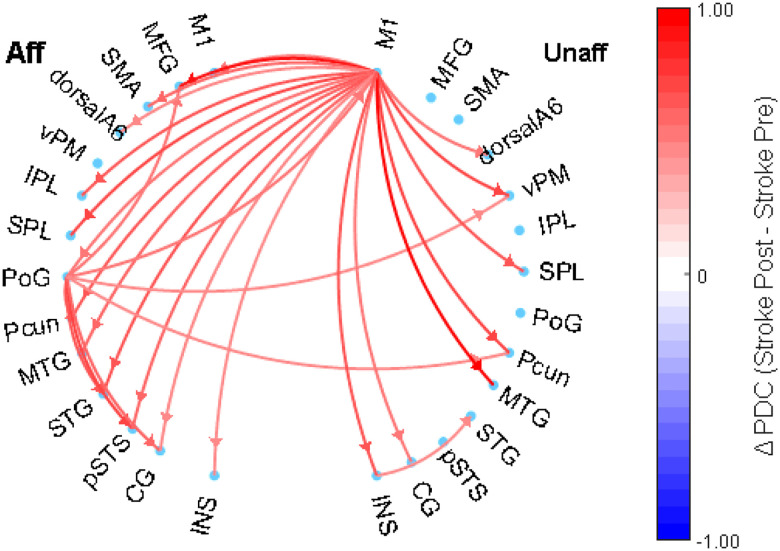 Figure 4
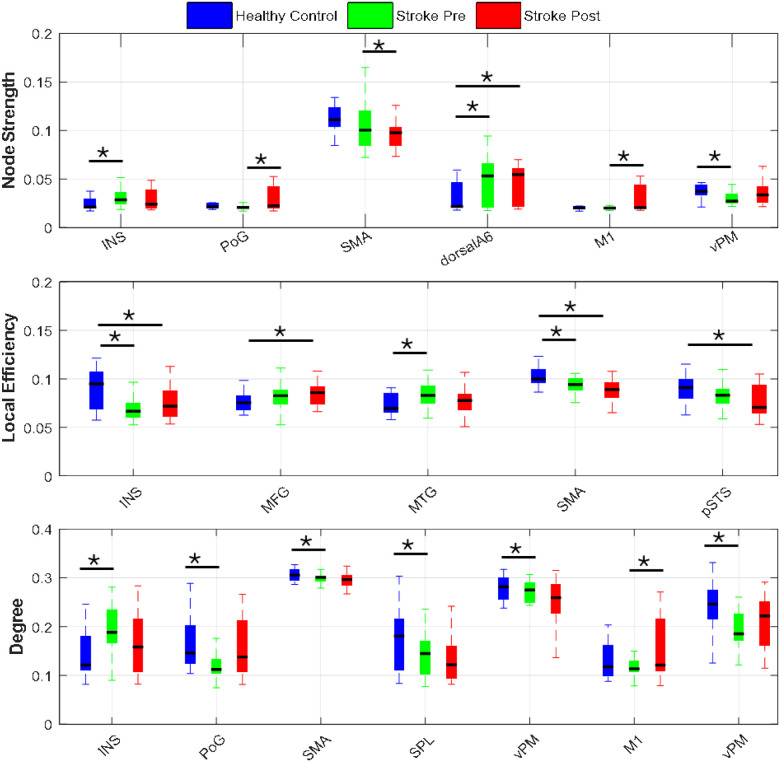 Figure 5
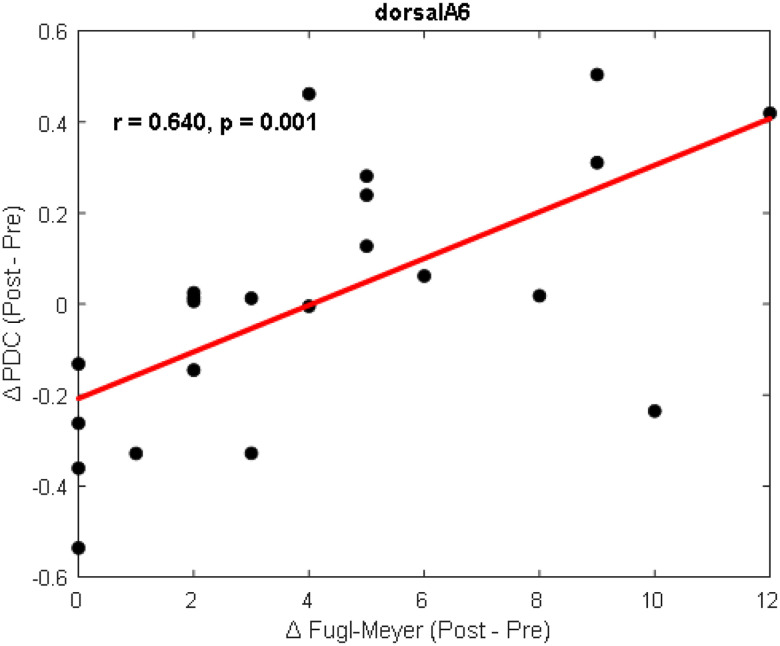 Figure 6
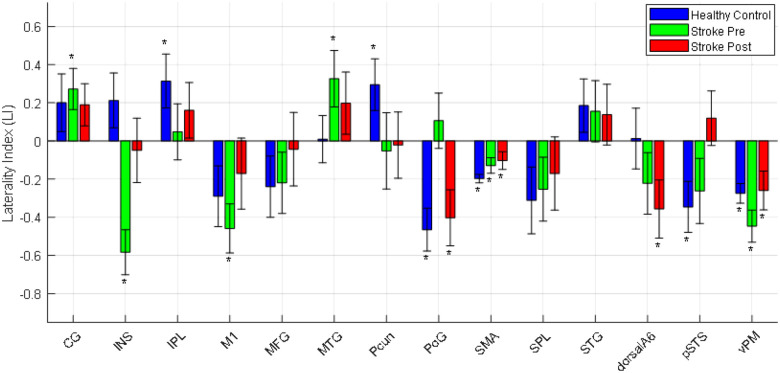 Figure 7
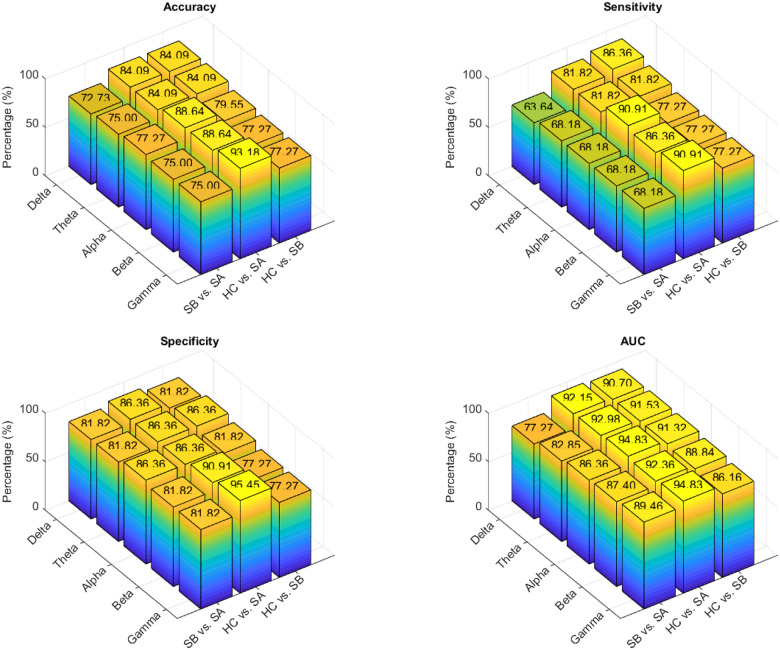 Figure 8
Peer Reviews
No public reviews on file for this paper yet. If you reviewed it on a platform where reviews are public (OpenReview, ICLR, NeurIPS, ICML), you can paste yours below so the community can read it here.
Videos
No videos yet. Explain this paper in a talk, walkthrough, or lecture? Add one.
Taxonomy
TopicsFunctional Brain Connectivity Studies · EEG and Brain-Computer Interfaces · Transcranial Magnetic Stimulation Studies