Coupling the MAPK Slt2/ERK1 Pathway and IRE1-driven UPR Through Transcription Factor Rlm1/MEF2
Anish Chakraborty, Saswata Chakrabarty, Jagadeesh Kumar Uppala, Kimberly Ann Mayer, Anna J Evans, Jasmine George, Chandrima Ghosh, Ritisha Dey, An Phu Tran Nguyen, Nadege Gouignard, Pradeep Chaluvally-Raghavan, Madhusudan Dey

TL;DR
This study reveals a new connection between the UPR and MAPK pathways through the Rlm1/MEF2 transcription factor in yeast.
Contribution
The novel crosstalk between the MAPK pathway and IRE1-driven UPR via Rlm1/MEF2 is identified.
Findings
The UPR has two phases: an early IRE1-dependent phase and a later phase involving Slt2/ERK1 and Rlm1/MEF2.
Slt2 promotes IRE1 expression through Rlm1, revealing a new regulatory mechanism.
Rlm1/MEF2 is a downstream target of Slt2/ERK1 and contributes to UPR regulation.
Abstract
Unfolded protein response (UPR) is a conserved cellular strategy that enhances the protein folding capacity of cells under stress conditions. In Saccharomyces cerevisiae, the dual kinase RNase IRE1 initiates the UPR by catalyzing the cytosolic splicing of HAC1 mRNA, a process conserved in humans where IRE1 splices XBP1 mRNA. The spliced HAC1/XBP1 mRNA yields a transcription factor that upregulates the expression of protein-folding enzymes and chaperones, thereby boosting the cell’s ability to cope with unfolded proteins. Our study demonstrates that the UPR involves two distinct phases. The early phase operates predominantly through the canonical IRE1 signaling pathway, while the later phase involves additional regulation by the MAP kinase Slt2 or its human ortholog ERK1/ERK2/ERK5 and the downstream target the MADS-box transcription factor Rlm1 (an ortholog of human MEF2C). We further…
Genes, proteins, chemicals, diseases, species, mutations and cell lines named across the full text — each resolved to its canonical identifier and authoritative record.
Click any figure to enlarge with its caption.
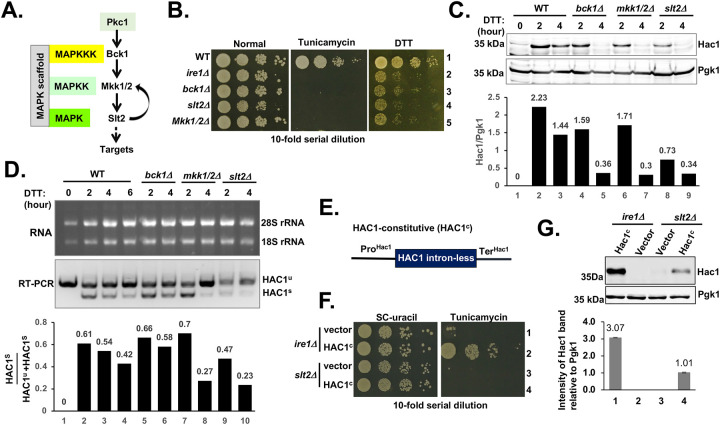 Figure 1
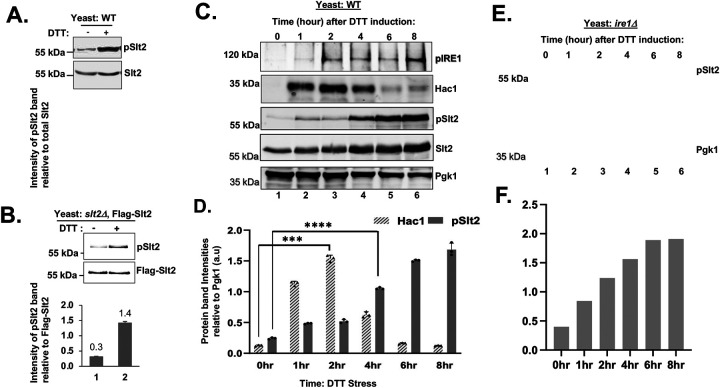 Figure 2
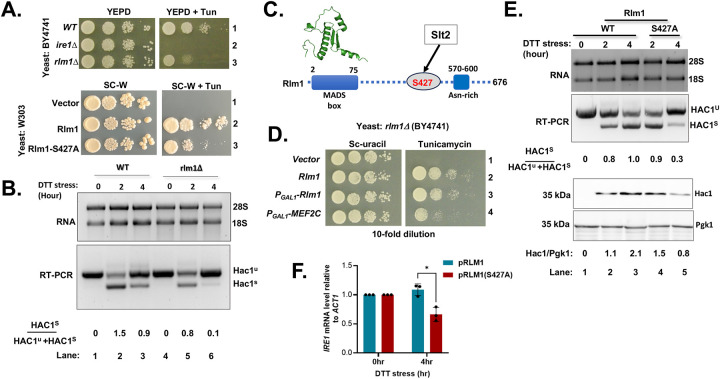 Figure 3
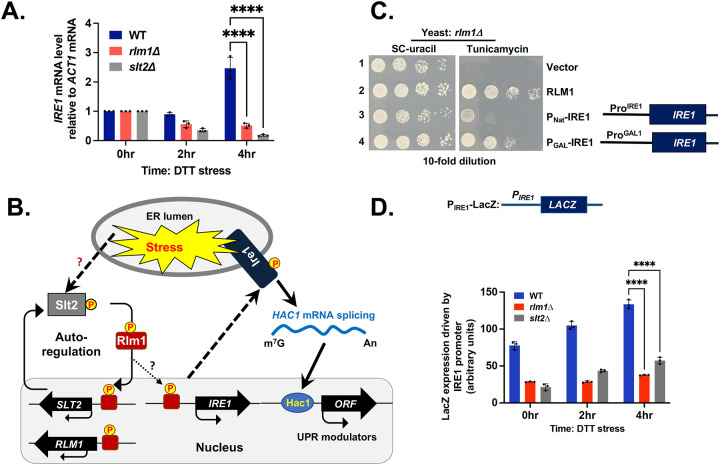 Figure 4
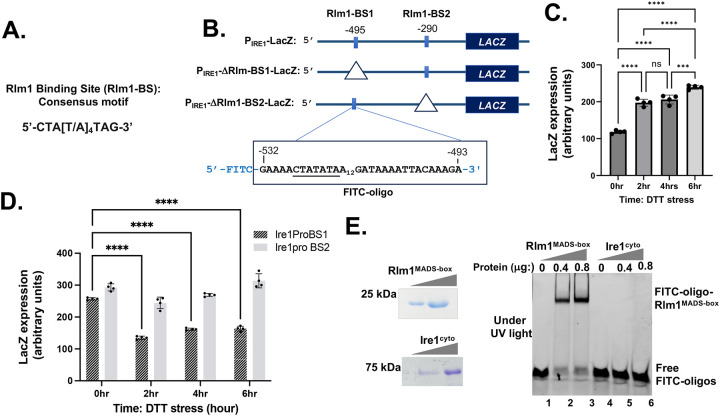 Figure 5
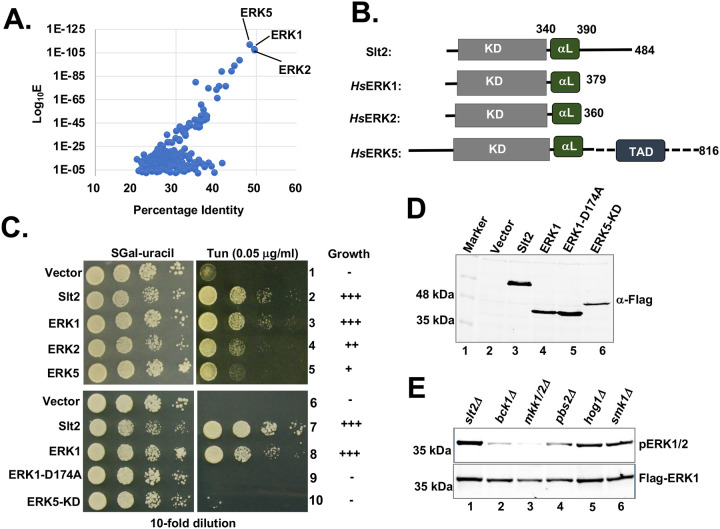 Figure 6
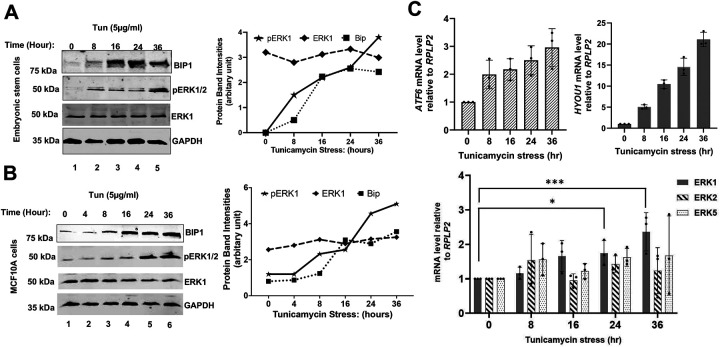 Figure 7
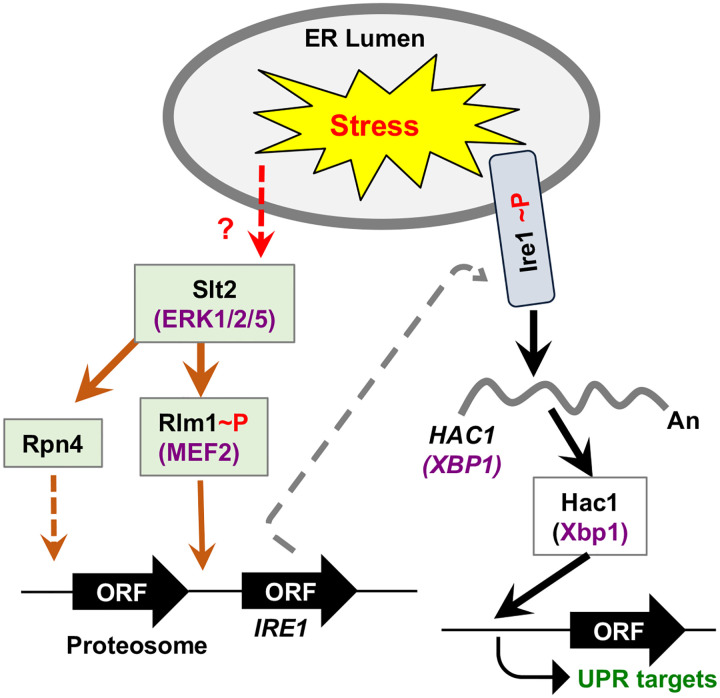 Figure 8
Peer Reviews
No public reviews on file for this paper yet. If you reviewed it on a platform where reviews are public (OpenReview, ICLR, NeurIPS, ICML), you can paste yours below so the community can read it here.
Videos
No videos yet. Explain this paper in a talk, walkthrough, or lecture? Add one.
Taxonomy
TopicsEndoplasmic Reticulum Stress and Disease · Heat shock proteins research · Protein Tyrosine Phosphatases