Local Misalignment Scoring Reveals Spatially Uniform Chondrocyte Disorganization in a Wnt5a-C83S Knock-in Model of Robinow Syndrome
Zhendong A. Zhong, Megan N. Michalski, Cassandra R. Diegel, Cheryl Christie, Zachary Klamer, Nathan J. Lanning, Brian B. Haab, Stephanie Grainger, Bart O. Williams

TL;DR
A new imaging method reveals how a Wnt5a mutation causes disorganized cartilage cells in a mouse model of Robinow Syndrome.
Contribution
The study introduces a novel image-based method, local misalignment score (LMS), to detect chondrocyte orientation defects in Wnt/PCP signaling.
Findings
The Wnt5a-C83S mutation causes widespread chondrocyte disorganization in mouse limbs.
LMS distinguishes between Wnt/PCP loss-of-function and gain-of-function phenotypes in vivo.
The C83S mutation does not act as a dominant-negative in Wnt/PCP signaling.
Abstract
The WNT5A-mediated Wnt/Planar Cell Polarity (Wnt/PCP) pathway plays a key role in vertebrate development, particularly in limb morphogenesis. Robinow Syndrome (RS) is a rare genetic disorder characterized primarily by craniofacial malformations and limb shortening that is linked to mutations in multiple Wnt/PCP genes. The pathogenic WNT5A point mutation, Cys83Ser (C83S), is one of the most-studied RS-associated variants to date. It has been described as a loss-of-function, hypomorphic, or dominant-negative variant based on overexpression studies in vitro and in vivo. However, a mammalian model that mimics the C83S condition in human RS patients has not yet been established, and methods to distinguish between Wnt/PCP loss-of-function and gain-of-function in vivo phenotypes remain limited. In this study, we present a novel image-based method, local misalignment score (LMS), for in situ…
Genes, proteins, chemicals, diseases, species, mutations and cell lines named across the full text — each resolved to its canonical identifier and authoritative record.
Click any figure to enlarge with its caption.
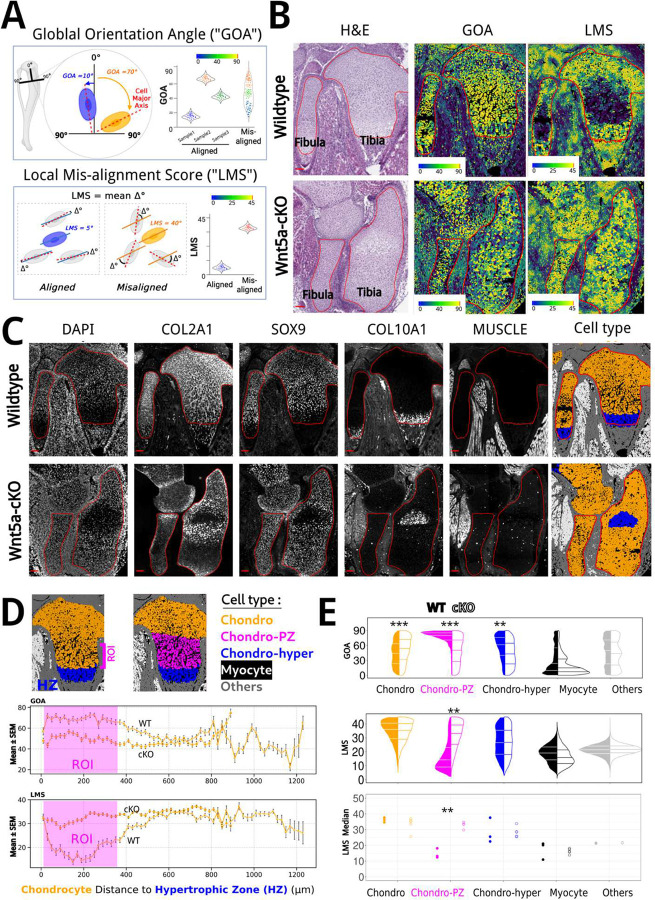 Figure 1
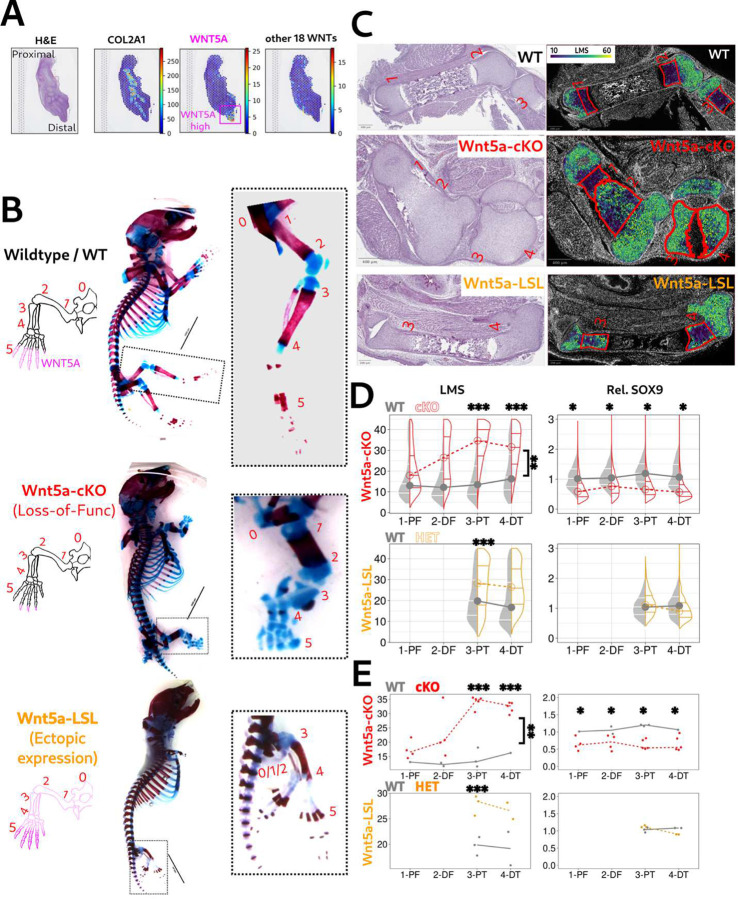 Figure 2
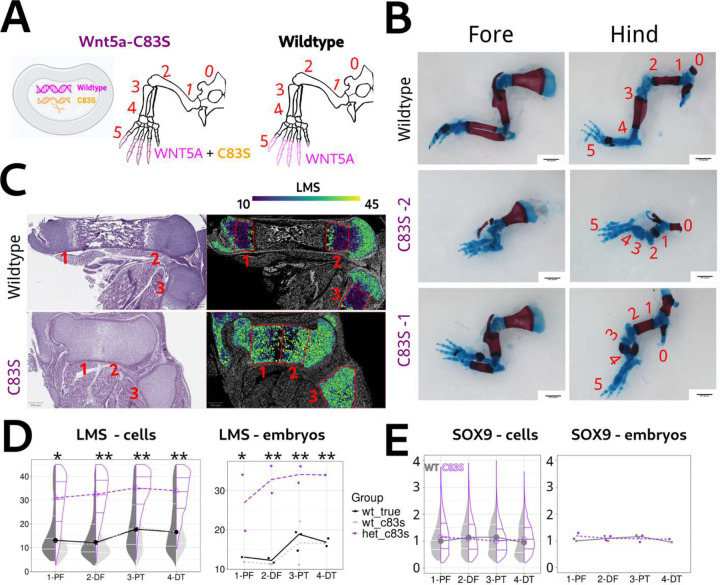 Figure 3
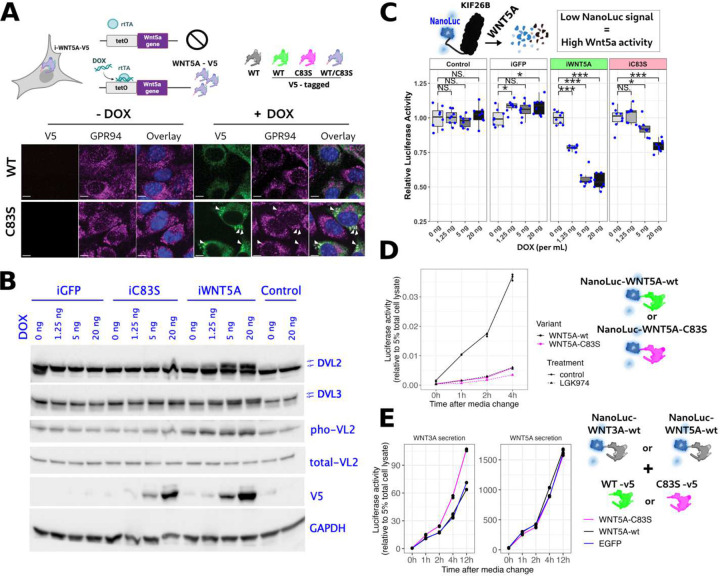 Figure 4
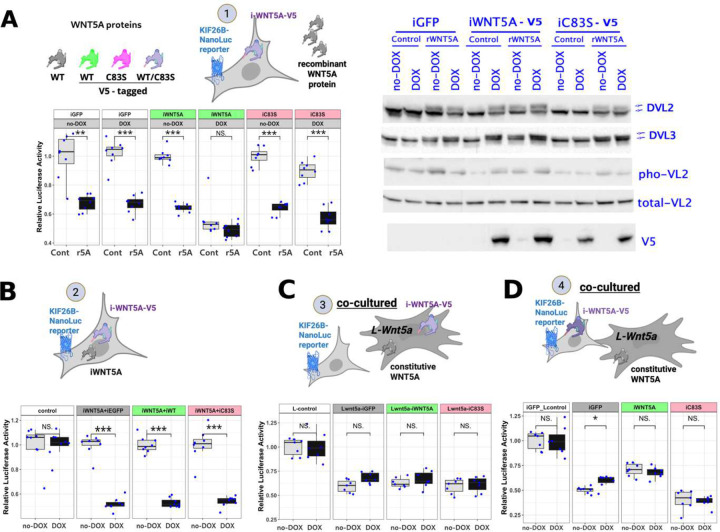 Figure 5
Peer Reviews
No public reviews on file for this paper yet. If you reviewed it on a platform where reviews are public (OpenReview, ICLR, NeurIPS, ICML), you can paste yours below so the community can read it here.
Videos
No videos yet. Explain this paper in a talk, walkthrough, or lecture? Add one.
Taxonomy
TopicsWnt/β-catenin signaling in development and cancer · Developmental Biology and Gene Regulation · Hippo pathway signaling and YAP/TAZ