Genome wide association study of a Circadian Imbalance Index in 312,935 European ancestry UK Biobank participants identifies loci related to diabetes, mood and myocardial infarction
Magdalena Żebrowska, Matthias Wielscher, Jing Zhang, Ingvild Saksvik-Lehouillier, Lee DiMilia, Angus Burns, Jesse Valliere, Leonardo Vincenzi, Susan Redline, Olivia I Okereke, Richa Saxena, Rebecca Richmond, Martin Rutter, Eva Schernhammer

TL;DR
This study links a Circadian Imbalance Index to genes related to diabetes, mood, and heart disease in over 300,000 UK Biobank participants.
Contribution
A novel Circadian Imbalance Index was developed and genetically linked to metabolic, cardiovascular, and mood traits.
Findings
27 loci and 72 genes were identified, including circadian regulators like CALCA and DHCR7.
A polygenic score for CII was associated with type 2 diabetes, depression, and obesity.
Genetic correlations and Mendelian randomization suggest causal links between CII and health outcomes.
Abstract
The Circadian Imbalance Index (CII) integrates chronotype, sleep duration, neuroticism, caffeine intake, and vitamin D. In a genome wide association study (GWAS) of CII in 312,935 European ancestry UK Biobank participants, we identified 27 loci mapping to 72 genes, including circadian regulators CALCA, DHCR7, KDM5A, HAL, and CRX. Gene-overlap analyses demonstrated shared architecture with CII components, while EPHB1, SERPING1, C12orf74, PLEKHG7, and EEA1 were uniquely associated with CII. A CII polygenic score (CII-PRS) showed phenome-wide associations with type 2 diabetes (T2D), major depressive disorder, and obesity. Genetic correlations linked CII with insomnia, mood symptoms, body mass index (BMI), T2D, coronary artery disease (CAD), and myocardial infarction (MI). Mendelian randomization suggested causal effects of CII on T2D, mood swings, and MI, and reverse effects of CAD, mood,…
Genes, proteins, chemicals, diseases, species, mutations and cell lines named across the full text — each resolved to its canonical identifier and authoritative record.
Click any figure to enlarge with its caption.
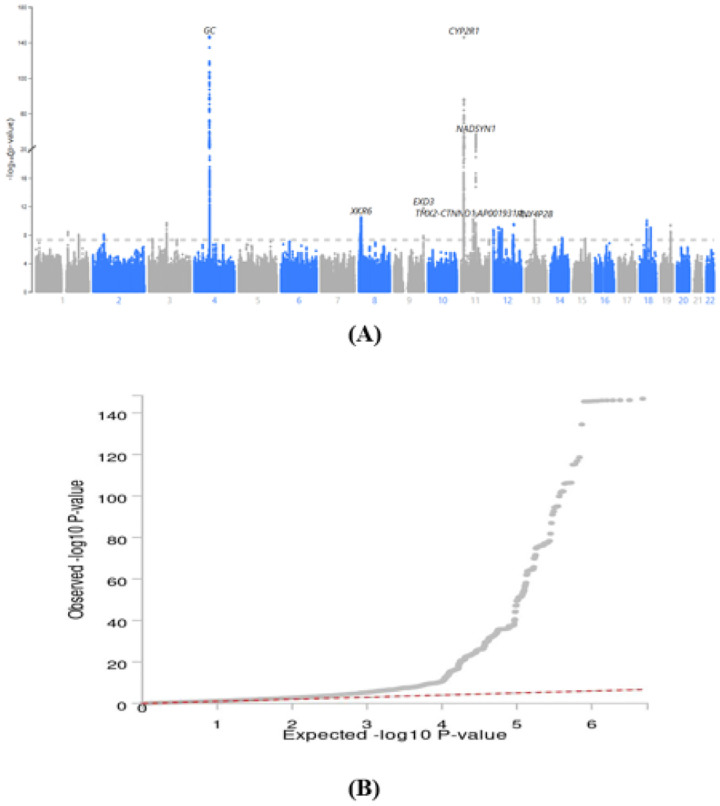 Figure 1
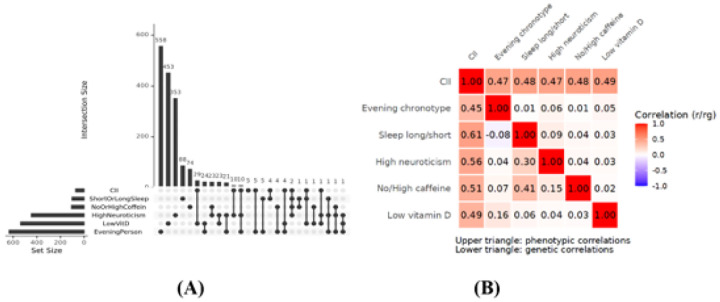 Figure 2
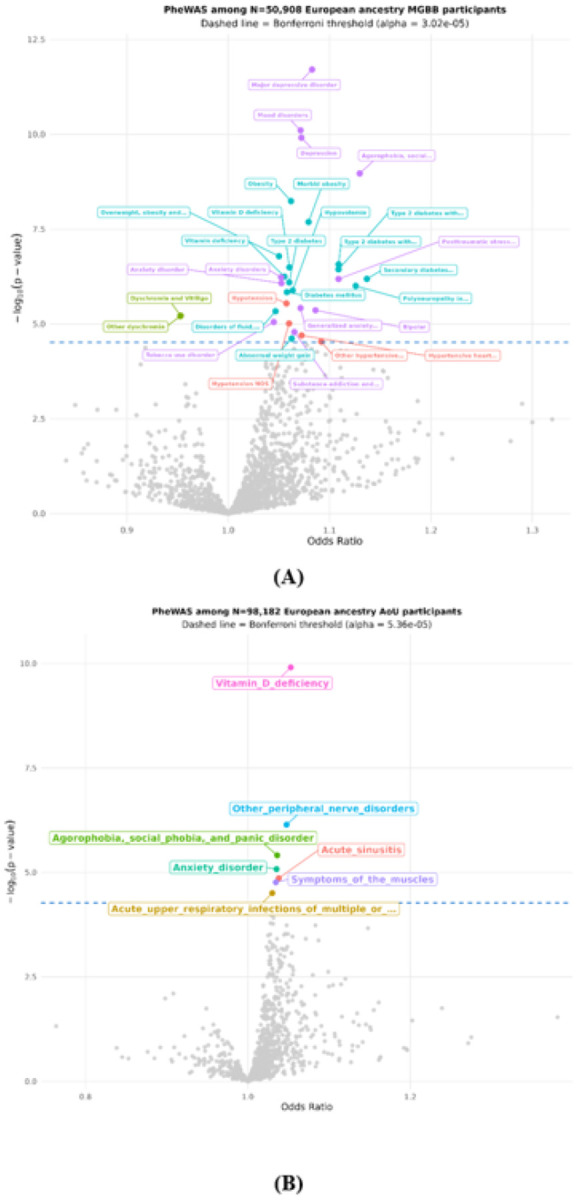 Figure 3
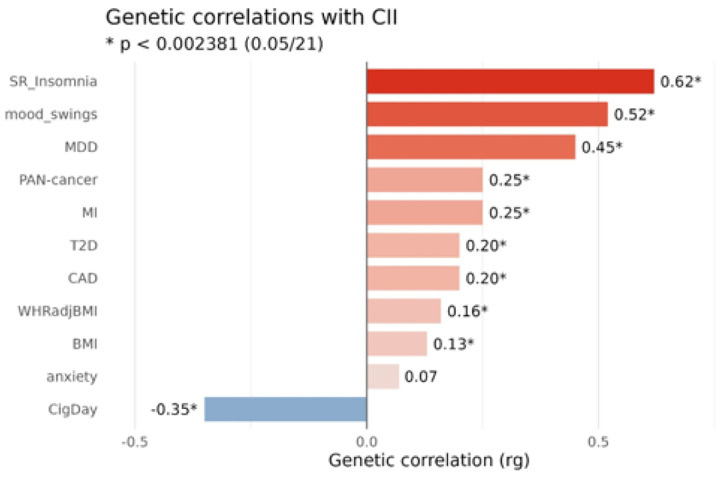 Figure 4
Peer Reviews
No public reviews on file for this paper yet. If you reviewed it on a platform where reviews are public (OpenReview, ICLR, NeurIPS, ICML), you can paste yours below so the community can read it here.
Videos
No videos yet. Explain this paper in a talk, walkthrough, or lecture? Add one.
Taxonomy
TopicsCircadian rhythm and melatonin · Genetic Associations and Epidemiology · Sleep and related disorders