Homing and Detection of Unknown Primary Head-Neck Cancer by Acid-Sensing Nanoparticles
Jinming Gao, Qiang Feng, Jun Chen, William Hartnett, Sindhu Voorugonda, Brittny Tillman, John Truelson, Larry Myers, Andrew Day, Vijay Basava, Xuechun Wang, Yangyang Zhao, Oreoluwa Onabolu, Natalia Hajnas, Haini Zhang, Gang Huang, Shao-Po Huang, Isaac Chan, Mingyi Chen

TL;DR
Acid-sensing nanoparticles help locate hidden head and neck cancers in patients where traditional methods fail, improving surgical outcomes.
Contribution
A clinical trial demonstrates the use of acid-sensing nanoparticles to detect and guide surgery for unknown primary head and neck cancers.
Findings
Pegsitacianine accumulates in acidic tumor stromal regions adjacent to active cancer cells.
The nanoparticle enabled fluorescence-guided resection in 14 out of 16 patients with unknown primary cancer.
The study links tumor metabolism, immune infiltration, and nanoparticle delivery mechanisms.
Abstract
Precise localization of cancer is essential for curative surgery but remains a major clinical challenge when tumors are small or anatomically concealed. While tumor-targeted imaging with nanomaterials has shown promise in preclinical models, mechanistic understanding and clinical translation in cancer patients remain limited. Here, in a prospective Phase 2 clinical trial (NCT05576974), we constructed a single-cell spatial atlas of Pegsitacianine, an acid-sensing nanoparticle with activation pH threshold of 5.3, in human squamous carcinoma of the head and neck. Mechanistically, Pegsitacianine preferentially accumulate in immune-infiltrative severely acidic milieus (iSAM) within tumor stromal regions adjacent to metabolically active cancer cells. Clinically, Pegsitacianine illuminated iSAM regions and achieved fluorescence-guided resection of tumors in 14 of 16 patients with unknown…
Genes, proteins, chemicals, diseases, species, mutations and cell lines named across the full text — each resolved to its canonical identifier and authoritative record.
Click any figure to enlarge with its caption.
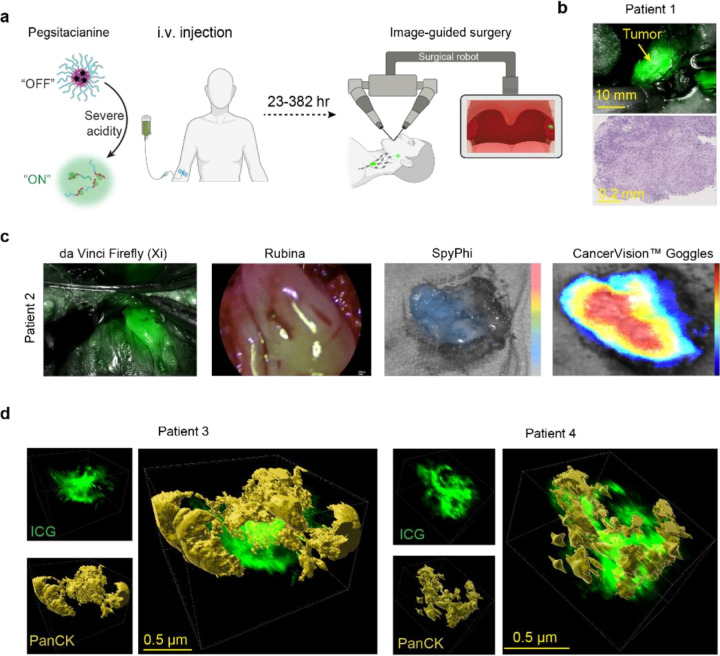 Figure 1
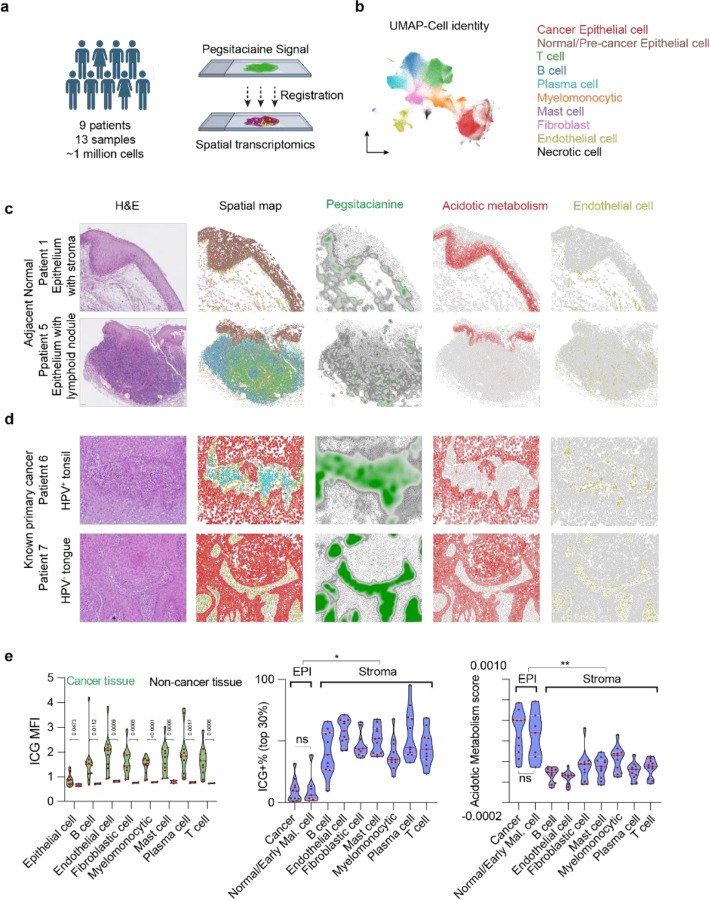 Figure 2
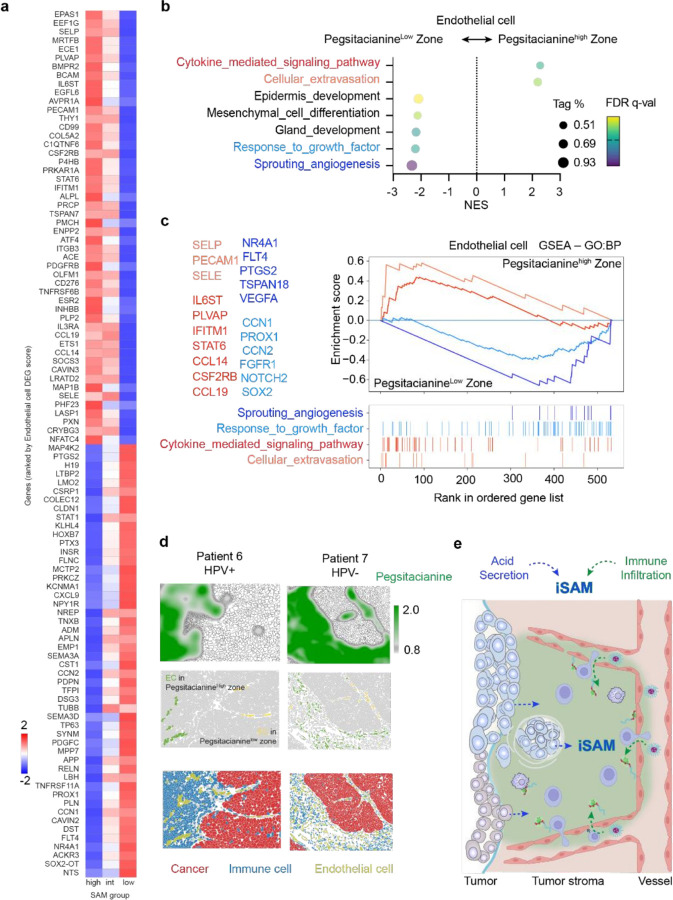 Figure 3
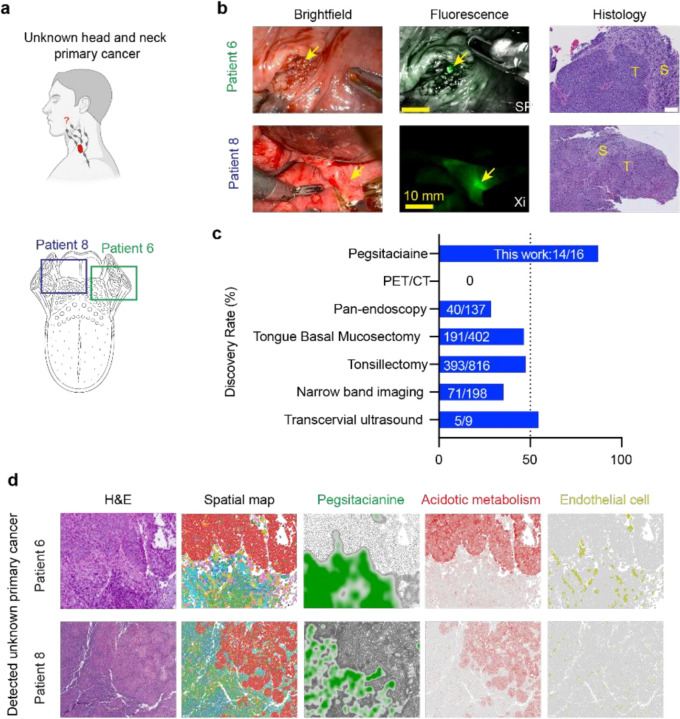 Figure 4
Peer Reviews
No public reviews on file for this paper yet. If you reviewed it on a platform where reviews are public (OpenReview, ICLR, NeurIPS, ICML), you can paste yours below so the community can read it here.
Videos
No videos yet. Explain this paper in a talk, walkthrough, or lecture? Add one.
Taxonomy
TopicsCancer, Hypoxia, and Metabolism · Analytical Chemistry and Sensors · Nanoplatforms for cancer theranostics