Erythrocyte-microglia crosstalk contributing to sex differences in pediatric brain tumorigenesis
Baoli Hu

TL;DR
This study shows how interactions between red blood cells and brain cells contribute to higher rates of brain tumors in boys, offering new insights for early detection and prevention.
Contribution
The study reveals a novel mechanism involving erythrocyte-microglia interactions that explain sex differences in pediatric brain tumor development.
Findings
Male neural progenitor cells differentiate more slowly due to microglia-mediated erythrophagocytosis and lipid transfer.
Lower GYPA expression in male erythrocytes increases cell damage and microglial bilirubin-lipid metabolism.
Neonatal hyperbilirubinemia is linked to increased pediatric brain tumor risk in clinical data.
Abstract
Pediatric brain tumors are a leading cause of cancer-related morbidity and mortality, with limited treatment options and a male predominance across all ages of children and adolescents1,2. However, the origins and underlying mechanisms of these sex differences in tumorigenesis remain elusive. Here, we use medulloblastoma (MB), the most common malignant brain tumor in children3,4, as a model to demonstrate that sex-specific cell and organ interactions slow neural progenitor cell (NPC) differentiation, contributing to a higher incidence and poorer prognosis of MB in males. Single-cell transcriptome analyses of developing human and mouse cerebella, along with in vitro and in vivo validations, uncover intrinsic sexual dimorphisms in NPCs, regulated by microglia-mediated erythrophagocytosis and lipid transfer. In males, lower Glycophorin A (GYPA) expression in the erythrocyte membrane leads…
Genes, proteins, chemicals, diseases, species, mutations and cell lines named across the full text — each resolved to its canonical identifier and authoritative record.
Click any figure to enlarge with its caption.
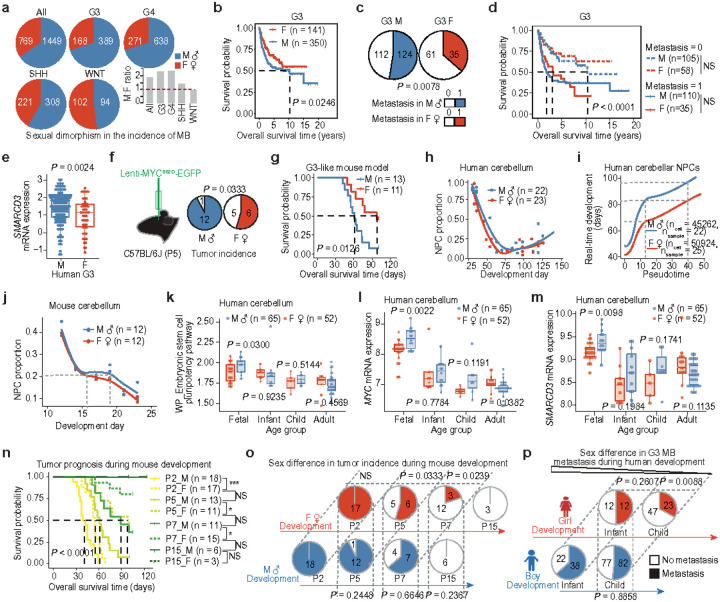 Figure 1
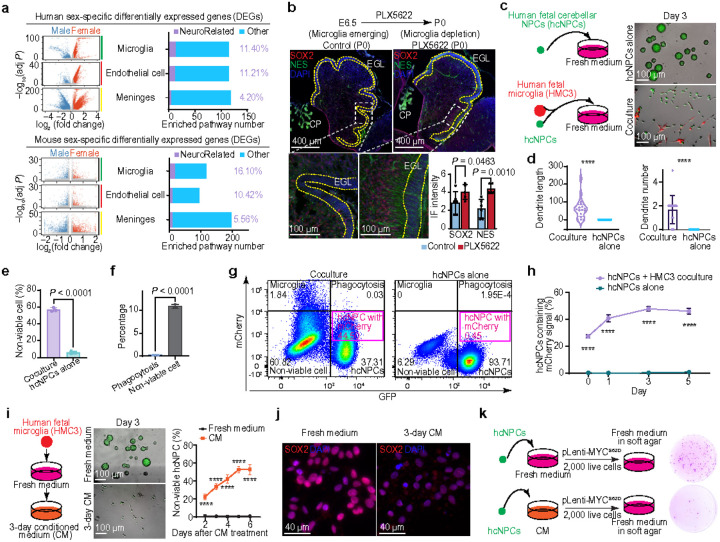 Figure 2
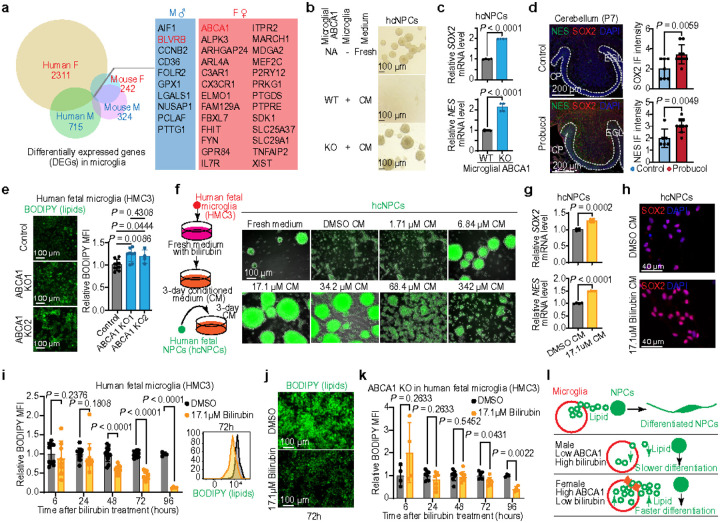 Figure 3
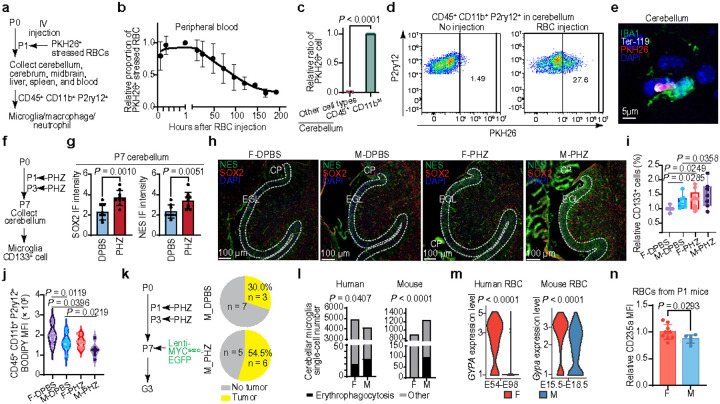 Figure 4
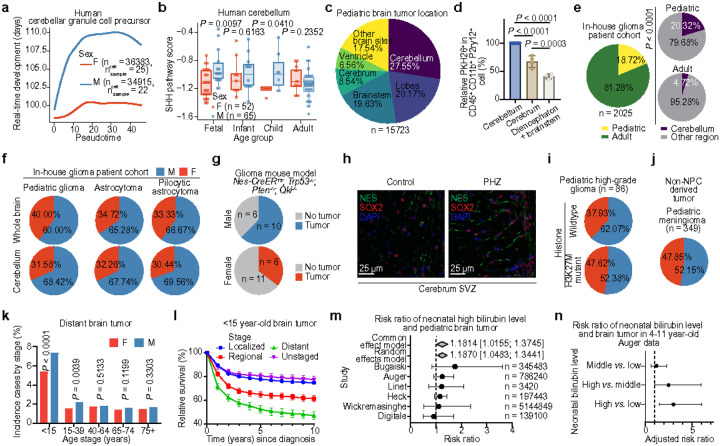 Figure 5
Peer Reviews
No public reviews on file for this paper yet. If you reviewed it on a platform where reviews are public (OpenReview, ICLR, NeurIPS, ICML), you can paste yours below so the community can read it here.
Videos
No videos yet. Explain this paper in a talk, walkthrough, or lecture? Add one.
Taxonomy
TopicsNeuroinflammation and Neurodegeneration Mechanisms · Neurogenesis and neuroplasticity mechanisms · Glioma Diagnosis and Treatment