Trajectory of skill acquisition, loss, and regain in females with classic Rett syndrome
Jeffrey L. Neul, Timothy A. Benke, Eric D. Marsh, Sarika U. Peters, Cary Fu, Jonathan K. Merritt, Alan K. Percy

TL;DR
This study tracks how developmental skills are gained, lost, and regained in females with Classic Rett syndrome, focusing on age-related patterns and implications for clinical trials.
Contribution
The study provides detailed age-specific trajectories of skill acquisition, loss, and regain in Classic Rett syndrome, offering new insights for clinical trial design.
Findings
Skill acquisition peaks at age 6, with lower-level skills acquired more frequently than advanced skills.
Skill loss typically occurs within 2 years of acquisition, with minimal regain in fine motor, communication, and social skills after age 6.
Regain of skills generally stops by age 6, suggesting functional gains post-6 years are rare and significant for treatment evaluation.
Abstract
To characterize frequency, timing, and trajectory of gain, loss, and regain of developmental skills in Classic Rett syndrome (RTT). The frequency and timing of gain, loss, and regain of 51 developmental skills from 1228 females with Classic RTT and a pathogenic loss-of-function variant in MECP2 was assessed during in-person visits from participants enrolled in the US Natural History Study. The percentage of participants experiencing gain, loss, or regain events, mean and median age of event and time to event with confidence intervals, and the cumulative incidence curves were calculated and compared to normative data using SPSS v29.0.2.0. One-year incidence of either gain or regain of each skill from 0–20 years old and one-year incidence of either gain or regain of any of 51 developmental skills was calculated. The acquisition of skills was greatest for lower-level skills and…
Genes, proteins, chemicals, diseases, species, mutations and cell lines named across the full text — each resolved to its canonical identifier and authoritative record.
Click any figure to enlarge with its caption.
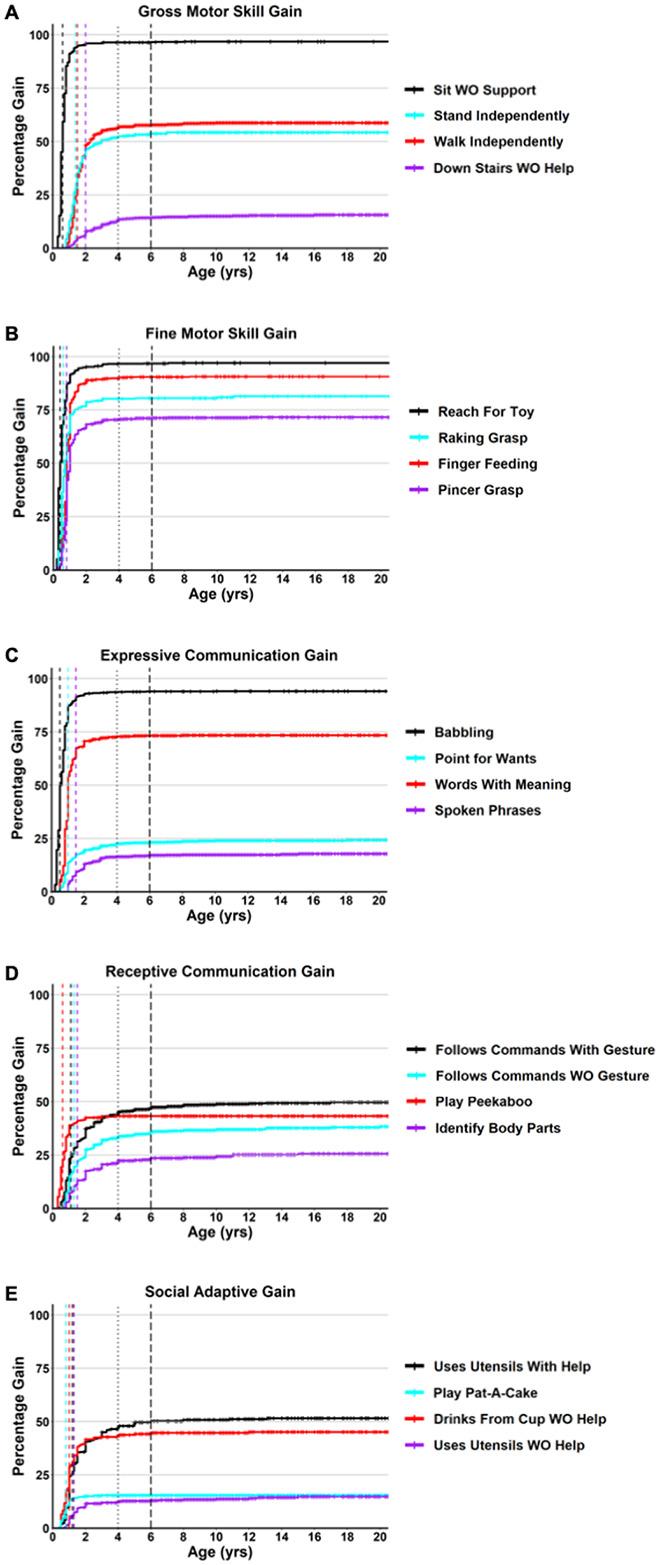 Figure 1
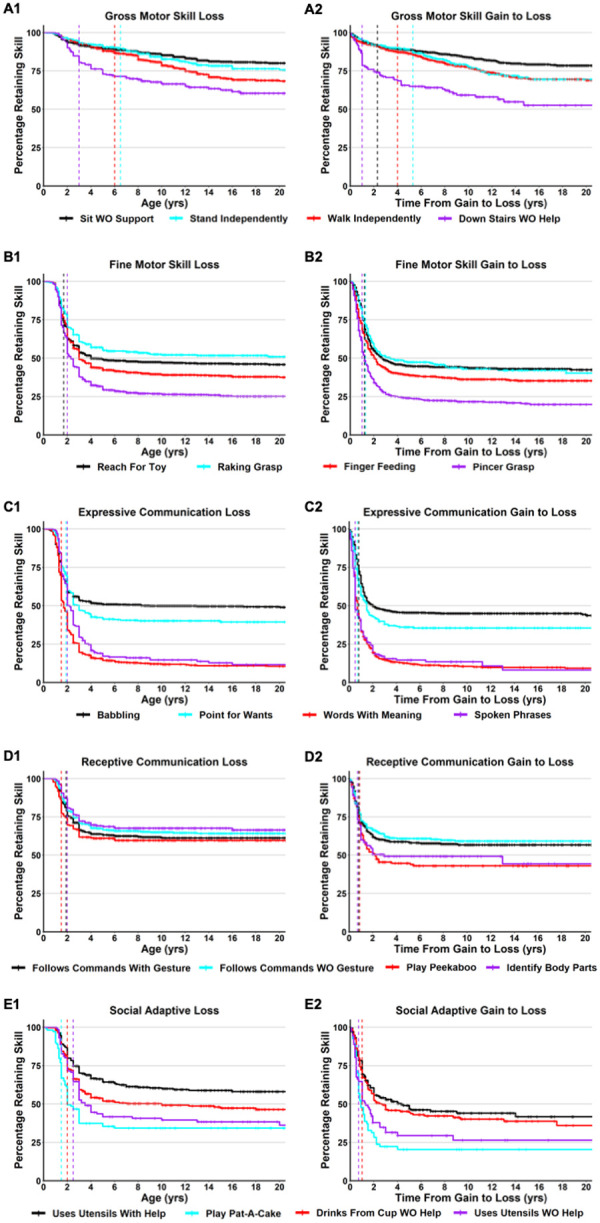 Figure 2
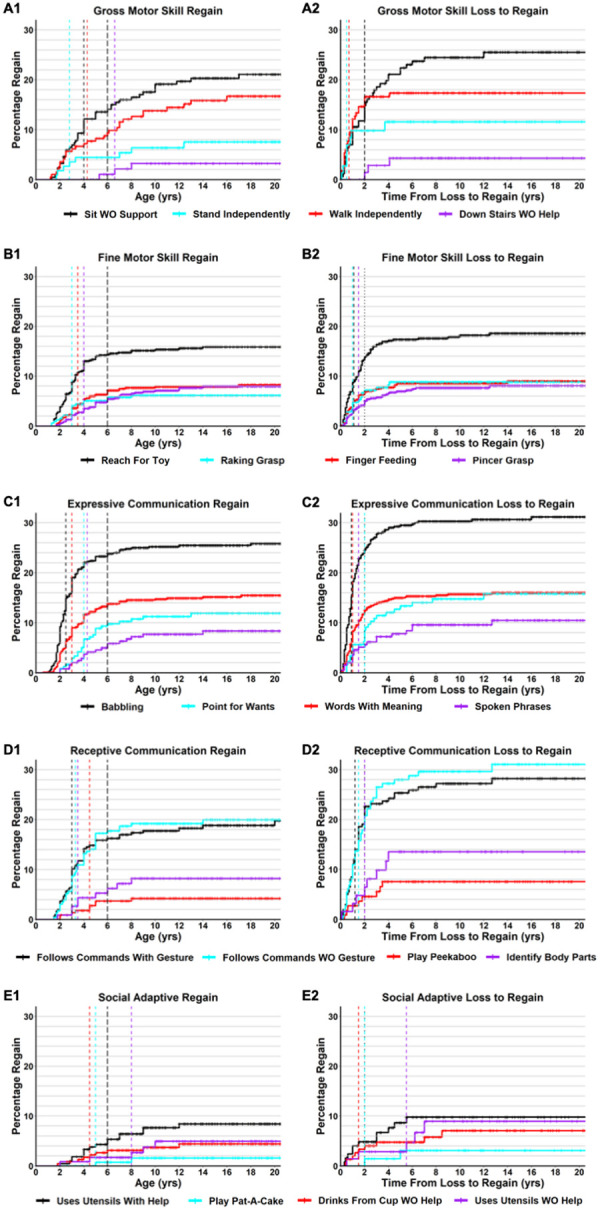 Figure 3
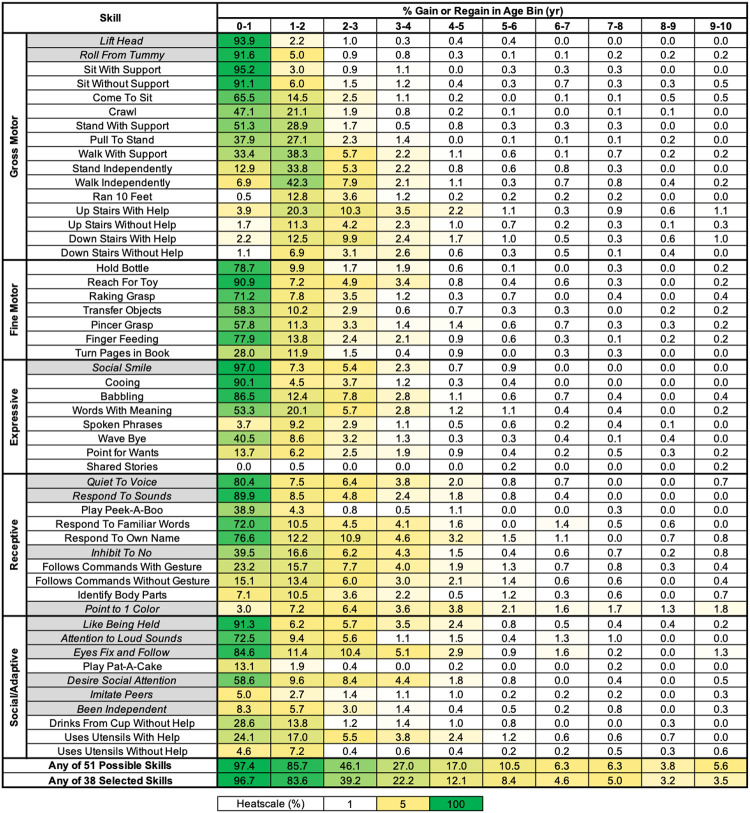 Figure 4
Peer Reviews
No public reviews on file for this paper yet. If you reviewed it on a platform where reviews are public (OpenReview, ICLR, NeurIPS, ICML), you can paste yours below so the community can read it here.
Videos
No videos yet. Explain this paper in a talk, walkthrough, or lecture? Add one.
Taxonomy
TopicsGenetics and Neurodevelopmental Disorders · Neurogenetic and Muscular Disorders Research · Genetic Neurodegenerative Diseases