Accuracy of Plasmodium falciparum genetic data for estimating parasite prevalence and malaria incidence in Uganda
Shahiid Kiyaga, Monica Mbabazi, Thomas Katairo, Kisakye Diana Kabbale, Victor Asua, Bienvenu Nsengimaana, Innocent Wiringilimaana, Francis Ddumba. Semakuba, Caroline Mwubaha, Jackie Nakasaanya, Eric Watyekele, Alisen Ayitewala, Stephen Tukwasibwe, Jerry Mulondo

TL;DR
This study evaluates how genetic data from malaria parasites in Uganda can estimate malaria spread and prevalence, finding that diversity metrics like COI are reliable for prevalence but less so for incidence.
Contribution
The study demonstrates that within-host diversity metrics, particularly COI and eCOI, are strong predictors of malaria prevalence across diverse transmission settings.
Findings
COI and eCOI were strongly and consistently positively associated with parasite prevalence.
Between-host relatedness was the strongest predictor of incidence but showed weaker overall performance in incidence estimation.
Genomic metrics captured spatial variation in malaria prevalence but had limited ability to predict incidence.
Abstract
Genetic metrics derived from Plasmodium falciparum infections offer a potential complement to conventional malaria surveillance by utilizing features of parasite diversity and relatedness to estimate transmission intensity. However, the performance of molecular metrics to predict epidemiologic metrics across a wide range of transmission settings remains understudied. Dried blood spots from 3563 symptomatic malaria cases were collected from 26 sentinel health facilities across Uganda during two collections in 2023. Amplicon deep sequencing of 165 polyallelic microhaplotypes was performed using MAD4HatTeR. Within-host diversity metrics (complexity of infection (COI), effective complexity of infection (eCOI), percent polyclonality, within-host relatedness) and between-host relatedness metrics were calculated. Associations with prevalence and recent incidence were evaluated using…
Genes, proteins, chemicals, diseases, species, mutations and cell lines named across the full text — each resolved to its canonical identifier and authoritative record.
Click any figure to enlarge with its caption.
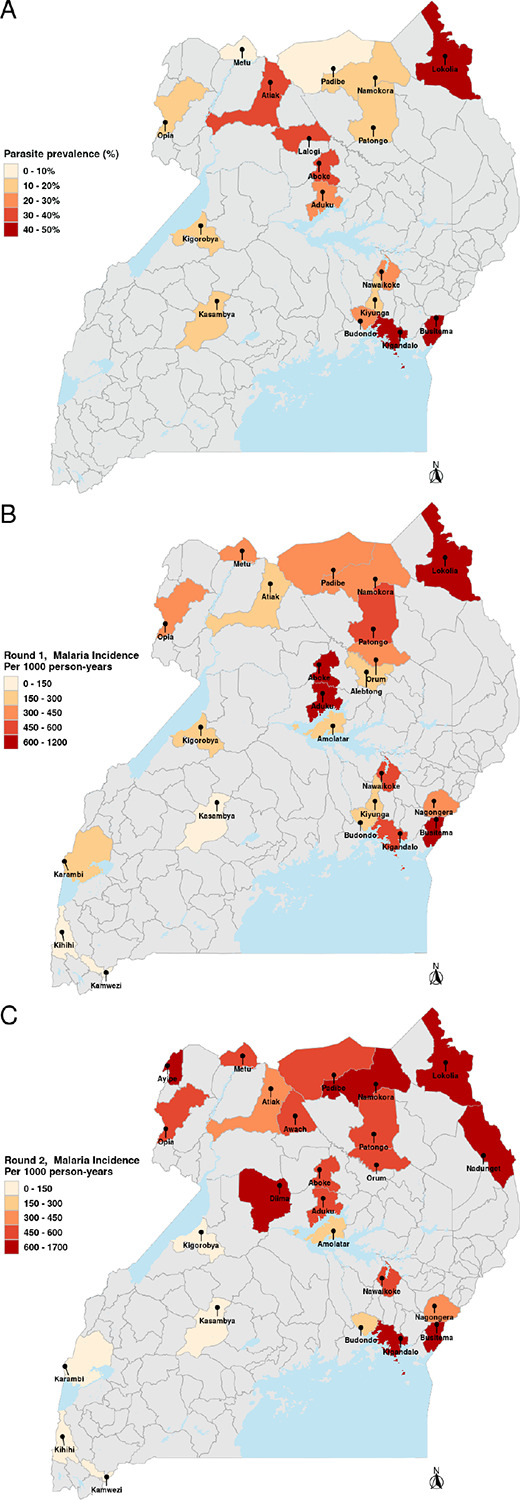 Figure 1
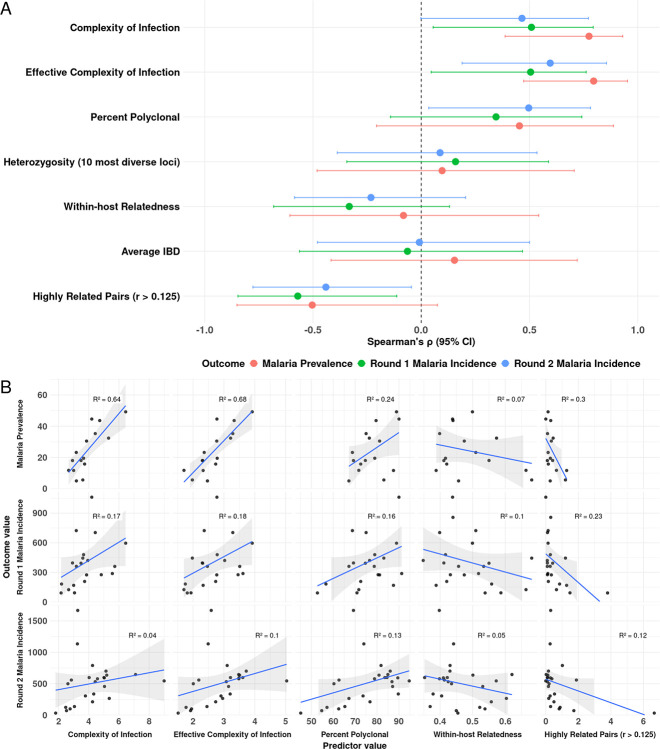 Figure 2
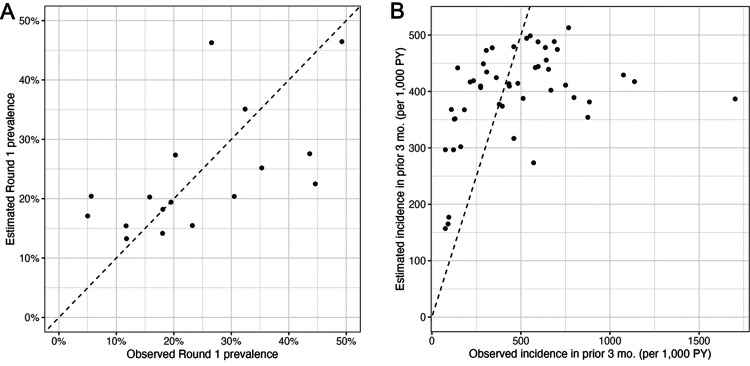 Figure 3
Peer Reviews
No public reviews on file for this paper yet. If you reviewed it on a platform where reviews are public (OpenReview, ICLR, NeurIPS, ICML), you can paste yours below so the community can read it here.
Videos
No videos yet. Explain this paper in a talk, walkthrough, or lecture? Add one.
Taxonomy
TopicsMalaria Research and Control · Parasites and Host Interactions · Trypanosoma species research and implications